

California Symphony Celebrates the Season on December 18 & 19 with the Return of HOLIDAY TRADITIONS
California Symphony Celebrates the Season on December 18 & 19 with the Return of HOLIDAY TRADITIONS
Photo by Kristen Loken. Hi res photos available here.
California Symphony Celebrates the Season on December 18 & 19 With the Return of HOLIDAY TRADITIONS
Part of California Symphony’s 40th Anniversary
Led by Donato Cabrera, Artistic & Music Director
Featuring Guest Organist Eric Choate
In Concert Friday, December 18 at 7:30pm & Saturday, December 19, 2026 at 2:00pm
At Walnut Creek Presbyterian Church
Tickets & Information
WALNUT CREEK, CA – California Symphony, led by Artistic and Music Director Donato Cabrera and Executive Director Lisa Dell, celebrates the season with the return of HOLIDAY TRADITIONS on Friday, December 18 at 7:30pm and Saturday, December 19, 2026 at 2:00pm at Walnut Creek Presbyterian Church (1801 Lacassie Ave.). Back by popular demand, California Symphony’s holiday concerts return for the first time in many years as part of the orchestra’s 40th anniversary season. Familiar carols such as “Hark! The Herald Angels Sing” and “Carol of the Bells” will be paired with selections from Bach’s Christmas Oratorio, creating a program that spans centuries of holiday tradition.
The concerts place guest organist Eric Choate and California Symphony’s brass and percussion in the spotlight, in the warm setting of Walnut Creek Presbyterian Church. Sacred, classical, and folk influences come together in resonant arrangements that showcase both the intimacy and power of this seasonal music, creating an uplifting experience.
"There's nothing quite like brass and organ ringing through a church in December — it's the sound of the season itself,” says Donato Cabrera. “Bringing Holiday Traditions back in our 40th anniversary season felt essential: this is music that has gathered people together for centuries, from Bach's Christmas Oratorio to the carols everyone knows by heart. Whether it's your first California Symphony concert or you've been with us for years, this celebration is meant for you.”
J.S. Bach composed his Christmas Oratorio in 1734 as a set of six cantatas for the churches of Leipzig, to be performed over the Christmas season through the Feast of the Epiphany. Its festive opening, with trumpets and timpani ringing out, makes it one of the most joyful works in the sacred repertoire, and it remains a beloved part of holiday celebrations around the world. “Hark! The Herald Angels Sing” pairs text by the English hymn writer Charles Wesley from 1739 with a melody adapted from a choral piece by Felix Mendelssohn. “Carol of the Bells” is based on a Ukrainian folk chant and New Year’s celebration song, which became a holiday favorite in the U.S. after Peter J. Wilhousky arranged it for the NBC Symphony Orchestra and added English lyrics in 1936.
During the 2026-2027 season, California Symphony celebrates 40 years of bringing vibrant orchestral music to the Bay Area in five compelling programs over ten performances from September 2026 to May 2027, plus the return of California Symphony’s Holiday Traditions concerts in December 2026. California Symphony's signature programming approaches orchestral music as storytelling, and this season explores American connections across continents and generations; musical contemporaries from Russia and America; the grandeur of the Enlightenment era in Paris; California innovators alongside Beethoven's bold optimism; and evocative orchestral landscapes from Spain, Mexico, and Italy. World-class soloists join the orchestra in riveting concertos, including cellist Julian Schwarz in Jennifer Higdon's Cello Concerto, clarinetist Cory Tiffin in Aaron Copland's Clarinet Concerto, violinist Helen Kim in John Adams' Violin Concerto, and pianist Tanya Gabrielian in Manuel de Falla's Nights in the Gardens of Spain.
Founded in 1986, California Symphony has been led by Donato Cabrera since 2013. Its concert season at the Lesher Center for the Arts in Walnut Creek, California, serves a growing number of music lovers from across the Bay Area. California Symphony believes that the concert experience should be fun and inviting, and its mission is to create a welcoming, engaging, and inclusive environment for the entire community. Through this commitment to community, imaginative programming, and its support of emerging composers, California Symphony is a leader among orchestras in California and a model for regional orchestras everywhere.
During the 2026-2027 season, California Symphony will continue to serve its community beyond the stage through its nationally recognized educational initiative Sound Minds and its innovative lifelong learning program Fresh Look: The Symphony Exposed. It will also continue and expand its community partnerships with the Amateur Music Network and the Trinity Center Walnut Creek.
FOR CALENDAR EDITORS:
WHAT: California Symphony’s holiday concerts are back by popular demand! Brass, percussion, and organ bring the season’s music into sharp focus, moving from quiet reflection to rhythmic celebration. Familiar carols such as “Hark! The Herald Angels Sing” and “Carol of the Bells” sit alongside selections from Bach’s Christmas Oratorio, creating a program that spans centuries of holiday tradition, led by California Symphony’s Artistic and Music Director Donato Cabrera and featuring guest organist Eric Choate. Sacred, classical and folk influences come together in resonant arrangements that highlight both the power and the intimacy of these seasonal works, offering an uplifting way to experience the music of the season.
WHEN:
Friday, December 18, 2026 at 7:30pm
Saturday, December 19, 2026 at 2:00pm
WHERE:
Walnut Creek Presbyterian Church
1801 Lacassie Ave., Walnut Creek
TICKETS: Single tickets ($50-80) and student tickets ($20 for students 25 and under with valid Student ID) on sale now. For more information or to purchase, visit CaliforniaSymphony.org or call (925) 280-2490.
PHOTOS: Available here
ABOUT THE CALIFORNIA SYMPHONY:
Founded in 1986, California Symphony has been led by Artistic and Music Director Donato Cabrera since 2013. It is distinguished by its vibrant concert programs that span the breadth of orchestral repertoire, including works by American composers and by living composers. Its concert season at the Lesher Center for the Arts in Walnut Creek, California serves a growing number of music lovers from across the Bay Area.
California Symphony believes that the concert experience should be fun and inviting, and its mission is to create a welcoming, engaging, and inclusive environment for the entire community. Through this commitment to community, imaginative programming, and its support of emerging composers, California Symphony is a leader among orchestras in California and a model for regional orchestras everywhere.
Since 1991, California Symphony's three-year Young American Composer-in-Residence program has provided a composer with a once-in-a-lifetime opportunity to collaborate with the orchestra over three consecutive years to create, rehearse, premiere, and record three major orchestra compositions, one each season. Every Composer-in-Residence has gone on to win top honors and accolades in the field, including the Rome Prize, Pulitzer Prize, Grammy Awards, and more.
The orchestra's nationally recognized educational initiative Sound Minds impacts students' trajectories by providing instruction for violin or cello and musicianship skills. Sound Minds has proven to contribute directly to improved reading and math proficiencies and character development, as students set and achieve goals, learn communication and problem-solving skills, and gain self-confidence. Inspired by the El Sistema program of Venezuela, the program is offered completely free of charge to the students and families of Downer Elementary School in San Pablo, California.
Through its innovative adult education program Fresh Look: The Symphony Exposed, California Symphony provides lifelong learners a fun-filled introduction to the orchestra and classical music. Led by celebrated educator and California Symphony program annotator Scott Foglesong, these live classes are held over four weeks in the summer annually.
In 2017, California Symphony became the first orchestra with a public statement of a commitment to diversity. Its website is available in both Spanish and English.
Reaching far beyond the performance hall, since 2020 the orchestra's concerts have been broadcast nationally on multiple radio series through Classical California (KUSC/KDFC) and the WFMT Radio Network, reaching over 1.5 million listeners across the country.
For more information, visit CaliforniaSymphony.org.
California Symphony’s 2026-27 season is sponsored by the Lesher Foundation.
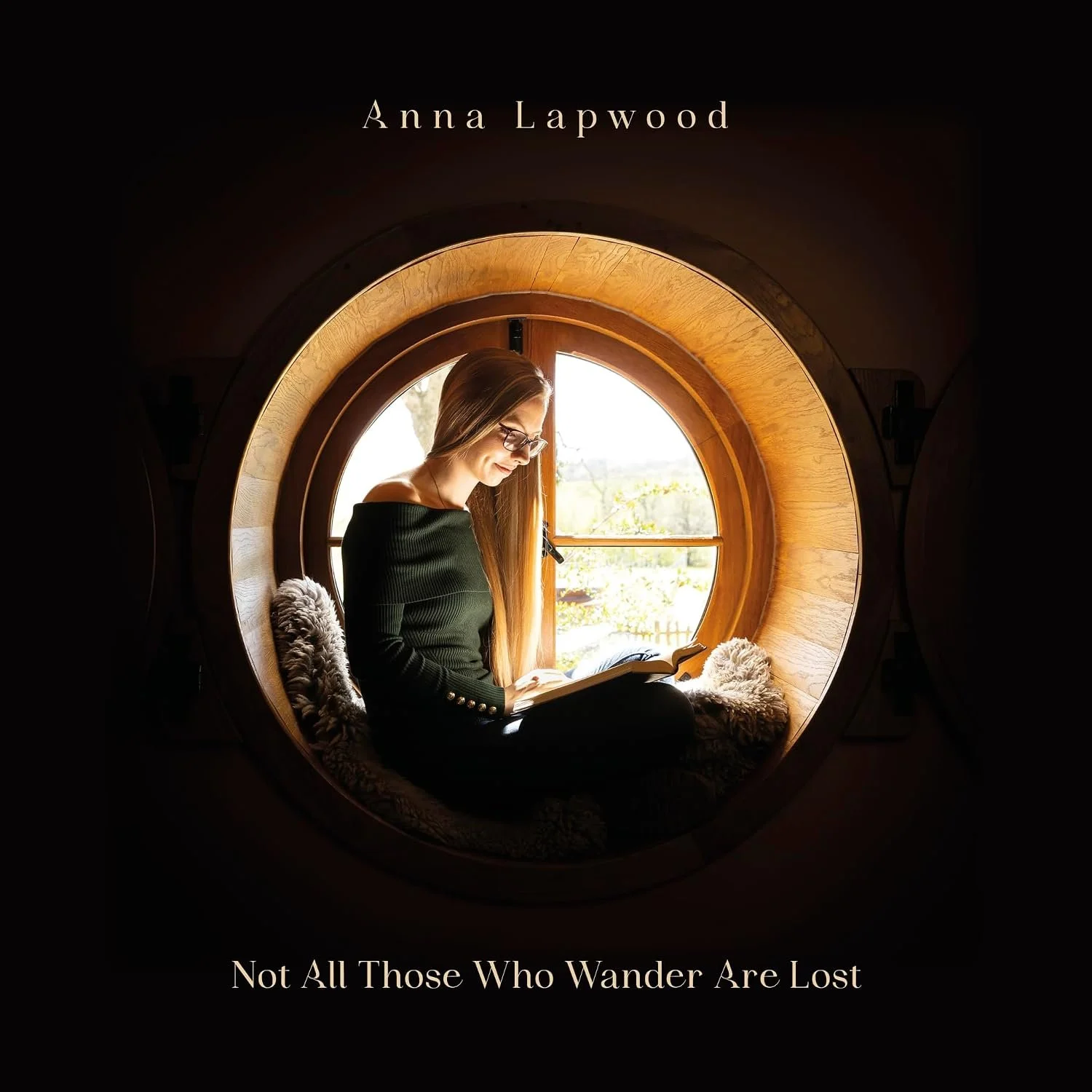
Nov. 13: Anna Lapwood Releases Not All Those Who Wander Are Lost on Sony Music Masterworks – New Single Out Today
Nov. 13: Anna Lapwood Releases Not All Those Who Wander Are Lost on Sony Music Masterworks – New Single Out Today
Anna Lapwood Unveils Her Most Ambitious Album Yet
Not All Those Who Wander Are Lost
Featuring The Lord of the Rings Organ Symphony
Anna Lapwood’s Transcription of Howard Shore’s Iconic Soundtrack
One Day (Suite from Pirates of the Caribbean)
New Single Out Today
Worldwide Album Release Date: November 13, 2026
Pre-Order Available Now
Acclaimed organist Anna Lapwood returns with her new album, Not All Those Who Wander Are Lost, set for release on Friday, November 13, 2026 on Sony Music Masterworks, one that will whisk you away into a vividly realised world of fantastical characters, dark forests, looming mountains and tempestuous seas. Pre-order the album here.
New single One Day (Suite from Pirates of the Caribbean) is out today - listen here.
One of the most gifted artists of her generation, Lapwood is famed for introducing the organ to millions of new fans through her interpretations of both classical and contemporary works. On this new record – her most ambitious to date – she dives into two of the most iconic film soundtracks, Howard Shore’s The Lord of the Rings and Hans Zimmer’s Pirates of the Caribbean, reimagining them as major works for organ and using them to showcase the Steinmeyer organ of Nidaros Cathedral, Trondheim.
Ahead of the album, the first two tracks – Prologue: One Ring to Rule Them All and The Shire/Concerning Hobbits, both taken from ‘The Lord of the Rings’ Organ Symphony – arriving, Friday, September 11, and feature Lapwood singing in Elvish. Elsewhere on the album, Lapwood is joined on Rivendell and Song For Justice by the Nidaros Cathedral Girls’ Choir, conducted by Johanna Bjørkhaug.
The album grew out of a chance encounter in a New York City coffee shop, when a young girl called Katherine requested Concerning Hobbits from The Lord of the Rings. That ignited a spark which would eventually become Lapwood’s largest transcription project yet: The Lord of the Rings Organ Symphony.
Lapwood says: “It has been the most extraordinary journey delving into JRR Tolkien's world in more detail, and into Howard Shore’s incredible scores. I knew that if I was going to do it, I would need to go all in! When I wrote the Pirates of the Caribbean Suite a couple of years ago it was my largest scale (and hardest!) transcription I had ever written. I feel like everything I learned from that informed The Lord of the Rings Organ Symphony, which is by far the biggest project I’ve ever worked on and has completely transformed how I think about the organ. It has been such a beautiful process and has made me fall in love with the organ all over again!”
Transcribing everything by ear, Lapwood enlisted the help of fellow The Lord of the Rings fans to choose which movements to include, exploring Howard Shore’s motivic development while maintaining a clear sense of the story’s narrative arc. She also had the opportunity to speak with Howard Shore himself, who offered suggestions along the way. “Howard and his team have been so kind and generous with their time and support during this whole process, and I’m incredibly grateful to have had the opportunity to ask their advice!” she says.
Demonstrating her talent in concert halls around the world and drawing a huge and loyal following on social media, Lapwood shot to fame on TikTok and now has over 4 million followers across all platforms. She has been hailed as a sensation by the media, covered by major titles including The Times, The Guardian, The Telegraph and The New York Times with Tatler hailing her “the Taylor Swift of classical music”. “Social media has helped make me who I am as a performer” Lapwood has previously explained, “in that it’s made me realise that I’m allowed to be myself onstage. Now I actually feel like I’m the freest version of myself when I’m performing - and that’s a rather lovely thing”.
Lapwood trained at the Junior Royal Academy of Music on the piano, harp, viola, and violin. Naturally shy, she found music was one of the ways she could most easily communicate. At school in Oxford, she played 15 different instruments, four of them to Grade 8 standard. In 2012, she became the first woman in Magdalen College, Oxford’s 560-year history to be awarded an organ scholarship.
Then, when she was just 21, Lapwood became the youngest person ever to hold the position of Director of Music at Oxford or Cambridge, leading the choirs at Pembroke College, Cambridge. She stepped down in 2025, after nine years in the role to pursue a full-time career as a concert organist. She has performed with pop stars like RAYE and Florence & the Machine, opened for Ludovico Einaudi at the O2 arena, and has even given Tom Cruise an organ lesson at the Royal Albert Hall, where she is the Official Organist.
A lover of storytelling through the instrument, Lapwood introduces a new element on this album, singing in Elvish throughout The Lord of the Rings Organ Symphony. “I’ve never done anything like this before, but for me it was very important to the project. The Lord of the Rings isn’t just a story you read; it’s a world that you enter” she explains. “I really feel like I’ve lived it for the past year, as though I’ve been living in Middle Earth. I knew Howard Shore was a genius before I started this project, but the more you look at it and the more time you spend with his music, the more extraordinary it is.”
Lapwood has worked hard to shift the narrative around both the organ and classical music. With Not All Those Who Wander Are Lost, she is keen to promote the intrinsic value of film music. “This is the music I played in my school orchestras, when I was growing up; it’s the music that made me want to compose,” she says. “It is incredible, intelligent, beautiful music, and I think it is deserving of so much respect! I’ve tried to treat it with that respect in creating this album, showing just how virtuosic if can be. Film music isn’t some secondary art form; it is essential to the success of the stories we know and love. For me, film music is the music that makes my heart sing.”
Not All Those Who Wander Are Lost Tracklist:
1. I. Prologue: One Ring to Rule Them All (The Lord of the Rings Organ Symphony)
2. II. The Shire/Concerning Hobbits (The Lord of the Rings Organ Symphony)
3. III. A Knife in the Dark (The Lord of the Rings Organ Symphony)
4. IV. Rivendell (The Lord of the Rings Organ Symphony)
5. V. The Ring Goes South (The Lord of the Rings Organ Symphony)
6. VI. The Three Hunters (The Lord of the Rings Organ Symphony)
7. VII. The Grace of Undómiel (The Lord of the Rings Organ Symphony)
8. VIII. The Lighting of the Beacons (The Lord of the Rings Organ Symphony)
9. IX. The Battle of the Pelennor Fields (The Lord of the Rings Organ Symphony)
10. X. A Far Green Country (The Lord of the Rings Organ Symphony)
11. XI. The Black Gate Opens (The Lord of the Rings Organ Symphony)
12. XII. For Frodo (The Lord of the Rings Organ Symphony)
13. XIII. The Crack of Doom (The Lord of the Rings Organ Symphony)
14. XIV. The Return of the King (The Lord of the Rings Organ Symphony)
15. Song For Justice
16. I. Hoist the Colours/Davy Jones (Suite from Pirates of the Caribbean)
17. II. Jack Sparrow (Suite from Pirates of the Caribbean)
18. III. One Day (Suite from Pirates of the Caribbean)
19. IV. Drink Up, Me Hearties, Yo Ho! (Suite from Pirates of the Caribbean)
20. Romantic Flight/Test Drive (from How to Train Your Dragon)
Follow Anna Lapwood
Instagram | TikTok | YouTube | X | Facebook | Website
Sony Music Masterworks comprises Masterworks, Sony Classical, Milan Records, XXIM Records, and Masterworks Broadway imprints. For email updates and information please visit www.sonymusicmasterworks.com/
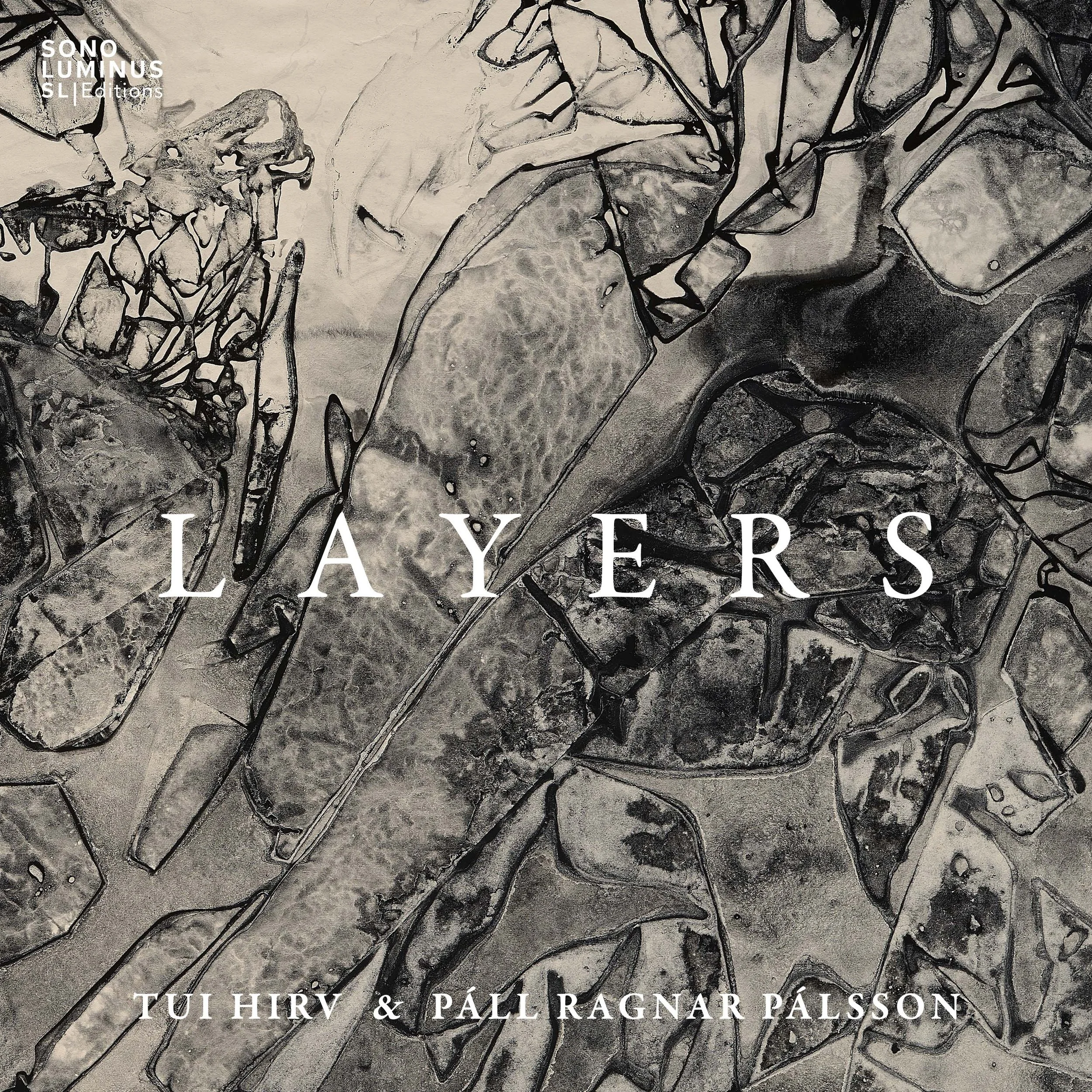
OUT TODAY: Vocalist Tui Hirv and Composer / Guitarist Páll Ragnar Pálsson Release Layers – New Sono Luminus Album Featuring Old Nordic Folk Songs
OUT TODAY: Vocalist Tui Hirv and Composer / Guitarist Páll Ragnar Pálsson Release Layers – New Sono Luminus Album Featuring Old Nordic Folk Songs
Vocalist Tui Hirv and Composer / Guitarist Páll Ragnar Pálsson
Release New Album Layers
Out Today on Sono Luminus
Featuring Ambient Interpretations of Old Nordic Folk Songs
with Guest Artists Sóley, Skúli Sverrisson, Kaktus Einarsson, and Sander Saarmets
Worldwide Release Date: Out Today
Páll Ragnar Pálsson | Tui Hirv | Sono Luminus
Today, October 23, 2026, married duo, Estonian vocalist Tui Hirv and Icelandic composer and guitarist Páll Ragnar Pálsson release their new album, Layers, on Sono Luminus - listen here. This unique concept album brings together the spiritual and historical lineages of several Nordic folk songs, through thoughtful, ambient interpretations that consider the works in their entirety: compositional form, emotional direction, historical context, social significance, and cultural purpose.
Layers showcases the many sides of the history behind music both secular and sacred and how its place in the lives of those who hear it can vary based on the time, place, language, and meaning that surrounds the music when it’s found and integrated into daily life. Through this mindful and meticulously crafted recording, Pálsson and Hirv shed light on the power of folk music to be both a lasting record of people and times past, as well as a living, evolving demonstration of the perspective seen and felt by people of today’s vast and multicultural world.
The album contains 17 folk songs and hymns of various Nordic, Latin, and English origins: Nüüd hingvad inimesed (Now Rest Beneath Night’s Shadow); Bred dina vida vingar (Thy Holy Wings O Savior); Mitt hjerte alltid vanker (My Heart Will Always Wander); Hátíð fer af höndum ein (Joyous Tides Do Now Begin); There Is No Rose Of Such Virtue; Gjendines bådnlåt (Gjendine’s Lullaby); In the Bleak Midwinter; Nú kemur heimsins hjálparráð (Saviour of the Nations Come); Nüüd südant, inimene (Ye Sons of Men, Oh, Hearken); Jeesus kõige ülem hää (Jesus Is the Best of All Good Things); Kes Jumalat nii laseb teha (If Thou But Suffer God to Guide Thee); Oh Jeesus, Sinu valu (O Sacred Head, Sore Wounded); Ma vaatan üles mäele (I Gaze Up at the Hill); Kas sureb nii mu kõige armsam elu (Alas, Does My Most Beloved Life Thus Die?); Su hooleks ennast annan ma (My all I to my God commend); Nú er á himni og jörð (Now in Heaven and on Earth); and The Snow it Melts the Soonest.
Contemporary chamber music plays a significant part in Tui Hirv’s artistic profile. While in Estonia, she worked with new music ensembles and occasionally premiered pieces written for her by local composers. Hirv’s collaboration with her composer husband Páll Ragnar Pálsson has been especially fruitful, resulting in more than ten pieces for Hirv as soloist and ensembles of varying scale. They keep developing their musical language, walking new and unknown paths with every project.
After undergraduate studies at Iceland University of the Arts Páll Ragnar Pálsson obtained a Master‘s and doctoral degree from Estonian Academy of Music and Theatre in 2014. Dwelling in the musically intense environment of Tallinn and being a student of Helena Tulve added another cultural layer on Pálsson’s indie rock background from 1990‘s Reykjavik and made him the artist he is today. During his formative years as a guitar player, Pálsson’s sense of sound was refined in recording studios, perceiving music rather in masses of noise than melodic-harmonic patterns, rather in a physical and instinctive than an intellectual and analytical manner. Sounds and textures are thus still central to Pálsson’s music.
As artists that also share foundations in academia, Pálsson and Hirv have explored the long, winding paths of origin behind the songs on Layers and come to a deep understanding of where this music fits in the lives of people from different nations, spanning many generations. Layers of spiritual singing reach seamlessly from Estonia – across the Swedish-speaking areas of Estonia to mainland Sweden and Norway and overseas to Iceland – making a stop in England where similar cultural processes took place earlier. Latin hymns translate into local languages, blend into folk tradition, get picked up again, make their way into art music directly or indirectly, and become a source of inspiration once again.
“For centuries, spiritual singing was an inseparable part of everyday life of mankind,” Hirv explains. “It accompanied the course of day, course of life and course of year – acting as a kind of measure to keep in touch with the flow of time. There were songs to sleep and wake by, to pray for God‘s mercy in all situations possible, and to maintain a harmonious and modest life. These songs travelled through Europe mostly with the help of Protestant pastors and songbooks, but blended into local folk heritage in every parish. Different versions of well-known chorales create a unifying web across Western culture while maintaining a distinct, irreplicable voice of the isolated communities. These songs, either straight from songbooks or transcribed during field trips by scholars of the early 20th century, make up the core of Layers.”
In their endeavor to connect these folk songs with modern day musicality and stylization, like many before them, Pálsson and Hirv chose carefully where to uphold and where to bend the lines of traditional conventions of western music, which give each song its original musical character and social purpose.
“We encounter these songs in an environment where boundaries between social classes, styles of music, scenes and venues get blurred over and over, each time according to a whole different logic,” Hirv says. “We break a few canons, clichés and customs by approaching spiritual hymns with modern equipment, still making the vocals sound natural, timeless and unprocessed, vulnerable and enlightened. In our arrangements, we are aware of the tradition but treat the material with playfulness and a slight sense of irresponsibility. This is the layer we add to the heritage that has shaped our identities as individuals and nations, keeping the very core of human knowledge and spiritual existence alive and relevant.”
Beyond their intention to balance the history of the past and their creativity in the present, Pálsson and Hirv’s arrangements add yet another layer to the hymn tradition.
Hirv explains in the album’s liner notes: “As a melodic element, we use notated transcriptions that educated musicians wrote down on their field trips to record the disappearing vocal heritage of Estonian villages. A big part of Estonian folklore is spiritual and has its roots in the Lutheran tradition. Going to church on Sundays and praising the Lord at home was a general practice. It was a natural part of existence equally in the ethnic Estonian and Swedish communities that lived side by side for many centuries. Texts were written down in psalmbooks but the melodies were learned by ear and passed on within the family.
In the late 19th and early 20th century, during the wave of national awakening, the Estonian student fraternity of Tartu University organized a wide-spread expedition of folk-song gathering all over Estonia that lasted for a number of summers. Secular songs were considered more original and valuable at the time than the ones developed from Lutheran hymns. For Estonian professional music life later on, the folk hymns have proved an invaluable source of inspiration and tokens of identity at difficult times. They underline Estonia‘s connection to Western culture while maintaining an irreplicable, unifying voice.”
More about Tui Hirv: Singer and musicologist Tui Hirv was born in Tallinn, Estonia in 1984. Tui Hirv graduated from Estonian Academy of Music and Theatre with a BA degree in singing in 2007 and MA in musicology in 2009. From an early age and until moving to Iceland in 2013 she was very active in Estonia’s vivid and highly professional scene of choral music. For a period of time she was a member of some of the most renowned vocal groups such as Estonian Philharmonic Chamber Choir and Vox Clamantis. Both ensembles place great emphasis on the music of Arvo Pärt, their fellow Estonian and one of the most performed composers at a global scale. Both ensembles have extensive international reach and regularly record albums for leading labels such as ECM New Series and Harmonia Mundi. The 2014 ECM release of Adam’s Lament led by EPCC’s founding conductor Tõnu Kaljuste contains a version of Pärt’s L’Abbé Agathon for choir and chamber orchestra where Tui Hirv sings lead. The album received the GRAMMY Award for Best Choral Performance.
More about Páll Ragnar Pálsson: Páll Ragnar Pálsson has ongoing collaborations with artists all over the world and his music has been performed by internationally renowned ensembles and orchestras in sought-after venues. In recent years, Páll has collaborated on several occasions with Sono Luminus. Atonement with a selection of chamber pieces was released in 2020, while Concurrence, a collaboration with Icelandic Symphony Orchestra featuring Quake was nominated for the GRAMMYAward in 2021. The Icelandic motion picture Quake directed by Tinna Hrafnsdóttir featured original music by Páll and Eðvard Egilsson, released on an album named Skjálfti by Sono Luminus in 2023. One of the highlights of recent years was the premiere of Páll’s first symphony in April 2026 at the Harpa concert house in Reykjavík commissioned by Icelandic Symphony Orchestra and conducted by Eva Ollikainen.
Layers: Tui Hirv and Páll Ragnar Pálsson
Release Date: October 23, 2026 | Sono Luminus
Tracklist:
1. Nüüd hingvad inimesed (Now Rest Beneath Night’s Shadow)[3:55]
2. Bred dina vida vingar (Thy Holy Wings O Savior)[3:05]
3. Mitt hjerte alltid vanker (My Heart Will Always Wander)[4:47]
4. Hátíð fer af höndum ein (Joyous Tides Do Now Begin)[2:49]
5. There Is No Rose Of Such Virtue [3:53]
6. Gjendines bådnlåt (Gjendine’s Lullaby)[3:40]
7. In the Bleak Midwinter [3:36]
8. Nú kemur heimsins hjálparráð (Saviour of the Nations Come)[3:25]
9. Nüüd südant, inimene (Ye Sons of Men, Oh, Hearken) [5:07]
10. Jeesus kõige ülem hää (Jesus Is the Best of All Good Things)[3:04]
11. Kes Jumalat nii laseb teha (If Thou But Suffer God to Guide Thee)[3:54]
12. Oh Jeesus, Sinu valu (O Sacred Head, Sore Wounded)[3:21]
13. Ma vaatan üles mäele (I Gaze Up at the Hill)[4:01]
14. Kas sureb nii mu kõige armsam elu (Alas, Does My Most Beloved Life Thus Die?)[5:05]
15. Su hooleks ennast annan ma (My all I to my God commend)[3:10]
16. Nú er á himni og jörð (Now in Heaven and on Earth)[2:30]
17. The Snow it Melts the Soonest [3:36]
Total Time: [63:02]
Páll Ragnar Pálsson, Composer, Guitars, Electronics
Tui Hirv, Vocals, Piano (tracks 9, 17)
Sóley Stefánsdóttir, Accordion (track 17)
Skúli Sverrisson, Bass (track 10)
Kaktus Einarsson, Trumpet (track 12)
Sander Saarmets Electronics (track 8)
Executive Producers: Páll Ragnar Pálsson and Tui Hirv
Arrangements: Tui Hirv and Páll Ragnar Pálsson
Recorded and Produced: Páll Ragnar Pálsson
Mixing: Eðvarð Egilsson
Mastering: Daniel Shores
Layout: Joshua Frey
Liner Notes: Tui Hirv and Páll Ragnar Pálsson
Artwork on cover: Valgerður Briem (1914-2002)
Artist portrait: Brynjar Gunnarsson
Recorded in Vesturbær, Reykjavík throughout 2025
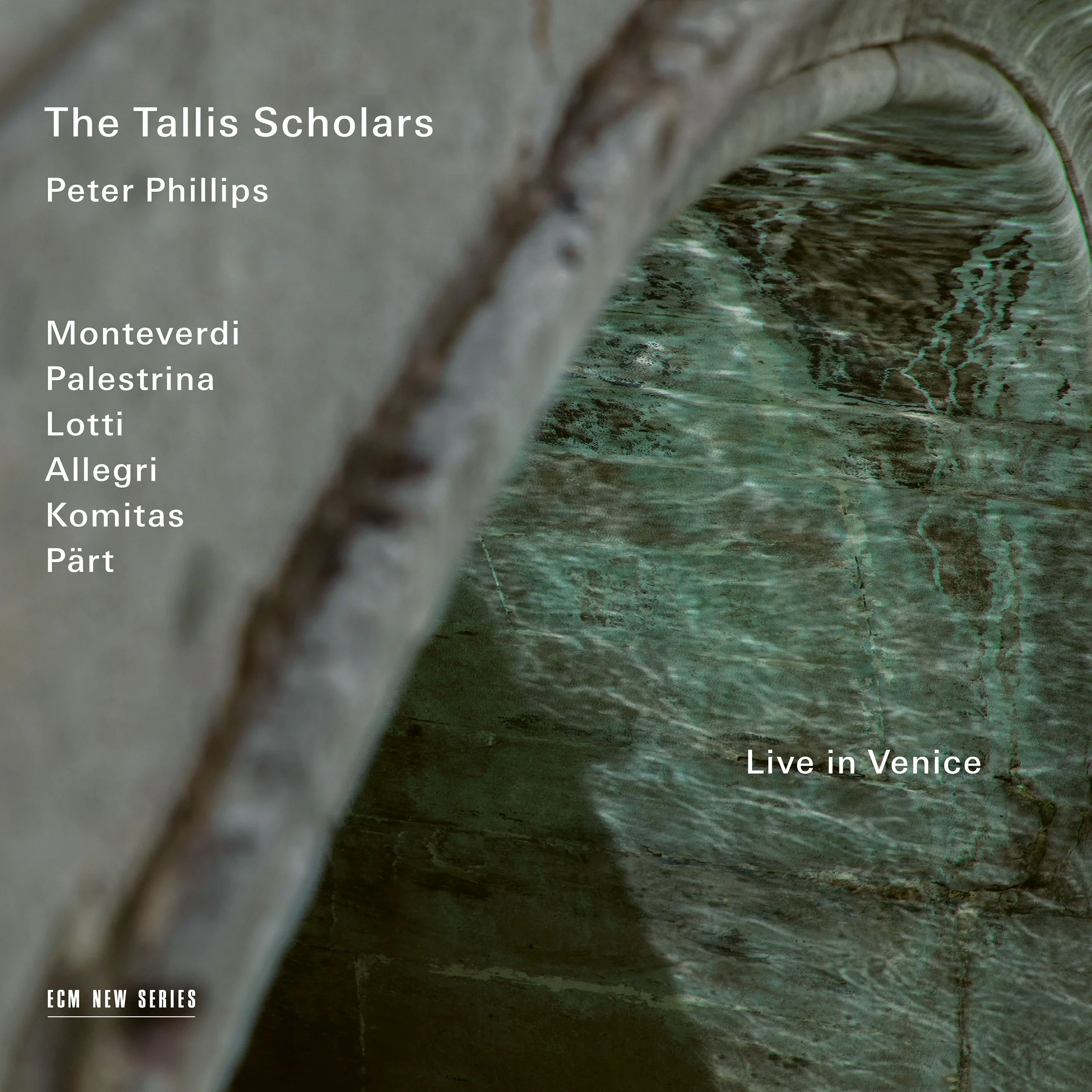
Out Today: ECM New Series Releases The Tallis Scholars - Live in Venice
Out Today: ECM New Series Releases The Tallis Scholars - Live in Venice
The Tallis Scholars
Live in Venice
Works by Monteverdi, Palestrina, Lotti, Allegri, Komitas, Pärt
Peter Phillips, conductor
ECM New Series 2732/33
Out Today: October 23, 2026
Digital and CD/Blu-ray Set
Downloads and CD/Blu-ray Set available upon request.
The Tallis Scholars, founded by their conductor Peter Phillips in 1973, belong among the world’s preeminent chamber choirs and have championed the sacred vocal music of the Renaissance like no other ensemble. Here they are captured in a remarkable concert recorded on 14 July 2017 in the glorious Basilica di San Marco in Venice. Issued as a 1-CD/1-Blu-ray set, the release offers both an intimate listening experience and the rare opportunity to witness the performance from within the basilica itself, where the acoustics of the historic space become an integral part of the music.
Renaissance polyphony permeates this programme, which was conceived around the 450th anniversary celebrations of Claudio Monteverdi’s birth in 2017. Alongside music by Monteverdi himself are compositions by Giovanni Pierluigi da Palestrina, Antonio Lotti and Gregorio Allegri, among them Allegri’s celebrated Miserere and Palestrina’s Magnificat – works with which the Tallis Scholars have become closely identified over the years. Yet the programme also reaches beyond the Renaissance, placing this great tradition of sacred polyphony in dialogue with music of a very different historical and cultural origin.
In the concert’s programme note, printed in the CD-accompanying booklet, Peter Phillips speaks of “old favourites and some very new ideas”. The new ideas are represented by Arvo Pärt’s Nunc dimittis on the one hand, (The piece, composed in 2001, also appears on the label in a performance by Vox Clamantis, on the ensemble’s 2025 album And I Heard A Voice.) and on the other by the music by Komitas, whose works the Tallis Scholars performed as a gesture of solidarity with the Armenian community of Venice. Phillips and the ensemble “wish to pay tribute to the centuries-old heritage of the Armenian community in Venice”, creating a connection between the musical traditions of the city and the living cultural memory of its Armenian presence.
The composers represented here illuminate the rich and varied history of sacred vocal music. Monteverdi stands at the threshold between Renaissance polyphony and the emerging Baroque, bringing the contrapuntal inheritance of the sixteenth century into a new expressive language. Palestrina, by contrast, became the defining figure of the Roman Renaissance, his lucid polyphony long regarded as an ideal of liturgical writing. Antonio Lotti, born and active in Venice, continued the Venetian tradition into the eighteenth century and served as maestro di cappella at San Marco, making his presence in this particular setting especially resonant. Gregorio Allegri, a Roman composer and singer associated with the Sistine Chapel, is remembered above all for his Miserere, whose restrained setting of Psalm 51 became one of the most famous sacred works of the Western tradition.
Alongside these European masters stand two works by Komitas (Soghomon Soghomonian), the Armenian priest, composer and pioneering ethnomusicologist whose work preserved and transformed the musical heritage of Armenia. Like Pärt, his compositions bring a modern, deeply personal voice to a programme otherwise rooted in centuries-old Western sacred polyphony.
The Tallis Scholars are in the midst of an international tour as this album is released, with concerts in Bogotá, Colombia (1 Oct.); Florence, Italy, at the Teatro Niccolini (25 Oct.); and Cambridge, UK, at King’s College Chapel (28 Oct.), followed by performances in South Korea and China in November.
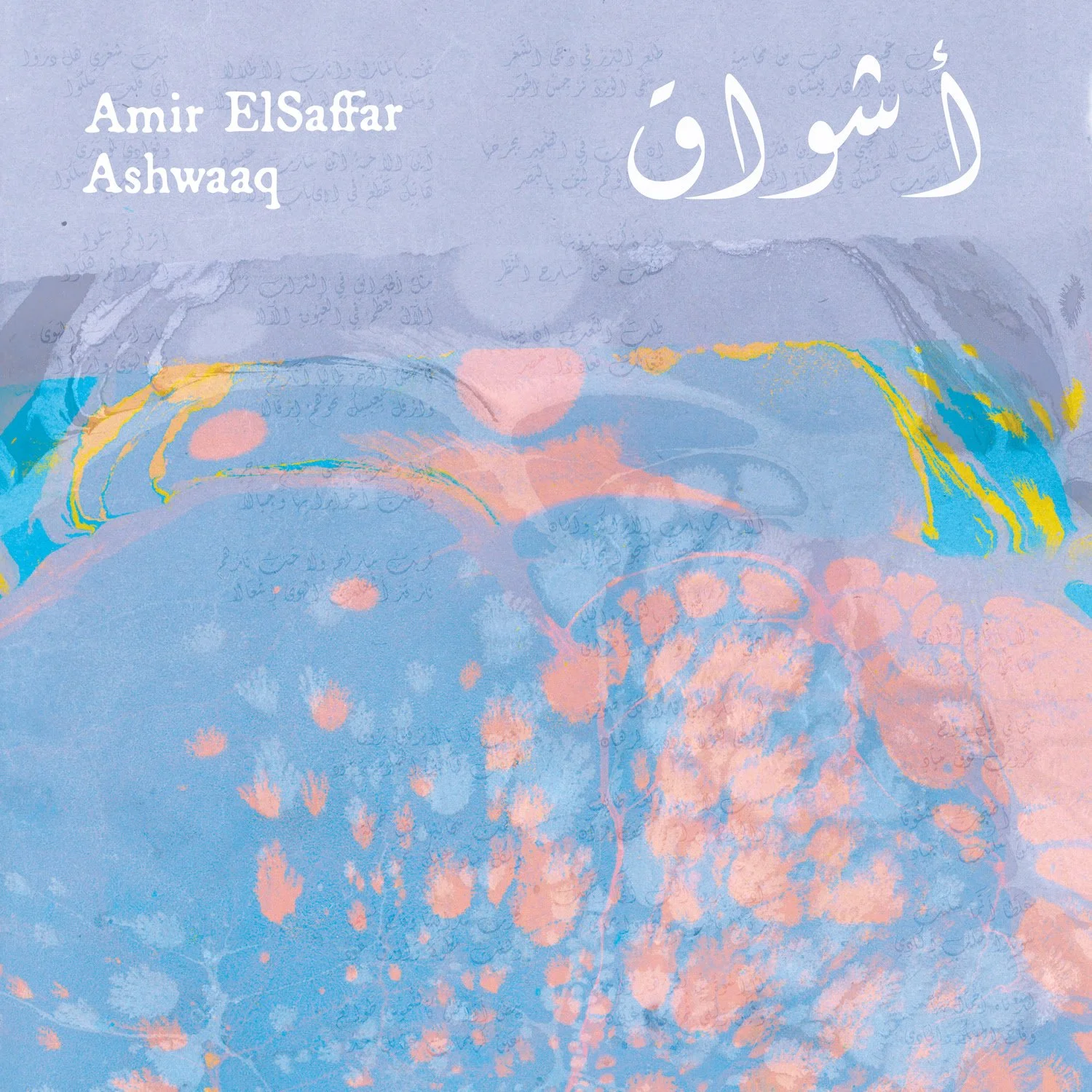
Nov. 6: Composer Amir ElSaffar Releases Ashwaaq on Maqām Records – New Single Out Today and Montreál Concert on Nov. 4
Nov. 6: Composer Amir ElSaffar Releases Ashwaaq on Maqām Records – New Single Out Today and Montreál Concert on Nov. 4
Composer and Multi-Instrumentalist Amir ElSaffar
Announces New Album Ashwaaq
Out November 6, 2026 on Maqām Records
Pre-Order Available Now
Ashwaaq Live in Concert at Arab World Festival in Montreál
Wednesday, November 4, 2026 at 8:00pm
Place des Arts | Montreál | Canada
More Information
Tal'a al Badru طَلَعَ البَدْرُ
New Single Now Available - Listen Here
CDs or press downloads available upon request.
On November 6, 2026, New York City-based Iraqi-American composer, trumpeter, santur player, vocalist, and modular synthesist Amir ElSaffar will release his new album Ashwaaq on Maqām Records, part of Maqām Studio, of which ElSaffar is the founder and Artistic Director. Ashwaaq is Amir ElSaffar’s ninth studio album and his second on Maqām Records. This recording is comprised of an original seven-movement composition for string quartet, voice, and santur (Iraqi hammered-dulcimer) by ElSaffar, that pairs his music with verses of poetry by thirteenth-century poet Ibn Arabi. New single, Tal'a al Badru طَلَعَ البَدْرُ, is available now - listen here.
ElSaffar will perform Ashwaaq live in concert on Wednesday, November 4, 2026 at 8pm at Place des Arts in Montreál, as part of the Arab World Festival, with vocalist Khaled AlHafez, violinists Layale Chaker and Megan Weeder, violist Dena El Saffar, and cellist Naseem AlAtrash.
Alongside ElSaffar, Ashwaaq features renowned Syrian vocalist Khaled AlHafez, a carrier of traditional singing from Aleppo, and a string quartet with whom ElSaffar has deep musical relationships: his sister, Dena El Saffar on viola, with whom he co-leads an Iraqi Maqam ensemble; violinist Megan Gould, a major player in the Arabic music scene in New York who has played with Dena for over 30 years; Eylem Basaldi, an innovative violinist and improviser rooted in Turkish music; and cellist Naseem AlAtrash, a virtuoso and composer in his own right and member of the Turtle Island String Quartet.
Amir ElSaffar works at the intersections of jazz, Western classical, electro-acoustic music, and Iraqi and Arabic Maqam. Described as “the celebrated trumpeter and composer who explores vital connections between jazz and Arabic music” (New York Times), and “The Innovator” (SPIN), ElSaffar has created a unique microtonal language that merges the Arabic maqam modal system with jazz and Western classical harmony.
Muhyiddin Ibn Arabi, or simply Ibn Arabi (1165-1240), is one of the most revered Sufi philosophers and mystics, whose work embodies the ideals of love and transcendence. The epic Turjuman Al-Ashwaq (Translator of Desires) is a collection of 61 poems that explores the divine and ecstatic nature of unity amid the diversity and variety of the manifest world. On Ashwaaq, selections from Ibn Arabi’s verses are paired with voice and string quartet, using the natural and inherent sound of string instruments to interpret and reflect upon the deeper meanings of Ibn Arabi’s texts.
“My heart can take on any form: a meadow for gazelles, a cloister for monks,
For the idols, sacred ground, Ka'ba for the circling pilgrim,
the tables of the Torah, the scrolls of the Qur'án.
I profess the religion of love; wherever its caravan turns along the way, that is the
belief, the faith I keep.”
The final lines of this poem are among the most widely read and quoted in Arabic poetry, about love of the divine in its constantly changing manifestations. Here, Ibn Arabi finds the unity in all religions, faiths, and philosophies from a place free of dogma. That which is infinite cannot be grasped or contained and is perceived through an open heart “capable of every form.”
The musical side of Ashwaaq is built on much more than the series of melodies and rhythms. ElSaffar is driven by a transcultural perspective which draws on the universality of composing, listening, and reacting to music, reflecting the sentiments of Ibn Arabi’s verses. In his approach to this composition, ElSaffar explores the vast possibilities of sound, melody, harmony, and rhythm through the combination of traditional Arabic singing with the string quartet, to create a work that’s less about conventional analysis or structure and more about expressing the ecstasy, spirituality, and emotion of the poetry.
In order to best achieve his artistic vision, ElSaffar embraced a musical language known as maqam, a system of modes that has been practiced for centuries in North Africa, Western Asia, and Central Asia. These modes – similar to Western scales but with microtones and greater melodic specificity – determine the feeling and spiritual quality of a piece of music.
“Rather than relying on Western harmony or counterpoint, two approaches that conflict with the maqam’s inherent logic,” says ElSaffar, “the harmonies of Ashwaaq emerge from sustained microtonal resonances inherent to the maqam, and heterophony — the simultaneous renderings of a single melodic phrase with variation.”
ElSaffar finds even more inspiration in Arab musicality for Ashwaaq, using overtones of the Arab takht – chamber ensemble – as well as rhythmic pulsations that conjure folk instruments and dance. He then brings these elements together with string techniques and aspects of contemporary music. The choice to include a string quartet of Western instruments, as opposed to traditional Arab musical instruments, was guided by ElSaffar’s desire to express the plurality and multitude of meanings in Ibn Arabi’s text, a departure from the single-melody approach characteristic of traditional Maqam music. The work proposes a new form of polyphony based on the microtonal maqam, a delicate undertaking few have attempted, making it a unique contribution in both maqam music as well as Western chamber music.
Composed in 2014 on a commission from the Royaumont Foundation in France, where ElSaffar was composer-in-residence for three years, the work premiered at the Festival d’Avignon and Festival d’Aix-en-Provence, and had follow-up performances throughout Europe.
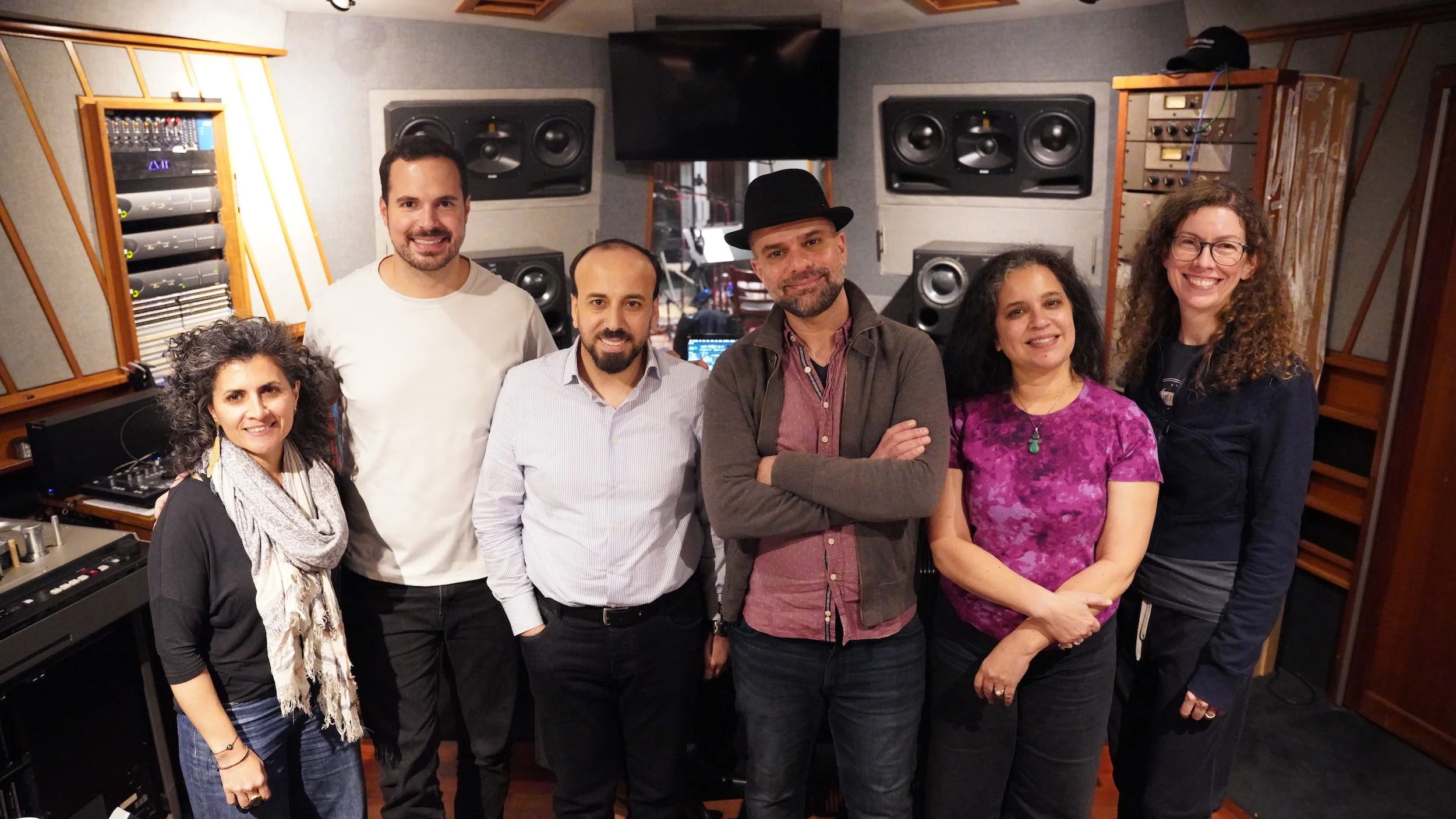
Left to right: Eylem Basaldi, Naseem AlAtrash, Khaled AlHafez, Amir ElSaffar, Dena El Saffar, Megan Gould
More about Amir ElSaffar: Amir ElSaffar leads the acclaimed six-piece Two Rivers ensemble and 17-piece Rivers of Sound Orchestra, and recently founded his New Quartet featuring microtonal piano. He is also the santur player and musical director for vocalist Hamid Al-Saadi, one of the last living practitioners of the Iraqi Maqam.
ElSaffar is the founder and Artistic Director of Maqam Studio and Maqam Records, an initiative supported by the Mellon Foundation, which seeks to preserve and foster innovation within the Maqam musical tradition of the Middle East. He is also composing an Arabic-language Maqam opera, which will have its concert premiere in 2027.
ElSaffar’s compositional output includes works for jazz ensembles, string quartets, mixed chamber ensembles, and symphony orchestras. In addition, he has led numerous hybrid projects with Raga, Flamenco, Stambeli (Tunisian Gnawa) and Subsaharan African trance music. In his most recent works he has incorporated electronic elements, such as analog modular synthesizer.
He has premiered new works at the Newport Jazz Festival, Berlin Jazz Festival, Dream City Festival (Tunisia), Festival d’Aix-en-Provence, Festival d’Avignon (France), Flamenco Biennale (Netherlands), the Mostly Mozart Festival at Lincoln Center, and Pierre Boulez Saal, among others.
ElSaffar’s awards and honors include a Mellon Foundation Arts and Culture grant (2023-2028), Doris Duke Performing Artist Award (2013), United States Artists Fellowship (2018), a Hodder Fellowship at Princeton University (2020-2021), an Opera America IDEA Grant (2025-2026) and Creative Capital Award (2026), in support of hisopera. in Arabic.
Ashwaaq
Music by Amir ElSaffar
Release Date: November 6, 2026
Maqām Records
Featuring Amir ElSaffar (santur and composition); Khaled AlHafez (voice); Megan Gould, Eylem Basaldi (violin); Dena El Saffar (viola); Naseem AlAtrash (cello)
Tracklist:
1. Introduction - Nizam [1:36]
2. I - Layta Shi'ri [2:29]
3. II - Qif Bil-Manazili [6:09]
4. III - Tal'a Al-Badru [4:28]
5. VI - Qalat [3:20]
6. V - Lam’at Lana Bil-Abraqayn [4:17]
7. VI - Al Hubbu Dini (Love is My Religion) [7:32]
8. VII - Ala Ya Banat Al-Wadi [2:37]
Total Time: [32:31]
Poetry by Ibn Arabi (1165-1240 AD)
Music by Amir ElSaffar
Produced by Maqām Records
Recorded by Marc Urselli at EastSide Sound, New York, NY on November 10, 2025
Mixed & Mastered by Marc Urselli at Audio Confidential, New York, NY
Cover Art by Amina Ahmed
Design by Buyana Jargalsaikhan
Commissioned by the Royaumont Foundation in 2014
Premiered at Festival d’Avignon and Festival d’Aix-en-Provence in July, 2014
Dedicated to the memory of Frederic Deval (1951-2016)
Excerpts from Ibn Arabi’s collection of mystical love poems, Turjumān al-Ashwāq (The Translator of Desires), written in Mecca in 1215. Excerpts from a translation into English by Michael Sells (Princeton University Press, 2021) are included in the linear notes.
Newport Classical presents Award-Winning Pianist Michael Leonardo Davidman on Nov 6 and Guitarist Raphaël Feuillâtre performs Latin Passions on Nov 20
Newport Classical presents Award-Winning Pianist Michael Leonardo Davidman on Nov 6 and Guitarist Raphaël Feuillâtre performs Latin Passions on Nov 20
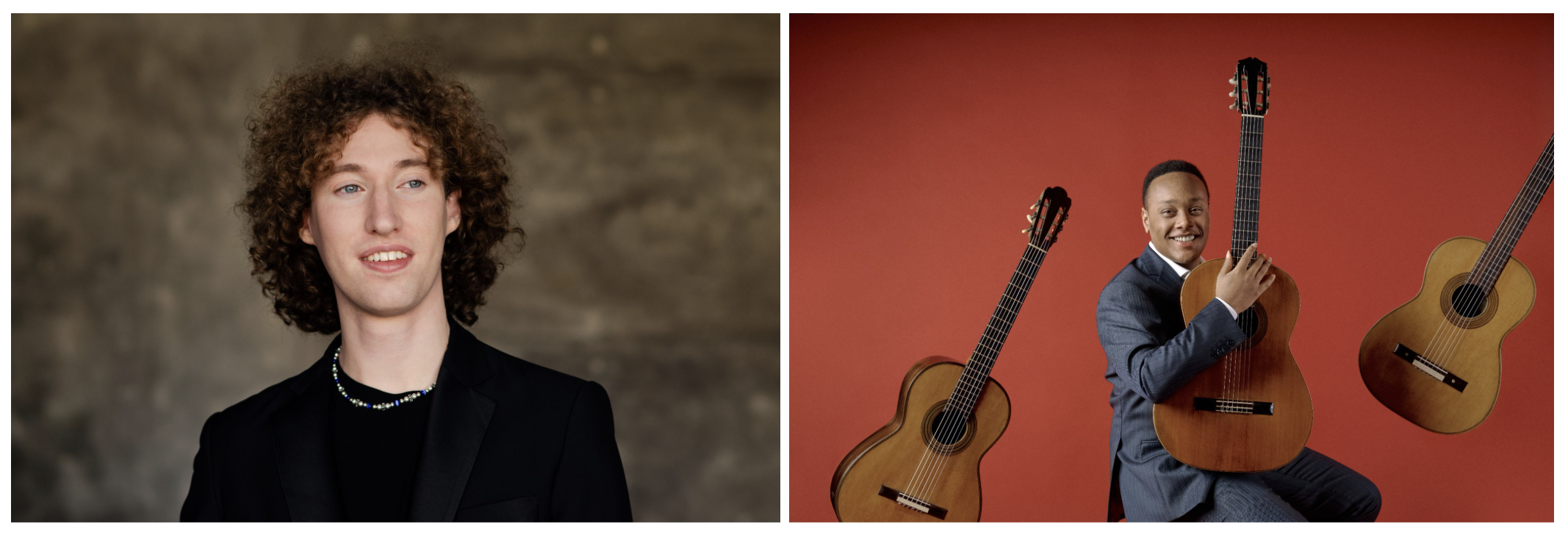
Michael Leonardo Davidman and Raphaël Feuillâtre. Photos available in high resolution here.
Newport Classical Continues 2026-2027 Chamber Series
November 6: Michael Leonardo Davidman, Winner of the American Piano Awards
November 20: Guitarist Raphaël Feuillâtre performs Latin Passions
Information & Tickets: www.newportclassical.org
Newport, RI – Newport Classical continues its sixth full-season Chamber Series, which features twelve concerts held on select Fridays between September 2026 and June 2027, at the organization's home venue Newport Classical Recital Hall (42 Dearborn St.), with two not-to-be-missed concerts in November. Pianist Michael Leonardo Davidman, winner of the 2025 American Piano Awards, makes his Newport debut on Friday, November 6, 2026 at 7:30pm, and Raphaël Feuillâtre, hailed as one of the leading classical guitarists of his generation, performs Latin Passions on Friday, November 20, 2026 at 7:30pm.
Newport Classical's Chamber Series takes place at Newport Classical Recital Hall in downtown Newport, known for its striking architecture and excellent acoustics. The Chamber Series reaffirms Newport Classical’s commitment to year-round classical music programming. Audiences are invited to enjoy performances by world-class classical musicians in a relaxed setting, with complimentary wine generously provided by Gold's Wine and Spirits served during intermission. After the concerts, all audience members are also invited to a reception with the artists at The Brenton Hotel, featuring complimentary wine and charcuterie, with additional food and beverages available for purchase. Both performers and audience members alike have described these performances as some of their favorites. “The venue was the perfect place for a magical evening,” raved one attendee, while others have described their experiences as “amazing and very entertaining,” “riveting,” and “an absolute delight.”
Michael Leonardo Davidman (November 6), winner of the 2025 American Piano Awards, is among the most distinguished young pianists in the nation. Praised for playing with “thunderous authority and loads of interpretive nuance” (Upstage), he has appeared as a soloist with leading orchestras including the Philadelphia Orchestra and Indianapolis Symphony Orchestra, and has performed at renowned venues across the United States and Europe. He is a recipient of numerous top honors, including prizes at the Long-Thibaud Competition and the Juilliard Gina Bachauer International Piano Competition. A lifelong opera enthusiast, Davidman shares historical and rare opera recordings on his YouTube channel, PucciniMD, and frequently accompanies opera singers. For his Newport debut, Davidman brings a program spanning J.S. Bach, Franz Schubert, César Franck, and Franz Liszt to the Recital Hall for an evening featuring his signature “chiseled and fiery playing” (Pianiste Magazine, Paris). Michael Davidman’s appearance is made possible through the generous support of Dr. William and Susan Kleinman and the American Piano Awards. Additional support provided by the Alphadyne Foundation.
Hailed as one of the leading classical guitarists of his generation, Raphaël Feuillâtre (November 20) brings a deeply personal approach to the guitar’s most beloved repertoire. Winner of first prize at the prestigious Guitar Foundation of America International Concert Artist Competition, Feuillâtre signed with Deutsche Grammophon in 2022, becoming the first guitarist in many years to join the legendary Yellow Label. In a program titled Latin Passions, Feuillâtre explores the rich musical traditions of Spain and Latin America through works by Francisco Tárrega, Isaac Albéniz, Miguel Llobet, Agustín Barrios, Antonio Lauro, Heitor Villa-Lobos, Astor Piazzolla, and Sérgio Assad. From the shimmering beauty of Tárrega’s Recuerdos de la Alhambra to the fiery rhythms of Brazil and Argentina, this vibrant program showcases the guitar’s remarkable ability to sing, dance, and tell stories across cultures.
As part of Newport Classical's desire to create connections between classical music, the artists who perform it, and the Newport community, all musicians performing on the Chamber Series will also go into the Newport-area schools to perform for and speak with students, through Newport Classical's Music Enrichment and Engagement Initiative.
Up next on the Chamber Series, Newport Classical presents the celebrated Boston-based Rasa String Quartet on October 23 at Newport Classical Recital Hall, performing Portraits of an American Patchwork in celebration of America’s 250th birthday.
In December, Newport Classical celebrates the season with an expanded holiday series of six performances across two festive weekends, with each program offered at 1:00pm and 3:30pm. On December 5, the acclaimed Minneapolis-based low-voice ensemble Cantus returns to Newport Classical Recital Hall for Christmas with Cantus, pairing beloved carols such as Silent Night and O Come, All Ye Faithful with new works by composers including Zanaida Robles and Eric Whitacre. On December 6, Messiah at the Mansion returns to Rosecliff, where Rhode Island’s acclaimed Ensemble Altera and the Professional Choristers of The Choir School of Newport County, conducted by Christopher Lowrey, perform a one-hour chamber version of Handel’s oratorio, including the Hallelujah Chorus. On December 12, the 11-piece chamber orchestra Frisson presents Classical Christmas with Frisson at Emmanuel Church, with selections from Tchaikovsky’s Nutcracker Suite, Vivaldi’s Winter, Bach’s Brandenburg Concerto No. 4, and Carol of the Bells, concluding with a Christmas sing-along.
The Newport Classical Chamber Series continues in 2027 with cellist Sterling Elliott and pianist Elliot Wuu on January 29, in the sonatas of Maurice Ravel, Richard Strauss, and Sergei Rachmaninoff. Elliott, a 2021 Avery Fisher Career Grant recipient, has been described by The Millbrook Independent as a cellist who has "risen beyond hopeful promise," while Wuu, a 2018 Gilmore Young Artist, is recognized for his “power, speed and finesse” (Tribune Star). On February 19, flutist Anna Urrey and harpist Kristi Shade perform a program of Nino Rota, Lili Boulanger, Jules Mouquet, Gabriel Fauré, Claude Debussy, and Astor Piazzolla, exploring the coloristic possibilities of flute and harp across centuries and styles. Urrey has appeared at leading venues including Carnegie Hall, David Geffen Hall, Le Poisson Rouge, and National Sawdust. A sought-after collaborator, Shade has appeared with artists ranging from Andrea Bocelli and John Legend to Florence + The Machine. The Dorian Wind Quintet, praised by the Los Angeles Times for delivering “chamber music as it was meant to be,” performs on March 12 in “Preludes and Variations,” pairing J.S. Bach chorale arrangements with Antonín Dvořák's Wind Quintet, Op. 105 and a set of Anniversary Variations by Richard Rodney Bennett, George Perle, Billy Childs, Bruce Adolphe, and Lee Hoiby on a theme from a wind quintet by Antonin Reicha written specifically for the Dorian Wind Quintet to celebrate the ensemble’s 40th anniversary. Versatile artist Chelsea Guo, the first musician to win the Young Concert Artists auditions in both voice and piano, and hailed by Gramophone as “clearly a special talent,” takes the stage on April 9 in a program of Frédéric Chopin, Pauline Viardot, Johannes Brahms, and Robert Schumann's Dichterliebe, singing while accompanying herself on piano.
On April 23, Newport Classical presents violinist Rubén Rengel and Friends, with pianist Gabriel Chakarji and percussionist Juan Diego Villalobos, who come together for an evening celebrating the music of Latin America, from their native Venezuela to the vibrant traditions displayed throughout the region. Rengel was the winner of the Robert F. Smith Prize at the 2018 Sphinx Competition, and has appeared as soloist with the Philadelphia Orchestra, Dallas Symphony Orchestra, Detroit Symphony Orchestra, Houston Symphony, New Jersey Symphony, and more. Accordionist Radu Ratoi, winner of the 2024 Young Concert Artists “Susan Wadsworth” International Auditions and recipient of Denmark’s prestigious Léonie Sonning Talent Prize, has established himself as a pioneer in expanding the accordion’s repertoire. He is joined by violinist Alexandra Tirsu, a 2021 ARD Competition prizewinner, on May 7 for a program of J.S. Bach, Igor Stravinsky, Béla Bartók, Antonio Vivaldi, Astor Piazzolla, and more. The 2026-2027 Chamber Series concludes on June 4 with violinist Njioma Grevious, a Juilliard graduate and founding member of the Abeo Quartet, who appears regularly at Carnegie Hall, Wigmore Hall, and the Concertgebouw. In Newport, she presents a program featuring the music of J.S. Bach, Johannes Brahms, W.A. Mozart, Oliver Messiaen, Edvard Grieg, and Clarence Cameron White. Grevious has been praised for her “violin pyrotechnics” and “sheer intensity” by the Washington Classical Review.
The 2027 Newport Classical Music Festival will take place from July 1-18, 2027.
Newport Classical 2026-2027 Schedule At-A-Glance:
September 18: Opening Night: Invoke performs "American Voices"
October 9: Trio Azura performs "Piano Trio Through Time"
October 18: Free Community Concert featuring Ensemble Mélange
October 23: Rasa String Quartet performs “Portraits of an American Patchwork”
November 6: Michael Leonardo Davidman, Winner of the American Piano Awards
November 20: Guitarist Raphaël Feuillâtre performs "Latin Passions"
December 5: Christmas with Cantus
December 6: Messiah at the Mansion at Rosecliff
December 12: Classical Christmas with Frisson
January 29: Cello Sonatas with Sterling Elliott and Elliot Wuu
February 19: Anna Urrey & Kristi Shade perform Works for Flute and Harp
March 12: Dorian Wind Quintet performs "Preludes and Variations"
April 9: Voice and Piano with Chelsea Guo
April 23: Rubén Rengel and Friends
May 7: Radu Ratoi & Alexandra Tirsu perform Vivaldi, Piazzolla, and more
June 4: Chamber Series Finale: Violinist Njioma Grevious
Complete concert details can be found at www.newportclassical.org/concerts. All Chamber Series concerts are held on select Fridays at 7:30pm at Newport Classical Recital Hall (42 Dearborn Street).
About Newport Classical
Newport Classical is a premier performing arts organization that welcomes people of every age, culture, and background to intimate, immersive musical experiences. The organization presents world-renowned and up-and-coming artistic talents at stunning, storied venues across Newport – an internationally sought-after cultural and recreational destination.
Originally founded in 1969 as Rhode Island Arts Foundation at Newport, Inc., Newport Classical has a rich legacy of musical curiosity having presented the American debuts of hundreds of international artists and is most well-known for hosting three weeks of concerts in the summer in the historic mansions throughout Newport and Aquidneck Island. In the 56 years since, Newport Classical has become the most active year-round presenter of live performing arts on Aquidneck Island, and an essential pillar of Rhode Island’s cultural landscape, welcoming thousands of patrons all year long.
Newport Classical invests in the future of classical music as a diverse, relevant, and ever-evolving art form through its four core programs – the one-of-a-kind Music Festival; the Chamber Series in the Newport Classical Recital Hall; the free, family-friendly Community Concerts Series; and the Music Enrichment and Engagement Initiative that inspires students in local schools and community organizations to become the arts advocates and music lovers of tomorrow. These programs illustrate the organization’s ongoing commitment to presenting “timeless music for today.”
In 2021, the organization launched a new commissioning initiative – each year, Newport Classical will commission a new work by a Black, Indigenous, person of color, or woman composer as a commitment to the future of classical music. To date, Newport Classical has commissioned and presented the world premiere of works by Stacy Garrop, Shawn Okpebholo, Curtis Stewart, Clarice Assad, and Cris Derksen.
After a year-long community-driven process, and rooted in the organization’s mission “to celebrate the living art form of classical music in intimate and iconic locations,” Newport Classical released its 2025-2028 Strategic Plan, presenting a clear roadmap to become a stronger, healthier, and more vibrant organization that enhances its programs and community engagement, promotes responsible financial growth and sustainability, and centers artistic excellence in every decision, as the organization aspires to open its doors even wider.

Nov. 21: Telegraph Quartet in Concert at the University of Michigan School of Music, Theatre & Dance – Performing Music Shaped by Revisitation
Nov. 21: Telegraph Quartet in Concert at the University of Michigan School of Music, Theatre & Dance – Performing Music Shaped by Revisitation
Photo of the Telegraph Quartet by Lisa Marie Mazzucco available in high resolution here.
Telegraph Quartet in Concert
at the University of Michigan School of Music, Theatre & Dance
Quartet-in-Residence
Saturday, November 21, 2026, at 7:30pm
Britton Recital Hall Earl V. Moore Building | 1100 Baits Dr. | Ann Arbor, MI
Free and Open to the Public
More Information | Livestream Here
“Precise tuning, textural variety and impassioned communication” – The Strad
Ann Arbor, MI – On Saturday, November 21, 2026, at 7:30pm, the Telegraph Quartet, quartet-in-residence with the University of Michigan School of Music, Theatre & Dance, presents its second university recital of the 2026–27 season in Britton Recital Hall in the Earl V. Moore Building (1100 Baits Dr.). The concert program, which highlights music shaped by the idea of revisitation, includes George Rochberg’s String Quintet (performed with cellist Norman Fischer); Franz Joseph Haydn’s String Quartet Op. 76, No. 2 “Quinten”; and Osvaldo Golijov’s Ever Yours, a string octet performed with Fischer, violist Matt Albert, and violinists River Sawchyn and Aidan Krieger. Composed in different eras, these works by Rochberg, Haydn, and Golijov each center on the idea of returning to something: musical ideas embraced before or the meanings behind emotions that influence the composers’ work.
The Telegraph (Eric Chin and Joseph Maile, violins; Pei-Ling Lin, viola; Jeremiah Shaw, cello) formed in 2013 with an equal passion for standard and contemporary chamber music repertoire. They rose quickly, winning the prestigious 2016 Walter W. Naumburg Chamber Music Award and the Grand Prize at the 2014 Fischoff Chamber Music Competition. Today, they perform across the United States and abroad, at venues including New York City’s Carnegie Hall, Lincoln Center, and Town Hall; San Francisco’s Herbst Theatre; and the Philharmonie de Paris; and at festivals including the Chautauqua Institute, Music in the Vineyards in Napa Valley, and the Emilia Romagna Festival in Italy.
Initially known for his use of serialism – an approach to composing that focuses on creating sequences using pitches, rhythms, dynamics, or other musical elements – Rochberg turned to writing music with a more melodic style after the death of his son in 1964. Rochberg claimed he couldn’t fully express his grief in music that used serialism’s pattern-focused approach. His 1982 String Quintet reflects Rochberg returns to the familiarity of more traditional melodic expression, and though critics thought it was a creative regression, the music still conveys what Rochberg viewed as an expanded emotional range.
Haydn’s String Quartet Op. 76, No. 2 “Quinten” bucked the composer’s trend of composing grand, bright, vibrant music and is instead written almost entirely in D minor, which is often described as the saddest and most melancholy of all keys. The piece is nicknamed “Quinten,” meaning fifths, because of Haydn’s frequent use of this foundational interval between notes. Composed when he was in his 60s, after a lifetime of writing some of the most sophisticated, expressive, and innovative works of his time, this quartet showcases Haydn’s ability to create impressive work even with the most basic elements.
After being asked to compose an octet for the Amsterdam String Quartet Biennale, Osvaldo Golijov re-read letters Vincent Van Gogh wrote to his brother Theo. The small but consistent detail of Van Gogh’s letters closing with “ever yours” prompted Golijov to reflect on the enduring bonds between himself, the St. Lawrence Quartet, and their late first violinist, co-founder, and force of nature, Geoff Nuttall, to whom the octet is dedicated. At the time, Nuttall was battling pancreatic cancer, which would ultimately take his life. In thinking about Nuttall, Golijov came to consider the idea of Van Gogh’s “ever yours” mentality and how attention can connect to love. Through that attention-minded lens, Golijov saw a bond between Nuttall, Van Gogh, and Haydn, a composer of whom Nuttall was especially fond, ultimately connecting the three across time and creative spaces.
The Telegraph Quartet was truly honored to work with Nuttall, the St. Lawrence Quartet, and Golijov in the actual formation of the work. Golijov composed the music almost before the ensemble’s very ears, using the instrumentation of the octet and aesthetic feedback from the Telegraph’s players to stimulate his own creative process. The work was dedicated to Nuttall, who, along with the St. Lawrence and Telegraph Quartets, premiered the work at the San Francisco Conservatory of Music.
The Telegraph Quartet released its celebrated debut album Into the Light in 2018 and is currently recording an extensive three-album series titled 20th Century Vantage Points for Azica Records, exploring string quartets of the 20th century. The first volume, Divergent Paths (2022), features two works that (to the best of the Telegraph Quartet’s knowledge) have never been recorded on the same album before: Maurice Ravel’s String Quartet in F Major and Arnold Schoenberg’s String Quartet No. 1 in D minor, Op. 7. In August 2025, the Telegraph released the second volume, Edge of the Storm, which examines the turbulent years of war and its aftermath, 1941–1951, through string quartets by Grażyna Bacewicz, Benjamin Britten, and Mieczysław Weinberg. Volume three will be released in fall 2027. In addition, the Telegraph released a recording of the string quartets of Robert Sirota in summer 2026 (Azica Records) and will release a recording of Kenji Bunch string quartets in spring 2027 (Phenotypic Records).
Beyond the concert stage, the Telegraph Quartet seeks to spread its music through education and audience engagement. The Telegraph has given master classes, served as artists-in-residence, and launched ChamberFEAST!, a chamber music workshop in Taiwan. In fall 2020, the Telegraph launched an online video project called TeleLab, in which the ensemble collectively breaks down the components of a movement from various works for quartet. In the summers of 2022 and 2024, the Telegraph Quartet traveled to Vienna to work with Schoenberg expert Henk Guittart in conjunction with the Arnold Schoenberg Center, researching all of Schoenberg's string quartets.
For more information, visit www.telegraphquartet.com.
Concert details:
Who: Telegraph Quartet
Presented by the University of Michigan School of Music, Theatre & Dance
What: Music by George Rochberg, Franz Joseph Haydn, and Osvaldo Golijov
When: Saturday, November 21, 2026, at 7:30pm
Where: Britton Recital Hall, Earl V. Moore Building, 1100 Baits Dr., Ann Arbor, MI 48109
More information: (Free and open to the public): https://smtd.umich.edu/event/21-november-2026-2/
Livestream: https://smtd.umich.edu/live-stream-britton/
Description: The Telegraph Quartet – the quartet-in-residence at the University of Michigan School of Music, Theatre & Dance – performs their second faculty recital of the 2026–27 season. The program, which highlights works shaped by the idea of revisiting ideas, includes George Rochberg’s String Quintet, performed with cellist Norman Fischer; Franz Joseph Haydn’s String Quartet Op. 76, No. 2 “Quinten”; and Osvaldo Golijov’s string octet Ever Yours, performed with Fischer, violist Matt Albert, and violinists River Sawchyn and Aidan Krieger.

Nov. 7: Telegraph Quartet Performs at The Loft at Algoma Conservatory
Nov. 7: Telegraph Quartet Performs at The Loft at Algoma Conservatory
Photo of the Telegraph Quartet by Lisa Marie Mazzucco available in high resolution here.
Telegraph Quartet Performs
at The Loft at Algoma Conservatory on November 7
“precise tuning, textural variety and impassioned communication” – The Strad
Saturday, November 7, 2026, at 7:30pm
The Loft at Algoma Conservatory
75 Huron St. | Sault Ste. Marie, ON
Tickets and More Information
Ann Arbor, MI – On Saturday, November 7, 2026, at 7:30pm, the Telegraph Quartet – a group described by The San Francisco Chronicle as being “an incredibly valuable addition to the cultural landscape” – will perform at The Loft at Algoma Conservatory (75 Huron St.). The concert program will feature Franz Joseph Haydn’s String Quartet Op. 76, No. 2 “Quinten,” as well as two works influenced by film or staged works – Dimitri Shostakovich’s Elegy and Polka, and Erich Wolfgang Korngold’s String Quartet No. 3 in D Major, Op. 34.
The Telegraph (Eric Chin and Joseph Maile, violins; Pei-Ling Lin, viola; Jeremiah Shaw, cello) formed in 2013 with an equal passion for standard and contemporary chamber music repertoire; they rose quickly, winning the prestigious 2016 Walter W. Naumburg Chamber Music Award and the Grand Prize at the 2014 Fischoff Chamber Music Competition. Today, they perform across the United States and abroad, at venues including New York City’s Carnegie Hall, Lincoln Center, and Town Hall; San Francisco’s Herbst Theatre; the Philharmonie de Paris; and at festivals including the Chautauqua Institute, Music in the Vineyards in Napa Valley, and the Emilia Romagna Festival in Italy.
Haydn’s Quartet Op. 76, No. 2 “Quinten” bucked the composer’s trend of composing grand, bright, vibrant music, and is instead written almost entirely in d minor, which is often described as the saddest and most melancholy of all keys. The piece is nicknamed “Quinten,” meaning fifths, because of Haydn’s frequent use of this foundational interval between notes. Composed when he was in his 60s, after a lifetime of writing some of the most sophisticated, expressive, and innovative works of his time, this quartet showcases Haydn’s ability to create impressive work even with the most basic elements. Shostakovich wrote Elegy and its companion piece Polka in a single night in 1931. Elegy is the transcription of a haunting aria from his opera Lady Macbeth of Mtsensk, while Polka is a version of a comical dance from his soccer-inspired ballet The Golden Age. These short pieces were lost for many years and not rediscovered until the 1980s, when they were made available by the USSR State Copyright Agency. Korngold’s String Quartet No. 3 was his last chamber music work, completed in 1945. Korngold was one of the most influential composers in Hollywood, and in his third string quartet he quoted from his scores for films, including Between Two Worlds (1944), The Sea Wolf (1941), and Devotion (1943).
The Telegraph Quartet released its celebrated debut album Into the Light in 2018 and is currently recording an extensive three-album series titled 20th Century Vantage Points for Azica Records, exploring string quartets of the 20th century. The first volume, Divergent Paths (2022), features two works that (to the best of the Telegraph Quartet’s knowledge) have never been recorded on the same album before: Maurice Ravel’s String Quartet in F Major and Arnold Schoenberg’s String Quartet No. 1 in D minor, Op. 7. In August 2025, the Telegraph released the second volume, Edge of the Storm, which examines the turbulent years of war and its aftermath from 1941-1951 through string quartets by Grażyna Bacewicz, Benjamin Britten, and Mieczysław Weinberg. Volume three will be released in fall 2027. In addition, the Telegraph released a recording of the string quartets of Robert Sirota in summer 2026 (Azica Records) and will release a recording of Kenji Bunch string quartets in spring 2027 (Phenotypic Records).
Beyond the concert stage, the Telegraph Quartet seeks to spread its music through education and audience engagement. The Telegraph has given master classes, served as artists-in-residence, and launched ChamberFEAST!, a chamber music workshop in Taiwan. In fall 2020, the Telegraph launched an online video project called TeleLab, in which the ensemble collectively breaks down the components of a movement from various works for quartet. In the summers of 2022 and 2024, the Telegraph Quartet traveled to Vienna to work with Schoenberg expert Henk Guittart in conjunction with the Arnold Schoenberg Center, researching all of Schoenberg's string quartets.
For more information, visit www.telegraphquartet.com.
Concert details:
Who: Telegraph Quartet
Presented by Algoma Conservatory
What: Music by Franz Joseph Haydn, Dimitri Shostakovich, and Erich Korngold
When: Saturday, November 7, 2026, at 7:30pm
Where:The Loft at Algoma Conservatory, 75 Huron St., Sault Ste. Marie, ON P6A 5P4, Canada
More information: https://algomaconservatory.com/the-store/p/telegraph-string-quartet-saturday-november-7-2026-730-pm-the-loft
Description: The Telegraph Quartet, a group The Strad describes as having “precise tuning, textural variety and impassioned communication,” performs at The Loft at Algoma Conservatory. The award-winning ensemble will perform Franz Joseph Haydn’s String Quartet Op. 76, No. 2 “Quinten,” Dimitri Shostakovich’s Elegy and Polka; and Erich Wolfgang Korngold’s String Quartet No. 3 in D Major, Op. 34.
Nov 1-22: Isabella Stewart Gardner Museum Presents Four November Concerts including Boston Debut of Poiesis Quartet and Rare US Performance by Eleanor Alberga
Nov 1-22: Isabella Stewart Gardner Museum Presents Four November Concerts including Boston Debut of Poiesis Quartet and Rare US Performance by Eleanor Alberga
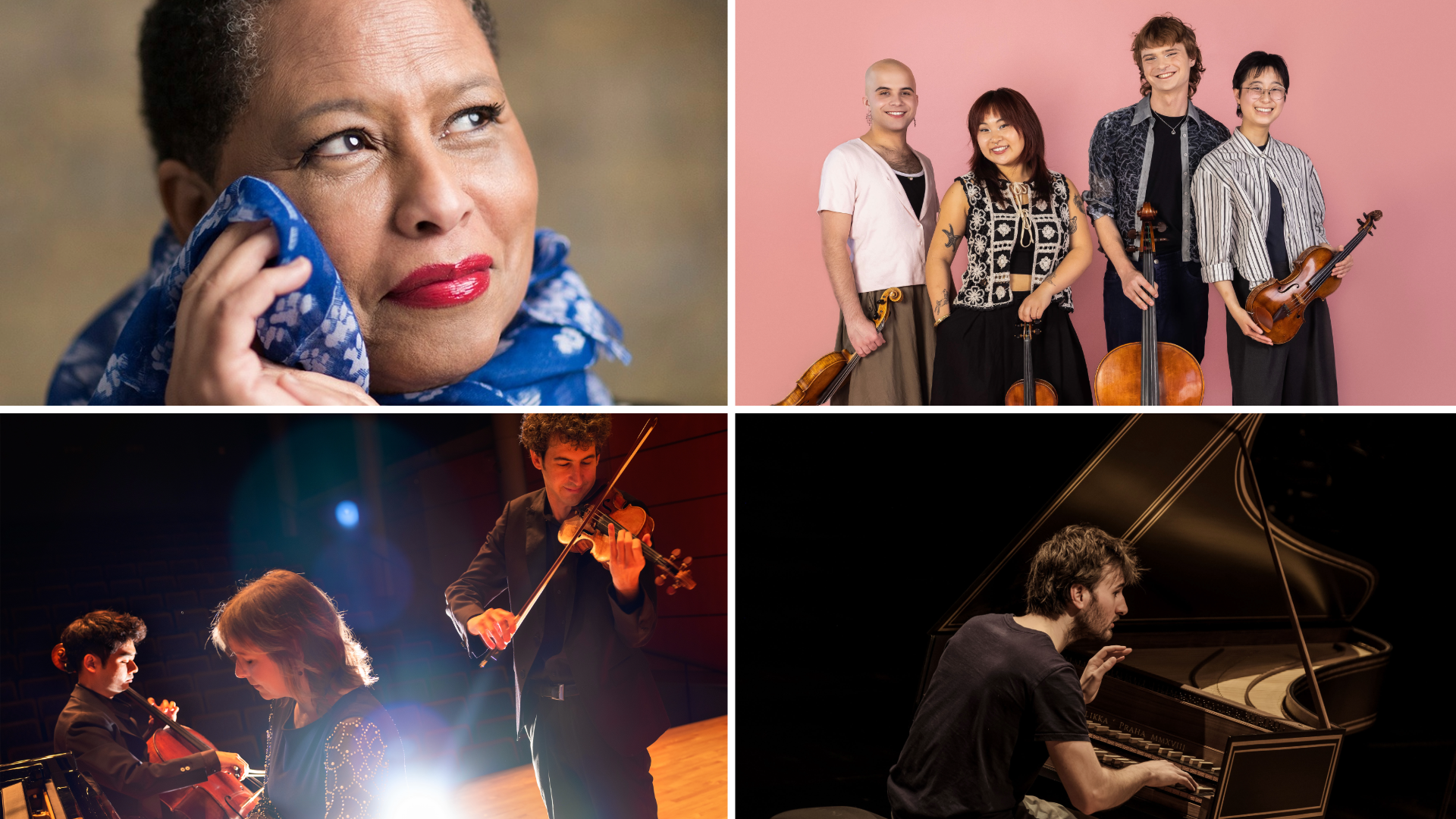
Clockwise from top left: Eleanor Alberga, Poiesis Quartet, Jean Rondeau, Lysander Piano Trio.
Press photos available here.
Isabella Stewart Gardner Museum’s Weekend Concert Series
November Performances
November 1: Eleanor Alberga with Green Room Ensemble
November 8: Poiesis Quartet – Boston Debut
November 15: Lysander Piano Trio
November 22: Jean Rondeau, Harpsichord
Isabella Stewart Gardner Museum | Calderwood Hall | 25 Evans Way | Boston, MA
Information & Tickets: gardnermuseum.org/music
For press tickets, please contact Christina Jensen at christina@jensenartists.com
BOSTON, MA – The Isabella Stewart Gardner Museum continues its Fall 2026 Weekend Concert Series with four performances in November. This ten-concert autumn season curated by Abrams Curator of Music George Steel is held on select Sundays at 1:30 pm and runs from September 13 through November 22, 2026. All concerts take place in the Museum’s extraordinary Calderwood Hall—a 300-seat “sonic cube” with three levels of balconies designed so that 80% of seats are front row, creating a uniquely intimate and intense acoustic environment.
Jamaican-British composer and pianist Eleanor Alberga, one of the most exciting composers writing in the U.K., takes the stage on Sunday, November 1 with the Green Room Ensemble—violinists Thomas Bowes and Nathan Meltzer, violist Jordan Bak, and cellist Sterling Elliott, who are all stars in their own right. The concert is part of the world premiere tour of Alberga’s Piano Quintet No. 2, “Stark,” and will also include her String Quartets Nos. 1, 2, and 3. Born in Kingston, Jamaica, Alberga studied at London’s Royal Academy of Music and was later Musical Director of London Contemporary Dance Theatre. She has been commissioned by the BBC Proms, The Royal Opera, and Covent Garden, among many others. Her Arise, Athena! opened the Last Night of the BBC Proms in 2015, and she was awarded an OBE in 2021 for services to British music. Of the premiere recording of her three string quartets, made by an ensemble led by Thomas Bowes, The Arts Desk reported, “if you’ve ever wondered if good string quartets are still being written, here’s proof that they are.”
Founded only in 2022, the Poiesis Quartet (violinists Sarah Ying Ma and Coco Mi, violist Jasper de Boor, and cellist Drew Dansby) has already become a much-talked-about force in classical music. In their Boston debut on Sunday, November 8, they tackle two landmarks of the repertoire—Ludwig van Beethoven’s final string quartet (a work full of good humor despite having been written in trying circumstances) and Sergei Prokofiev’s String Quartet No. 1. They also bring two recent works: Many Many Cadences, a bright and brilliant work by Sky Macklay, and Tapestry of the Beloved Beatified, a new commission from Jeff Scott, founding horn player of Imani Winds. The Poiesis Quartet won First Prize at the 2025 Banff International String Quartet Competition and was named among the best classical performances of 2025 by The New York Times. In 2026, the quartet also received the Cleveland Quartet Award, one of the most prestigious honors for a young American string quartet.
Formed while its members were students at Juilliard, the Lysander Piano Trio performs on Sunday, November 15, in a concert featuring music by the remarkable Swedish violinist-composer Amanda Maier, who knew and worked with Johannes Brahms and Edvard Grieg. The program also includes works by Grieg and Antonín Dvořák, alongside Two Nguni Dances by South African composer Bongani Ndodana-Breen, whom the Museum has commissioned in the past, and whose sophisticated style draws on sub-Saharan musical traditions, including those of the Xhosa clan, to which he belongs. The Lysander Piano Trio has been praised by The Washington Post for playing with “an uncommon degree of heart-on-the-sleeve emotional frankness.” The trio—violinist Itamar Zorman, pianist Liza Stepanova, and cellist James Kim—won the Concert Artists Guild Victor Elmaleh Competition and the Grand Prize at the Coleman Chamber Ensemble Competition, and takes its name from one of the young lovers in Shakespeare’s A Midsummer Night’s Dream.
The Gardner Museum’s Fall 2026 Weekend Concert Series concludes on Sunday, November 22 with superstar harpsichordist Jean Rondeau—perhaps the world’s most celebrated performer on the instrument—returning to Calderwood Hall for a survey of French Baroque treasures by Louis Couperin, Jean-Philippe Rameau, François Couperin, and Joseph-Nicolas-Pancrace Royer. Rondeau is a global ambassador for the harpsichord, and is at the forefront of bringing the instrument into the 21st century. The Washington Post raves, “He internalizes the music he plays so completely that any interpretive ambivalence or miscalculation is unthinkable. The sincerity and modesty of his delivery are the keys to its power.” At just 21, Rondeau became one of the youngest performers ever to win First Prize at the International Harpsichord Competition in Bruges. In a monumental undertaking, he recorded the complete works for harpsichord by Louis Couperin over ten albums, and has also devoted an entire album to Rameau and Royer, two of the other composers on this program.
George Steel’s music programming for the Museum continues founder and legendary arts patron Isabella Stewart Gardner’s vision of bringing together musicians and audiences for inspiring gatherings. Dating to 1927, the Gardner’s Weekend Concert Series is the longest-running museum music program in the country. Much like Isabella Stewart Gardner did in her time, Steel champions unknown repertoire and embraces new works, creates connections and builds community among musicians, and supports them by presenting them in new endeavors and collaborations. His programming also frequently draws on the history of the Gardner Museum, featuring instruments from the Museum’s collection and music by composers who were associated with its founder. In honoring Isabella Stewart Gardner’s musical legacy, Music at the Gardner remains strongly committed to broadening the repertoire of music presented to include previously overlooked and marginalized composers as well as performers of all backgrounds.
Fall 2026 At-a-Glance Concert Schedule
September 13: Rachel Barton Pine, violin
September 20: Twelfth Night Ensemble
September 27: Chamber Music Celebration
This annual concert celebrates the life and legacy of Scott Nickrenz, first Abrams Curator of Music at the Isabella Stewart Gardner Museum.
October 4: Ivalas Quartet
October 18: ACRONYM: Esther in the Age of Rembrandt
October 25: Celebrating Chrysanthemums
This performance is made possible by the Anne Hawley Fund for Programs.
October 29: Georg Friedrich Haas's in vain performed by Alarm Will Sound, conducted by Alan Pierson – Thursday Night Music
November 1: Eleanor Alberga with Green Room Ensemble
November 8: Poiesis Quartet
November 15: Lysander Piano Trio
November 22: Jean Rondeau, harpsichord
This concert is made possible by the generous support of David Scudder in memory of his wife, Marie Louise Scudder.
All concerts take place on Sundays at 1:30 pm in Calderwood Hall at the Isabella Stewart Gardner Museum (25 Evans Way, Boston, MA), except for the October 29 Thursday Night Music concert which starts at 7 pm.
Ticketing Information
Tickets ($25-$99) are available at gardnermuseum.org/about/music or by calling the Box Office at 617 278 5156. All concert tickets include Museum admission.
About the Isabella Stewart Gardner Museum
The Isabella Stewart Gardner Museum invites you to escape the ordinary in a magical setting where art and community come together to inspire new ways of envisioning our world. Embodying the fearless legacy of its founder, the Museum offers a singular invitation to explore the past through a contemporary lens, creating meaningful encounters with art and joyful connections for all. Modeled after a Venetian palazzo, unforgettable galleries surround a luminous Courtyard and are home to masters such as Rembrandt, Raphael, Titian, Michelangelo, Whistler, and Sargent. The Renzo Piano Wing provides a platform for contemporary artists, musicians, and scholars and serves as an innovative venue where creativity is celebrated in all of its forms.
Isabella Stewart Gardner Museum • 25 Evans Way, Boston, MA 02115 • Hours: Open Weekends from 10 am to 5 pm, Weekdays from 11 am to 5 pm, and Thursdays until 9 pm. Closed Tuesdays. • General admission: Adults $25; Seniors $22; Students $15; Free Thursdays from 5 – 9 pm and for members, children 17 and under, and everyone named Isabella • Information: 617 566 1401 • Box Office: 617 278 5156 • www.gardnermuseum.org
Music at the Gardner is supported by the Nora McNeely Hurley Foundation. The Museum thanks its generous concert donors: The Coogan Concert in memory of Peter Weston Coogan; Fitzpatrick Family Concert; James Lawrence Memorial Concert; Scott Nickrenz Concert; Alford P. Rudnick Memorial Concert; David Scudder in memory of his wife, Marie Louise Scudder; Wendy Shattuck Young Artist Concert; and Willona Sinclair Memorial Concert. The piano is dedicated as the Alex d’Arbeloff Steinway. The harpsichord was generously donated by Dr. Robert Barstow in memory of Marion Huse, and its care is endowed in memory of Dr. Barstow by The Barstow Fund. Music at the Gardner is also supported in part by Barbara and Amos Hostetter, Joseph Mari, Sallie and Jim McGregor, Nicie and Jay Panetta, and The Aaron Copland Fund for Music, Inc.
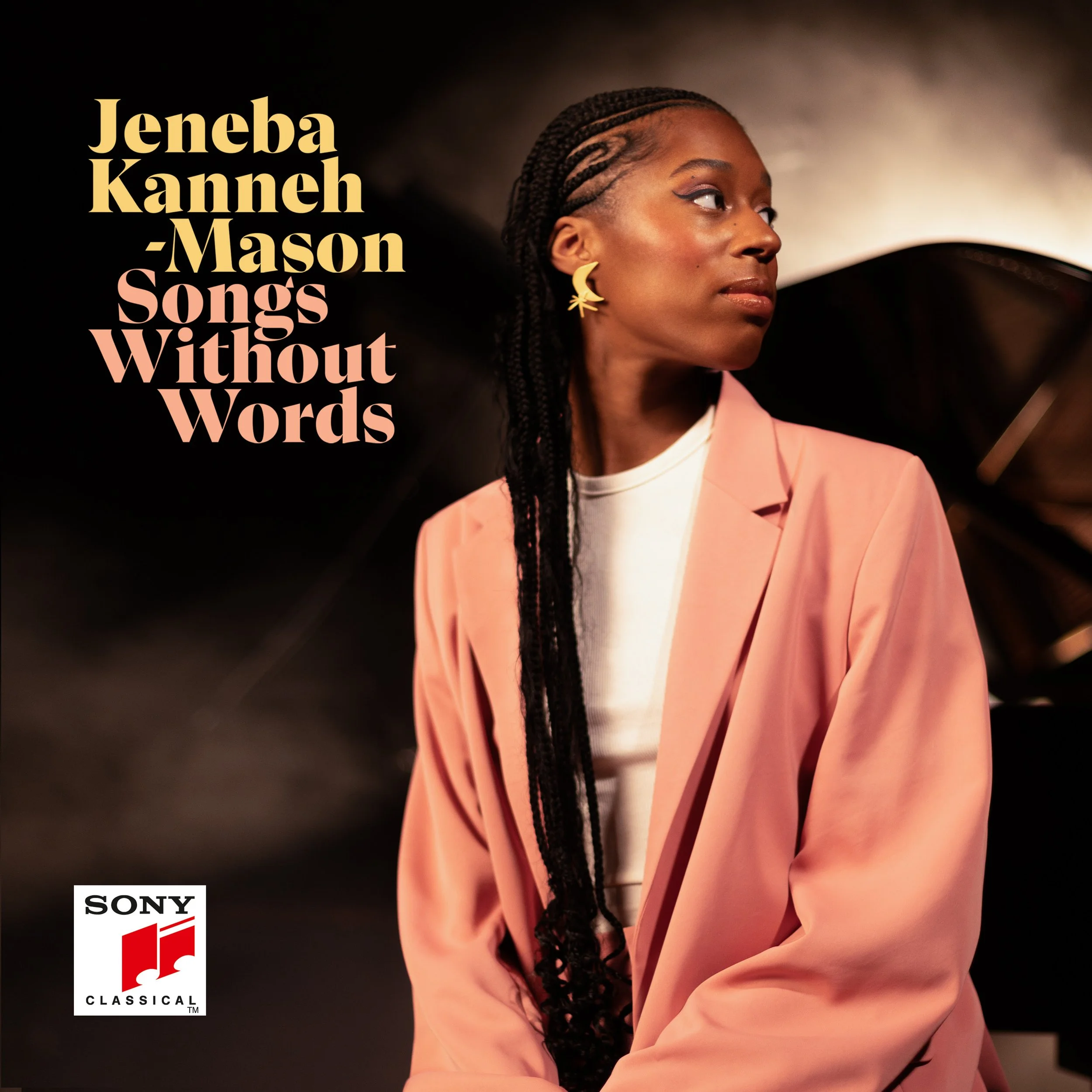
OUT TODAY: Acclaimed UK Pianist Jeneba Kanneh-Mason Releases Songs Without Words EP on Sony Classical
OUT TODAY: Acclaimed UK Pianist Jeneba Kanneh-Mason Releases Songs Without Words EP on Sony Classical
Acclaimed UK Pianist Jeneba Kanneh-Mason
Releases Songs Without Words EP on Sony Classical
Out Today - Listen Here
Album Release Date: Out Today
Thoughtfully curated by the artist, Jeneba Kanneh-Mason’s new EP, Songs Without Words – out today, listen here, brings together music by Felix Mendelssohn, Florence Price, Margaret Bonds, Camille Saint-Saëns and Nina Simone, continuing Jeneba's passion for championing overlooked voices and tracing the evolution of the Songs Without Words tradition across generations, musical styles and genres.
To acknowledge the origins of the genre Songs Without Words, Jeneba Kanneh-Mason has chosen Felix Mendelssohn’s Song Without Words in G major, Op. 62 No. 1 Andante espressivo. Felix Mendelssohn (1809-1847) and his sister, Fanny Hensel Mendelssohn (1805-1847) were among the first composers to write ‘Lieder ohne Worte’, Felix Mendelssohn writing eight volumes of six songs, which became hugely popular.
Continuing her commitment to championing music by black women composers and bringing their often-overlooked repertoire to a wider audience, Jeneba returns to African American composers, Florence Price (1887-1953) and Margaret Bonds (1913-1972), both of whom were featured on her debut Sony Classical album, Fantasie. For Songs Without Words, she has chosen two rarely recorded works by Price: Song Without Words in G major ‘Pleading’ (c. 1928) and the lyrical yet dramatic Song Without Words in A major (1932). These sit alongside Bonds' The Bells, the second movement from her Spiritual Suite for Piano and based on the spiritual Peter, Go Ring Dem Bells, which Bonds developed into an elaborate piano piece.
Jeneba also showcases the Theme from Samson and Delilah by Saint-Saëns, famously performed by Nina Simone in the artist’s own arrangement of this work as a solo piano piece during her 1963 debut solo concert at New York’s Carnegie Hall. In a fitting tribute to Nina Simone, Jeneba recently performed this work while making her own debut at the Hollywood Bowl.
Jeneba Kanneh-Mason, of whom Gramophone wrote: “her future will surely be dazzling” and who impressed BBC Music Magazine with her “sparkle and self-possession”, made her mark in March 2025 with her acclaimed debut album on Sony Classical, Fantasie, featuring works by Frederic Chopin, Florence Price, Margaret Bonds, William Grant Still, Claude Debussy and Alexander Scriabin of which International Piano magazine noted “…This is a debut recording of exceptional bravura and insight… Already she compels attention” . This much in-demand young artist and member of the supremely talented Kanneh-Mason family of musicians, followed it in December 2025 with an exceptionally fine self-curated EP, Jane Austen’s Piano, exploring the musical world of fellow pianist and world-famous author, Jane Austen, released for the 250th anniversary of the writer’s birth.
Songs Without Words Tracklist:
1. Felix Mendelssohn: Lieder ohne Worte V, op. 62: I. Andante espressivo
2. Florence Price: Song Without Words in A Major
3. Margaret Bonds: Spiritual Suite: II. The Bells
4. Florence Price: Song Without Words in G Major (Pleading)
5. Camille Saint-Saëns: Theme from Samson and Delilah (arr. Nina Simone)
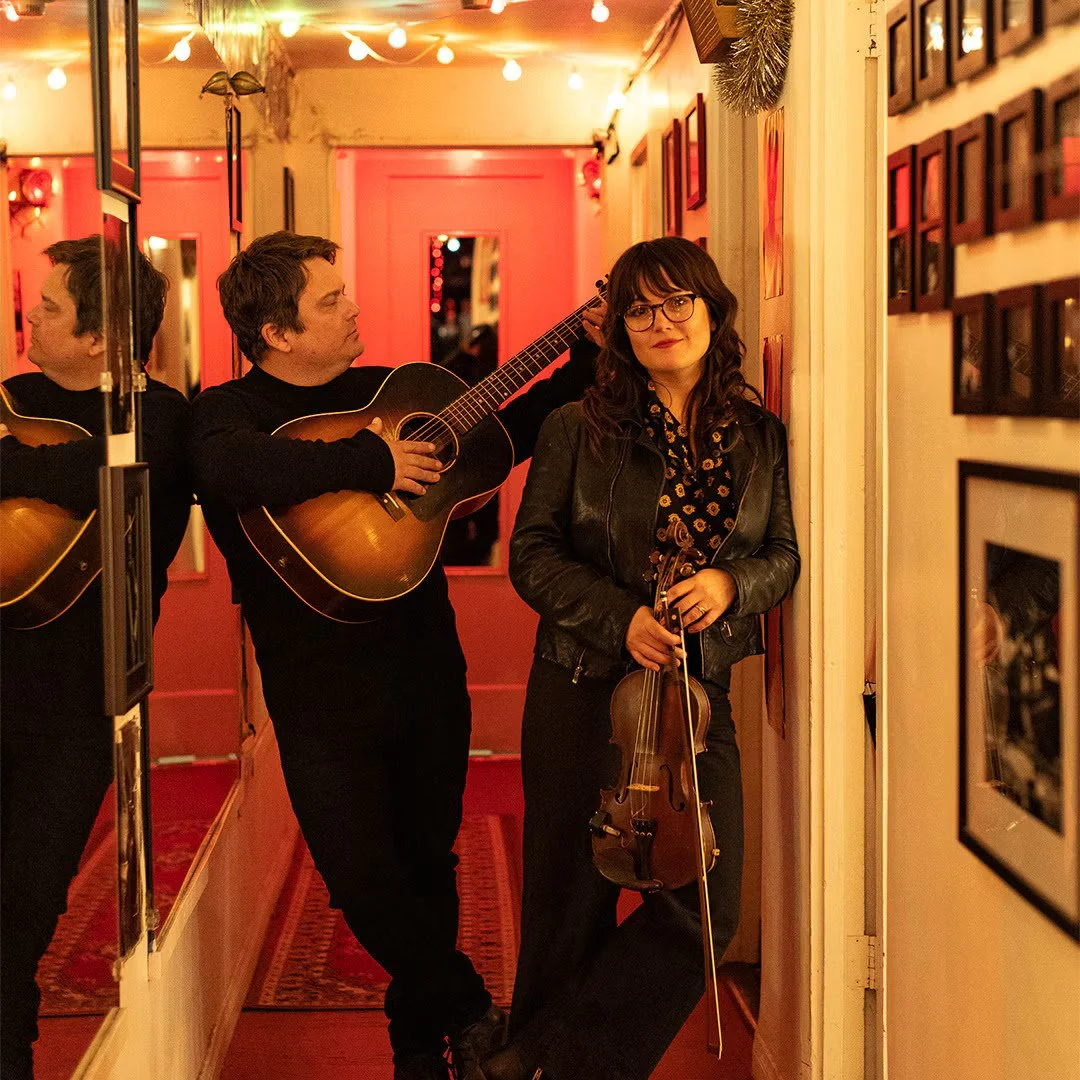
Dec. 5: Caramoor’s Annual Rosen House Benefit Concert Features Watkins Family Hour
Dec. 5: Caramoor’s Annual Rosen House Benefit Concert Features Watkins Family Hour
Photo of Sara and Sean Watkins of Watkins Family Hour by Jacob Boll
Caramoor’s Annual Rosen House Benefit Concert
Features Watkins Family Hour
Saturday, December 5, 2026 at 8:00pm
Caramoor Center for Music and the Arts | Rosen House
149 Girdle Ridge Road | Katonah, NY
Tickets & Information
KATONAH, NY – Caramoor, a vibrant cultural destination nestled on 81 acres of historic gardens and woodlands in Katonah, NY, presents its annual Rosen House Benefit Concert featuring a performance by Watkins Family Hour (Sara Watkins, violin, vocals; Sean Watkins, guitar, vocals) on Saturday, December 5, 2026 at 8:00pm. Once the estate of music and art lovers Walter and Lucie Rosen, Caramoor is one of the region’s most distinctive destinations for live performance, cultural engagement, and exploration. Caramoor’s Rosen House Concert Series runs from October through May, held in the exquisite Music Room of the historic home – a Mediterranean-style villa from 1939 filled with treasures from around the world. Audiences enjoy performances by some of today’s most in-demand artists in the same salon setting where the Rosens once entertained their many friends.
California siblings Sara and Sean Watkins have factored into some of the most accomplished and creative ensembles of the last two decades (GRAMMY®-winning groups Nickel Creek and I’m With Her), in addition to their own solo albums. Born out of their legendary residency at Los Angeles’s Largo nightclub, the two songwriters and multi-instrumentalists translate the intimacy of a front-porch picking party into an Americana masterclass. Featuring virtuosic interplay, soulful harmonies, and an ever-evolving repertoire, the Watkins siblings capture the essence of American roots music.
Since the first Watkins Family Hour show in 2002, the duo has released three studio albums, debuting with their self-titled album in 2015, following with Brother Sister in 2020 and Vol. II in August 2022. Sean and Sara recorded Vol. II at Los Angeles’s EastWest Studios in early 2022 alongside a stacked roster of longtime and new Family Hour collaborators, including Fiona Apple, Jackson Browne, Madison Cunningham, Lucius, Jon Brion and more. Watkins Family Hour remains an invaluable resource and respite for both Sean and Sara, offering a familiar but ever-evolving space to test new ideas, meet new collaborators and, most importantly, have a good time doing what they love.
A pre-concert Benefit Dinner also offers a way to support Caramoor in an even more meaningful way. Chef Andrea Calstier, Michelin-Starred Chef & Founder of La Bastide by Andrea Calstier, in North Salem, NY, will be preparing the evening’s dinner. Caramoor’s most ardent supporters will enjoy a three-course meal, fine wine, and conversation.
Born and raised in Marseille, Chef Andrea Calstier’s cooking is deeply rooted in the soulful, sun-soaked traditions of Provence—shaped by a reverence for terroir, seasonality, and thoughtful restraint. He began cooking professionally at just 15, training in some of France’s most esteemed Michelin-starred kitchens. His pursuit of excellence later brought him to New York, where he refined his skills under Chef Daniel Boulud at the acclaimed Restaurant Daniel. Chef Calstier’s cooking is guided by precision, heart, and a deep respect for ingredients – a philosophy built into La Bastide that helped to earn the restaurant a Michelin star in only its first year. Caramoor is thrilled to have Chef Calstier crafting this year’s dinner, bringing his culinary skill and creativity to this special evening.
Tickets for the Benefit Concert begin at $125. Ticket holders at the $500 level and up are invited to a post-concert reception with the artists. Tickets that include the pre-concert Benefit Dinner ($2500) can be purchased by selecting “orange” level seating when buying tickets for the concert via Caramoor’s website, or by contacting the Special Events Office at 914-232-1492 or events@caramoor.org.
Please note, as this is a Benefit Concert, there are no refunds or ticket exchanges. For those unable to use their tickets, they will be converted to a contribution in support of Caramoor’s programming.
About Caramoor
Caramoor Center for Music and the Arts is a vibrant cultural destination nestled on 81 acres of historic gardens and woodlands in Katonah, NY. Once the home of music and art lovers Walter and Lucie Rosen, Caramoor has evolved into one of the region’s most distinctive destinations for live performances, cultural engagement, and exploration – a sanctuary for music, art, and nature.
Each year, Caramoor presents an exciting array of concerts across genres – from classical, opera, and chamber music to jazz, American roots, global sounds, and the American songbook. Caramoor’s acclaimed Summer Season brings audiences together for unforgettable outdoor performances from June into August in five distinct settings (the Venetian Theater, Friends Field, Spanish Courtyard, Sunken Garden, and the Music Room), while the intimate Rosen House Concert Series runs from October through May in the historic Rosen House, a Mediterranean-style villa listed on the National Register of Historic Places and filled with treasures from around the world. With a mission to engage audiences of all ages, Caramoor also offers a selection of concerts and programs for families and our youngest listeners. Caramoor’s concert schedule is available at caramoor.org/events/concerts.
Caramoor is a place where music, history, and nature come together to create moments of beauty and connection for all who visit. Caramoor has expanded its Beyond the Music slate of community and family programming to include tours, teas, yoga, and more, giving visitors a wide variety of ways to experience this unique setting in addition to its world-class concerts. In addition to hearing concerts, visitors to Caramoor can tour the spectacular Rosen House, explore its intriguing collections, enjoy a picnic, and experience the lush gardens and grounds – including Caramoor’s unique collection of site-specific Sound Art, permanently installed sound sculptures that draw inspiration from their environment. Caramoor also offers a formal afternoon tea service year-round in the Music Room (by reservation), the seasonal summer concessions Bravo Bar, and a selection of public programs such as yoga, art classes, and large-scale community events. Beyond the Music programs are announced on a rolling basis at caramoor.org/events/beyond-the-music.
Caramoor’s official digital guide is available on Bloomberg Connects, the free arts and culture app from Bloomberg Philanthropies, via the Apple App Store or Google Play Store. The guide invites visitors to explore the estate at their own pace, with a 23-stop, one-mile walking tour. The app requires no ticket, login, or subscription. Visitors can walk the entire tour without a ticket or reservation.
Ticketing Information
Concert tickets are available for purchase online at caramoor.org; by phone at 914.232.1252 Tuesdays through Fridays from 10am-4pm; and on site from the Box Office two hours before each performance.
Caramoor is located at 149 Girdle Ridge Road in Katonah, NY.
How to get to Caramoor: caramoor.org/visit-us/amenities
More information about visiting Caramoor: caramoor.org/visit
At-a-Glance Calendar: 2026-27 Rosen House Concert Series Performances
Friday, October 2, 2026 at 7:30pm: Nobuntu
Friday, October 16, 2026 at 7:30pm: Bandits on the Run
Sunday, October 18, 2026 at 3:00pm: Countertenor Iestyn Davies and Harpist Oliver Wass
Sunday, October 25, 2026 at 3:00pm: Pianist Jonathan Biss
Saturday, October 31 and Sunday, November 1, 2026 at 3:00pm: Evnin Rising Stars
Friday, November 6, 2026 at 7:30pm: Pianist Aaron Diehl
Sunday, November 15, 2026 at 3:00pm: Renaissance Quartet
Sunday, December 6, 2026 at 2:00pm and 4:00pm: Christmas with Cantus
Sunday, March 7, 2027 at 3:00pm: Schwab Vocal Rising Stars
Sunday, April 4, 2027 at 3:00pm: Viano Quartet
Friday, April 9, 2027 at 7:30pm: The Summer Camargo Quintet
Sunday, April 11, 2027 at 3:00pm: ACRONYM and Countertenor Reginald Mobley
Sunday, April 25, 2027 at 3:00pm: Pianist Inon Barnatan
Sunday, May 2, 2027 at 3:00pm: Renaissance Quartet
Friday, May 7, 2027 at 7:30pm: Sister Sadie
Friday, May 14, 2027 at 7:30pm: Cabaret in the Music Room with Vocalist Mandy Gonzalez
For Caramoor's complete schedule, including the Rosen House Concert Series and Beyond the Music events: caramoor.org/events/calendar
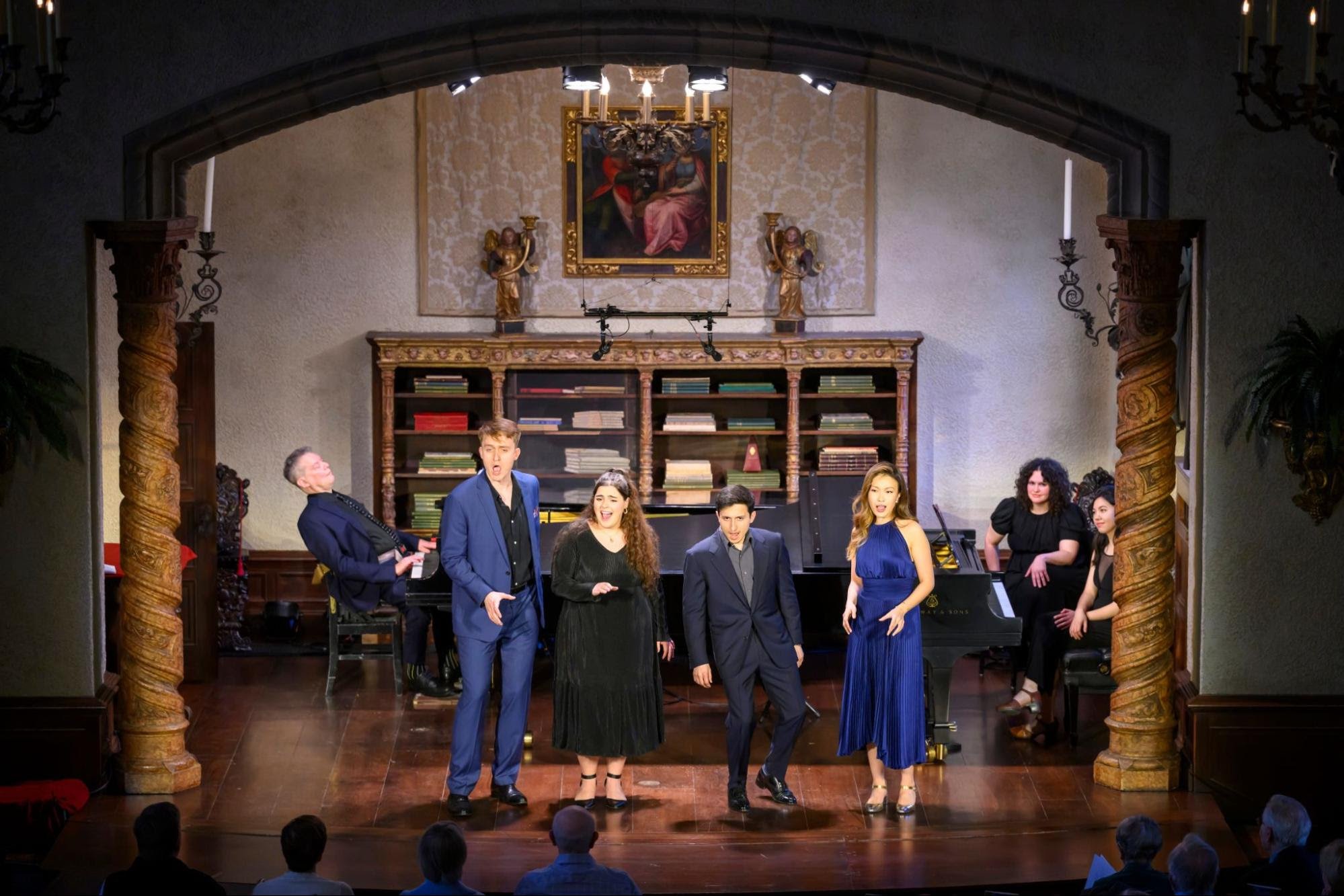
Caramoor’s Rosen House Concert Series runs from October through May, held in the exquisite Music Room of the Rosens’ historic home – a Mediterranean-style villa from 1939 filled with treasures from around the world.
Photo by Gabe Palacio available in high resolution here.
GatherNYC Announces 2026–2027 Season Now Presented at New Home Venue Jazzcultural – 31 Concerts Every Sunday at 11am
GatherNYC Announces 2026–2027 Season Now Presented at New Home Venue Jazzcultural – 31 Concerts Every Sunday at 11am
GatherNYC Announces 2026–2027 Season
Now Presented at New Home Venue Jazzcultural
31 Concerts – Held Weekly, Every Sunday Morning at 11AM
from October 25, 2026 through May 30, 2027
“thoughtful, intimate events curated with refreshing eclecticism by its founders, the cellist Laura Metcalf and the guitarist Rupert Boyd, complete with pastries and coffee” – The New Yorker
“A sweet chamber music series” – The New York Times
“Impressive Aussie/American led concert series proves music can be a religion.”
– Limelight Magazine
Jazzcultural | 349 West 46th St | New York, NY 10036
Tickets & Information: www.gathernyc.org
New York, NY – GatherNYC, a revolutionary concert experience founded in 2018 by cellist Laura Metcalf and guitarist Rupert Boyd, announces its 2026–2027 season featuring 31 concerts, with performances held every Sunday at 11am from October 25, 2026 to May 30, 2027. After five years at the Museum of Arts and Design, GatherNYC is moving to Jazzcultural, a new listening room in the heart of Manhattan located at 349 West 46th St. The season opens on October 25 with a performance by Metcalf and Boyd’s cello and guitar duo Boyd Meets Girl with violinist Doori Na and pianist Vanessa Perez, playing a festive program called Seasons. Coffee and pastries are served before each concert at 10:30am. Admission for children under 12 is free.
Guests at GatherNYC are served exquisite live classical music performed by New York’s immensely talented artists, artisanal coffee and pastries, a taste of the spoken word, and a brief celebration of silence. The entire experience lasts one hour and evokes the community and spiritual nourishment of a religious service – but the religion is music, and all are welcome.
Spoken word artists perform briefly at the midpoint of each concert, many of them winners of The Moth StorySLAM events. “It’s an interesting moment of something completely different from the music, and it often connects with the audience,” Metcalf told Strings magazine in a feature about the series. “Then we have a two-minute celebration of silence when we turn the lights down, centering ourselves in the center of the city. Then the lights come back on, and the music starts again out of the silence. We find that the listening and the feeling in the room changes after that.”
Metcalf and Boyd say, “We are thrilled to be offering 31 concerts throughout our 2026–2027 season, in our gorgeous new home venue, Jazzcultural. This exquisite, all-wood room designed for intimate listening is a perfect space for us. In these challenging times, we feel it’s essential to provide our community with a gathering place each week where we can enjoy world-class artists together in an intimate, unique setting – complete with spoken word, silence, coffee and a communal, welcoming environment. We look forward to welcoming new and old friends week after week.”
GatherNYC 2026–2027 Schedule – All Concerts Held on Sundays at 11AM:
October 25, 2026: Boyd Meets Girl feat. Doori Na, violin and Vanessa Perez, piano – Seasons
To kick off the 31-concert season of weekly concerts, Artistic Directors Laura Metcalf (cello) and Rupert Boyd (guitar) are joined by acclaimed musicians Doori Na (violin) and Vanessa Perez (piano) for a festive concert celebrating the seasons. The eclectic program pairs beloved favorites by Vivaldi, Piazzolla and Gershwin with modern delights by Yaz Lancaster, Joe Hisaishi and more.
November 1: Rupert Boyd, guitar
GatherNYC Co-Artistic Director Rupert Boyd shares an exquisite and eclectic mix of music for guitar, ranging from J.S. Bach to Astor Piazzolla to The Beatles, and from his homeland of Australia to Andalusia, Spain. Described by Classical Guitar Magazine as “a player who deserves to be heard,” Boyd will give a concert not to be missed.
November 8: Trio Candesco
The newly formed Trio Candesco, made up of distinguished instrumental faculty of Princeton University (Sarah Shin, flute; Jessica Thompson, viola; Jacqueline Kerrod, harp), performs a beloved masterpiece by Debussy alongside lesser-known but brilliant works for this uniquely colorful instrumentation.
November 15: Arcis Saxophone Quartet
Coming to GatherNYC all the way from Munich, Germany, the Arcis Saxophone Quartet is an internationally acclaimed ensemble that has won most of the major European chamber music competitions and whose creativity knows no bounds. They have shared their unique concerts and repertoire all over the world, from Ecuador to Saudi Arabia to Berlin and Bavaria, in prestigious halls and non-traditional venues alike. They even founded their own in-house record label through which they have released two critically acclaimed albums.
November 22: Fire & Grace
Fire & Grace is a unique collaboration between guitarist William Coulter and violinist Edwin Huizinga. These virtuoso performers explore the musical landscape of classical, folk, and contemporary traditions from around the world. Fire & Grace’s repertoire is vast, ranging from Bach to Vivaldi, tango to Celtic reels, traditional Bulgarian to American fiddle tunes and waltzes, all played with a sense of discovery and commitment to the elements of passion and virtuosity – fire and grace – found in these diverse traditions.
November 29: Horszowski Trio
The Horszowski Trio – violinist Jesse Mills, cellist Ole Akahoshi, and pianist Rieko Aizawa – brings a rare combination of virtuosity, warmth, and adventurous programming to the chamber-music stage. Named for legendary pianist Mieczysław Horszowski, who was Rieko Aizawa’s teacher and mentor, the New York–based trio has earned international acclaim for performances that make both beloved classics and contemporary music come alive. Their repertoire spans Schubert, Schumann, Dvořák, Ravel, and Haydn as well as music by living composers, including works written especially for the ensemble. They have toured extensively in the U.S., Europe, and Asia, premiered new works by composers including Charles Wuorinen, and released acclaimed recordings – including the complete Schumann piano trios.
December 6: Jennifer Koh, violin and Andrius Zlabys, piano
GRAMMY Award–winning international violin soloist Jennifer Koh, world-renowned for her dazzling technique and intensely expressive performances, moves fearlessly between the great works of the violin repertoire and bold new music. Koh has commissioned and premiered more than 100 new works, collaborating with some of today’s most exciting composers, and brings extraordinary curiosity, intensity, and imagination to everything she plays. For this recital, she joins acclaimed pianist Andrius Zlabys, a dynamic musical partner whose artistry and sensitivity make for an exciting collaboration.
December 13: Jeff Beal and The Overlook Quartet – New York Études
Five-time Emmy Award–winning composer Jeff Beal is a rare musical chameleon, equally at home in jazz, classical music, and the world of film and television. Best known for the haunting, atmospheric music of House of Cards, as well as scores for Monk, Rome, and Carnivàle, Beal brings the same rhythmic energy and cinematic imagination to his concert music. In this special performance, he joins GatherNYC regulars The Overlook Quartet for New York Études – a vivid, genre-crossing portrait of the city, where piano and strings meet in music shaped by jazz, improvisation, and the sounds of New York.
December 20: Timo Andres and Friends – Andres and Bacewicz
Internationally acclaimed pianist and composer Timo Andres brings his distinctive musical voice to the stage in an intimate program of his own solo piano works, followed by a performance of Grażyna Bacewicz’s first piano quintet. He is joined by violinist Mari Lee, violist Celia Hatton, and cellist Laura Metcalf for this thrilling, under-the-radar masterpiece: a fiercely energetic, emotionally charged work that moves from driving rhythms and brilliant virtuosity to moments of startling beauty. This riveting and affecting piece is one that deserves to be heard live.
January 3, 2027: Duo Étrange
Duo Étrange – soprano Vanessa Croome and cellist Sahara von Hattenberger – creates an intimate, adventurous sound world where voice and cello meet in unexpected ways. Their programs embrace the experimental and the deeply expressive, bringing contemporary music to life with a spirit of curiosity and discovery. Featuring works by Kebra-Seyoun Charles and David T. Little alongside other surprises, this is a chance to hear two remarkable artists exploring just how much sound, color, and emotion can come from only two performers.
January 10: Edmar Castañeda
Harpist and composer Edmar Castañeda brings his one-of-a-kind sound to GatherNYC. A Colombian-born virtuoso who has collaborated with artists ranging from Wynton Marsalis and Béla Fleck to Sting and Hiromi, Castañeda has transformed the harp into a dazzling vehicle for jazz, Colombian folk traditions, and improvisation. A Latin GRAMMY nominee and performer and musical consultant for Disney’s Encanto, he is known for playing bass, harmony, and melody simultaneously – a virtuosic approach that makes the harp sound like an entire ensemble.
January 17: Kittel & Co.
Led by GRAMMY-nominated violinist and composer Jeremy Kittel, Kittel & Co. brings together virtuosic string playing and a wildly imaginative blend of Celtic, bluegrass, folk, jazz, and classical music. Their debut album Whorls reached the Top 10 on Billboard’s Classical chart and #1 on the Bluegrass chart, while Kittel’s composition Chrysalis earned a 2019 GRAMMY nomination for Best Instrumental Composition. Kittel & Co. turn intricate arrangements, dazzling improvisation, and traditional string-band energy into something completely their own. As The Times (UK) put it, they bring “rarefied levels of collective virtuosity” and sound “thrillingly spontaneous.”
January 24: The Rhythm Method
Fierce, fearless, and virtuosic, The Rhythm Method is redefining what a string quartet can be. Praised by The New Yorker as “trailblazing” and by NewMusicBox for their “unapologetically stylistically omnivorous” artistry, this NYC-based ensemble blends composition, improvisation, vocalization, and theatricality into performances that are as adventurous as they are compelling. They have appeared at the Met Museum, Joe’s Pub, Roulette, The Stone, and the Noguchi Museum, and performed internationally at the Lucerne Festival Forward. Much of their repertoire is composed by the quartet members themselves, in which tightly composed passages give way to spontaneous improvisation and all manner of extended string techniques.
January 31: Sterling Elliott, cello and Elliot Wuu, piano
Cellist Sterling Elliott brings to the stage a rare combination of extraordinary virtuosity, depth of expression, and joyous musicianship. A winner of the Sphinx Competition and recipient of an Avery Fisher Career Grant, Elliott has quickly established himself as one of the most compelling young artists of his generation. His playing is distinguished by its richness of sound, emotional immediacy, and remarkable technical command. For this recital, Elliott is joined by pianist Elliot Wuu, an award-winning young artist.
February 7: The Overlook Quartet Album Release – Say It
The paradigm-shifting string quartet returns to GatherNYC to celebrate the release of their debut album, Say It, which features world-premiere recordings of works by Shelley Washington, Trevor Weston, Leila Adu, Carlos Simon and more. Known for their captivating performances that shine a spotlight on voices beyond the “standard” classical repertoire, The Overlook takes the audience on a journey through unexpected, surprising and beautiful musical terrain.
February 14: String Noise Duo + Nathan Schram, viola & composer
Composed of Conrad Harris and Pauline Kim Harris, two violinists who are integral to the New York contemporary music landscape, String Noise gives the world premiere of a set of violin duos written for them by multi-GRAMMY-winning violist and composer Nathan Schram, who will also share a solo performance on this concert.
February 21: PUBLIQuartet
The New York–based, GRAMMY-nominated PUBLIQuartet fuses classical strings with jazz, improvisation, hip-hop, rock, and global sounds – and has performed everywhere from Carnegie Hall and Lincoln Center to the Newport and Detroit Jazz Festivals. They won Chamber Music America’s prestigious 2019 Visionary Award, their album What Is American earned a 2023 GRAMMY nomination, and their wildly inventive appearance on The Late Show with Stephen Colbert – improvising a live soundtrack to a presidential debate – racked up more than a million views. This is the group’s first appearance on the GatherNYC series in five years.
February 28: Rebekah Heller, bassoon – Righteous Rage
Rebekah Heller’s Righteous Rage turns the bassoon into an entire world of sound. Playing every bassoon herself through intricate multitracking, Heller creates a thrilling bassoon choir that ranges from Julius Eastman’s ecstatic The Holy Presence of Joan d’Arc and Steve Reich’s hypnotic Grand Street Counterpoint – co-produced with Reich – to three newly commissioned works by Jessie Cox, Fay Victor, and Brittany J. Green. Fierce, immersive, and unexpectedly visceral, Righteous Rage is a love letter to an instrument never heard quite like this before.
March 7: Palaver Strings with Vuyo Sotashe & Chris Pattishall
GRAMMY-nominated Palaver Strings returns once again to the GatherNYC stage, this time joining forces with acclaimed South African jazz vocalist Vuyo Sotashe and GRAMMY-nominated pianist and composer Chris Pattishall for Incwadi – a vibrant musical portrait of South Africa. Traditional songs in Zulu, Sepedi, and Xhosa meet South African choral and jazz repertoire and Sotashe’s own music, all freshly arranged by Pattishall for voice, piano, and strings. The result is an exhilarating conversation between South African traditions, American jazz, and the intimacy of chamber music – music rich in memory, rhythm, and joy.
March 14: Merz Trio
Winner of the Naumburg, Fischoff, Concert Artists Guild, and Chesapeake competitions, Merz Trio has become known for turning chamber music into a fully immersive artistic experience. Their programs connect great works with poetry, theater, dance, and unexpected musical discoveries, while their own arrangements bring overlooked voices – from Lili Boulanger to Joséphine Baker – to the foreground.
March 21: Bergamot Quartet, Hardanger fiddles + James Moore, guitar
Bergamot Quartet brings the hypnotic sound of Norwegian Hardanger fiddles to GatherNYC, joined by James Moore on resonator guitar. Expect ringing overtones, earthy grooves, and virtuosic interplay as Scandinavian folk traditions meet the raw, resonant sound of American roots music. Music by Bach, Moore, and more.
March 28: Mikael Darmanie, piano
A prizewinner in multiple national and international competitions, pianist Mikael Darmanie brings extraordinary range and restless curiosity to the keyboard. Darmanie has performed at Carnegie Hall, Moscow Conservatory’s Rachmaninov Hall, Merkin Hall, Lincoln Center, and many more. He is also a composer, conductor, DJ, and keyboardist for the genre-defying Warp Trio, moving fluidly among classical music, jazz, hip-hop, rock, and electronic music. His concert for GatherNYC will meld his signature “Lisztian pyrotechnics” (New York Classical Review) with creative, adventurous programming.
April 4: Devony Smith, mezzo-soprano + Danny Zelibor, piano – Yonder
Following their 2025 GRAMMY nomination for their debut album In This Short Life, Smith and Zelibor share their newest program Yonder, featuring the world premiere of a folk-inspired song cycle written for them by NYC-based composer Shanan Estreicher.
April 11: Karen Ouzounian + Lembit Beecher – Mayrig
Mayrig – “mother” in Armenian – is an intimate, immersive journey through memory, family, and the Armenian diaspora. Cellist and vocalist Karen Ouzounian and composer Lembit Beecher weave recordings of Ouzounian’s mother and grandmother together with Armenian songs from her family’s ancestral home in Anatolia, music from post-genocide Lebanon, Charles Aznavour, and vivid new works by Beecher, Layale Chaker, Nathalie Joachim, Niloufar Nourbakhsh, and Ouzounian herself. Blending cello, voice, piano, electronics, stories, and soundscapes, Mayrig transforms one family’s history of migration and survival into a profoundly moving and universal musical experience.
April 18: WindSync
Founded at Rice University in 2009, WindSync launched their international career by winning both the Concert Artists Guild and Fischoff National Chamber Music competitions. They have since performed at Carnegie Hall, the Met, the Library of Congress, and Ravinia – and their 2024 album, recorded at Abbey Road Studios, debuted at No. 1 on the Billboard Classical chart. But WindSync is anything but conventional: they perform frequently from memory, commission and arrange much of their own repertoire, and bring a charismatic, personal stage presence that breaks down the distance between performers and audience and revolutionizes the art of the woodwind quintet.
April 25: Zodiac Trio
The Zodiac Trio – clarinet, violin, and piano – brings a rare combination to the concert stage, pairing virtuosic performances with adventurous programming that moves from beloved masterpieces to hidden gems, new commissions, and unexpected arrangements. The ensemble became the first North American group – and the first ensemble with a wind instrument – to enter the Ysaÿe Quartet’s celebrated chamber music program at the Paris Conservatory. Nearly two decades later, their performances continue to combine dazzling technique, infectious energy, and the thrill of hearing familiar chamber music in an entirely new color palette.
May 2: Mike Block + Yacouba Sissoko
Cellist Mike Block, a GatherNYC fan favorite, returns to the series with an exciting new collaboration. Block will be joined by Malian kora player Yacouba Sissoko, known for mastering and modernizing the instrument, collaborating with the likes of Paul Simon, Lauryn Hill, and Harry Belafonte. The duo will perform music written by both of them, combining classical training with a global, genre-expansive sensibility.
May 9: Audrey Wright, violin – Luminous Being
What if you could see music? In Luminous Being, New York Philharmonic violinist Audrey Wright transforms the traditional solo recital into an immersive journey of sound and light. Performing music spanning the 12th through 21st centuries – including her own original works and arrangements – Wright wears a bespoke, sound-responsive light garment created by artist and technologist Geoff Robertson, transforming her playing into shifting colors, shapes, and patterns. Part recital, part installation, and part theater, Luminous Being is an intimate, mesmerizing experience that invites you to hear – and see – music in an entirely new way.
May 16: Terra String Quartet
The Terra String Quartet burst onto the scene by winning the 2022 Fischoff Grand Prize and Gold Medal, and has since taken top prizes at the Melbourne and Osaka International Chamber Music Competitions and the 2025 Bordeaux and Wigmore Hall International Quartet Competitions. The 2025 Naumburg Chamber Music Competition winners, Terra brings together four musicians from across the globe – graduates of Juilliard, Curtis, Harvard, and New England Conservatory – whose performances combine precision with passion, spontaneity, and humor. Their concerts are as much about storytelling and human connection as they are about extraordinary string playing.
May 23: The Overlook and Yoonah Kim, clarinet – Cookbook
The Overlook joins acclaimed clarinetist Yoonah Kim for Kenji Bunch’s Cookbook – a vivid, genre-bending and whimsical work that draws on the rhythms, colors, and flavors of contemporary American life. The Overlook’s 2026 recording is the world-premiere recording of the piece, making this a special opportunity to hear the work live. Kim, hailed by The New York Times for her “inexhaustible virtuosity,” was the first solo clarinetist in nearly 30 years to win the Concert Artists Guild International Competition and the first woman to win the Vandoren Emerging Artist Competition.
May 30: Boyd Meets Girl – Present Tense Album Release
GatherNYC’s Artistic Directors, cellist Laura Metcalf and guitarist Rupert Boyd, close out the season with a celebration of their third album, Present Tense. The album, which contains 14 works that have been written or arranged for or by the duo by composers including Caroline Shaw, Reinaldo Moya, Sergio Assad, Radiohead, Stevie Wonder and more, will be released in 2027 and is produced by the seven-time GRAMMY-winning producer Elaine Martone. Expect a festive concert featuring the duo’s signature eclecticism, as well as a few surprises.
For tickets and information, visit www.gathernyc.org.

Nov. 21: The Jupiter String Quartet Performs Music Shaped by Deep Expressions of Love and Admiration – Presented by Chamber Music Concerts
Nov. 21: The Jupiter String Quartet Performs Music Shaped by Deep Expressions of Love and Admiration – Presented by Chamber Music Concerts
Photo of the Jupiter Quartet by Todd Rosenberg available in high resolution here
The Jupiter String Quartet Performs at Southern Oregon University
Music Shaped by Deep Expressions of Love and Admiration
Presented by Chamber Music Concerts
“technical finesse and rare expressive maturity” – The New Yorker
Saturday, November 21, 2026 at 3:00pm
Southern Oregon University Music Recital Hall
450 S Mountain Ave. | Ashland OR
Tickets and More Information
Ashland, OR – On Saturday, November 21, 2026 at 3:00pm, the Jupiter String Quartet – “an alert and energetic ensemble, with plenty of communication and an individual sonic sheen” (Cleveland Plain Dealer) – will perform in Southern Oregon University Music Recital Hall (450 S Mountain Ave.). Presented by Chamber Music Concerts, the program will include String Quartet in A minor, D 804, “Rosamunde” by Franz Schubert, Canções da America by Clarice Assad, Respiri by Juri Seo, and and Johannes Brahms’ Quartet No. 2 in A minor, Op. 51, No. 2.
The Jupiter String Quartet is a particularly intimate group, consisting of violinists Mélanie Clapiès and Meg Freivogel, violist Liz Freivogel (Meg’s older sister), and cellist Daniel McDonough (Meg’s husband, Liz’s brother-in-law). Founded in 2001, the ensemble is firmly established as an important voice in the world of chamber music, and exudes an energy that is at once friendly, knowledgeable, and adventurous. They give concerts all over the country, and are artists-in-residence and faculty at the University of Illinois, Urbana-Champaign. The quartet chose its name because Jupiter was the most prominent planet in the night sky at the time of its formation and the astrological symbol for Jupiter resembles the number four.
The Jupiter Quartet’s program for Chamber Music Concerts is composed of music from across cultures and time periods, shaped by deep expressions of love and admiration. Austrian composer Franz Schubert wrote his “Rosamunde” string quartet in 1824, and the piece represents a turning point in his music from lighter and more fanciful work, to a more intense, darker tone. Schubert’s failing health and a troubled love affair are often thought to be the causes behind his artistic shift. Brazilian American composer, pianist, vocalist, and educator Clarice Assad is known for writing music with evocative colors and rich textures, which she imparts to Canções da America, a work celebrating the many cultures and histories found in South America through its own musical styles, from the Milonga dance of Uruguay to the choro of Brazil and the Tango of Argentina. Assad dedicated the piece to Argentine composer Claudia Montero, who died in 2021. Korean-born American composer Juri Seo wrote her piece Respiri in 2016, in memory of British composer Jonathan Harvey. Seo wrote her dissertation on Harvey’s string quartets and corresponded extensively with him during his final year of life. Respiri is influenced by Harvey’s Buddhist beliefs as well as his musical approach. Brahms’s expansive and lyrical Quartet No. 2 in A minor, Op. 51, No. 2 was premiered in 1873 by the string quartet of his good friend, Hungarian violinist Joseph Joachim. Joachim's motto was “Frei, aber einsam” (Free, but lonely). In the opening movement of the quartet, Brahms encoded a special message for his friend, using the pitches F-A-E and also F-A-F to counter with, “Frei, aber froh” (Free, but glad). This personal connection between composer and performer was also evident in Brahms' use of Hungarian melodies and musical gestures in the second movement and the Finale.
The Jupiter Quartet has performed in some of the world’s finest halls, including New York City’s Carnegie Hall and Lincoln Center, London’s Wigmore Hall, Boston’s Jordan Hall, Mexico City's Palacio de Bellas Artes, Washington, D.C.’s Kennedy Center and Library of Congress, Austria’s Esterhazy Palace, and Seoul’s Sejong Chamber Hall. Their major music festival appearances include the Aspen Music Festival and School, Bowdoin International Music Festival, Cape Cod Chamber Music Festival, Rockport Music Festival, Caramoor International Music Festival, Music at Menlo, Tucson Winter Chamber Music Festival, the Banff Centre, the Seoul Spring Festival, and many others. In addition to their performing career, they have been artists-in-residence at the University of Illinois Urbana-Champaign since 2012, where they maintain private studios and direct the chamber music program. Their chamber music honors and awards include the grand prizes in the Banff International String Quartet Competition and the Fischoff National Chamber Music Competition; the Young Concert Artists International auditions in New York City; the Cleveland Quartet Award from Chamber Music America; an Avery Fisher Career Grant; and a grant from the Fromm Foundation. From 2007-2010, they were in residence at the Chamber Music Society of Lincoln Center’s Chamber Music Two. The Jupiter has recorded extensively for the Marquis Classics label, Azica Records, and Orchid Classics.
For more information, visit www.jupiterquartet.com.
For Calendar Editors:
Description: The Jupiter Quartet, described by The New Yorker as having “technical finesse and rare expressive maturity,” is presented by Chamber Music Concerts. The award-winning ensemble’s program features music shaped by deep expressions of love and admiration from across cultures and time periods, featuring the works of Franz Schubert, Clarice Assad, Juri Seo, and Johannes Brahms.
Concert details:
Who: Jupiter String Quartet
Presented by Chamber Music Concerts
What: Music by Clarice Assad, Juri Seo, Franz Schubert, Johannes Brahms
When: Saturday, November 21, 2026 at 3:00pm
Where: Southern Oregon University Music Recital Hall, 450 S Mountain Ave, Ashland, OR 97520
Tickets and information: https://chambermusicconcerts.org/concerts/jupiter-quartet
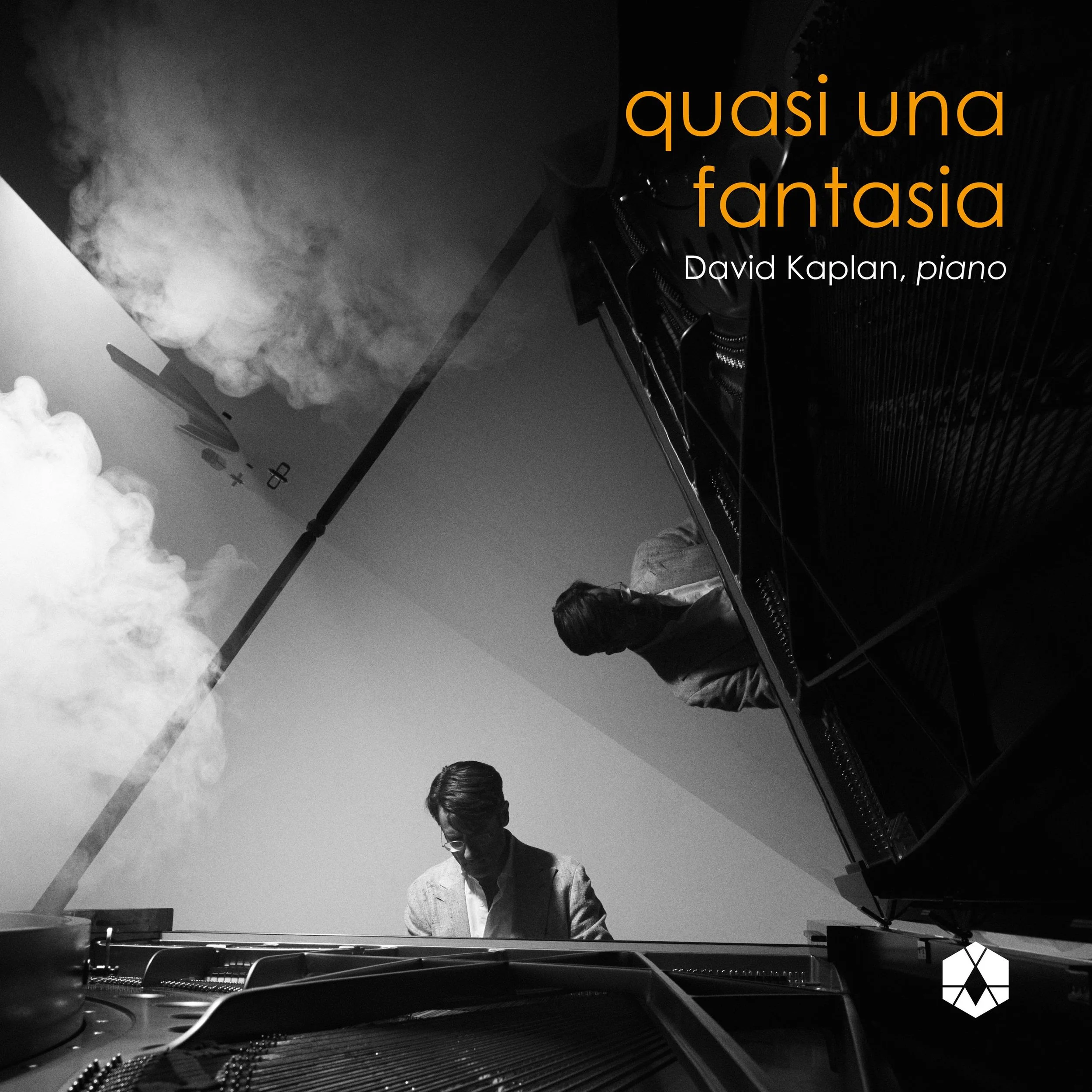
Nov 20: Pianist David Kaplan Releases quasi una fantasia - New Album Exploring the Relationship Between Composition and Improvisation - Orchid Classics
Nov 20: Pianist David Kaplan Releases quasi una fantasia - New Album Exploring the Relationship Between Composition and Improvisation - Orchid Classics
Pianist David Kaplan Announces New Album
quasi una fantasia
Exploring the relationship between composition and improvisation centered around Beethoven’s two Sonatas quasi una Fantasia, Op. 27 Nos. 1 and 2
“striking imagination and creativity” – The New York Times
Release Date: November 20, 2026
Orchid Classics (Pre-Save)
CDs or press downloads available upon request.
davidkaplanpiano.com | orchidclassics.com
Pianist David Kaplan will release his second solo album, quasi una fantasia (“almost a fantasy”), on November 20, 2026 on Orchid Classics. Quasi una fantasia is centered around Ludwig van Beethoven’s Sonata quasi una Fantasia in E-flat major, Op. 27 No. 1 and Sonata quasi una Fantasia in C-sharp minor, Op. 27 No. 2, and explores the elusive boundary between composition and improvisation in both old and new music. Kaplan has surrounded these two sonatas with music by György Ligeti, Louis Couperin, Robert Schumann, and Johannes Brahms, and contemporary commissioned works by Christopher Cerrone, Anthony Cheung, and Andrea Casarrubios. Kaplan’s own improvised preludes and transitions connect the works on this intriguing recording.
David Kaplan has been called “excellent and adventurous” by The New York Times, and praised by The Boston Globe for “grace and fire” at the keyboard. He has consistently drawn critical acclaim for creative programs that interweave classical and contemporary repertoire, often featuring newly commissioned works.
The theme of quasi una fantasia is a personal one for Kaplan. He writes in the album’s liner notes, “From a young age, extemporizing at the piano came much more naturally to me than sight-reading.” As a young student learning the music of Bach, Mozart, Beethoven, and Schumann, he invented his own sequences and passagework over the composed harmonic progressions, a habit that became what he describes as a private “party trick.” Recently, Kaplan has brought this aspect of his artistry to the stage, improvising cadenzas in concertos and recomposing passages in reprises, in performance. Kaplan writes in the liner notes that the album is dedicated to his childhood teachers, Miyoko Lotto and Walter Ponce, “who tolerated countless hours of me playing anything but what was on the page.”
Each of the three new works – by "the Three Cs," as Kaplan calls them – captures a different side of fantasia. Cerrone's Passagework (2020) orbits a single driving ostinato, its relentless unity of idea recalling, in Kaplan's words, “a great solo by the saxophonist Chris Potter or the pianist Keith Jarrett.” Cheung's three-movement Holding Patterns (2020) captures improvisation in two contradictory ways. It calls for improvisation through passages of indeterminate notation, while elsewhere its meticulously notated rhythms and metric modulations are designed to sound like free improvisation. Cerrone’s and Cheung’s works are also related, each inspired by elements of the other’s recent piano concertos. Casarrubios' Sandglass (2022) evokes the states of falling sand – pent-up energy, inevitable cascade, and a final transformation into stillness, “as we watch time, literally, run out,” as the composer puts it in her note.
The shorter works on the album each set up a larger one. Ligeti's Musica ricercata No. 1, built on a single pitch, prepares the austerity of Cerrone's ostinato in Passagework. Couperin's Prélude non mesuré, notated with pitches but no rhythms, anticipates Cheung's blend of aleatoric and specified notation. Brahms' Intermezzo Op. 76 No. 4 and Schumann's "Warum?" from the Fantasiestücke, Op. 12 bookend the ruminative romanticism of Casarrubios’ Sandglass. Kaplan's improvised transitions, as he explains, serve “to create the illusion of continuity between disparate musical languages.”
At the heart of the album are Beethoven's two Sonatas quasi una Fantasia, Op. 27, which Kaplan describes as fantasies in opposite ways. In Op. 27 No. 2, the “Moonlight Sonata,” Beethoven uses simple, stock forms as firm ground on which to "improvise" surprising materials – an opening movement played without dampers to create a “song in a deep cave” effect, and an incredibly virtuosic moto perpetuo finale. The Sonata Op. 27 No. 1 in E-flat major does the reverse, combining humble materials with bold form. Kaplan writes, “The ‘fantasia’ element manifests in how the music jumps from one simple idea to the next, traversing distant keys, contrasting opposite tempi, and often leaving fragmentary ideas unfinished, hanging in the air.”
Kaplan feels that classical-era scores were never meant as “sacred tablets intended for eternal posterity.” In the Op. 27 Sonatas, he improvises at a handful of what he calls “cliffhanger moments,” describing these transitions as “where a virtuoso would have felt potential energy to be mined in the form of new, unplanned expression and display.” Unlike Frederic Rzewski’s famous 20-minute improvisation in the Hammerklavier, Kaplan’s goal is “to bend rather than break Beethoven,” imagining “what one extra degree of expression, embellishment, excitement, or harmonic invention might have sounded like in 1800 at the hands of a contemporary improvising pianist.”
The album grew out of Kaplan's recital program of the same title, which he premiered as a guest artist of Piano Spheres at Los Angeles' Zipper Hall.
“I hope this album, with its mix of old and new, thorough composition, mock improvisation, and true improvisation,” Kaplan writes, “manages to bottle just a little bit of the magic of fantasia.”
For more information, read the album’s complete liner notes here.
About David Kaplan: David Kaplan is a New York-born piano soloist and chamber musician currently based in Los Angeles. He has appeared with the Britten Sinfonia at London’s Barbican, Das Sinfonie Orchester Berlin at the Philharmonie, and with the Symphony Orchestras of Baltimore, Hawaii, and San Antonio, among many others.
As recitalist, Kaplan has consistently drawn critical acclaim for programs that creatively interweave classical, contemporary, and newly commissioned works. He has performed at the Ravinia Festival, Sarasota Opera House, Music on Main in Vancouver, Strathmore, Washington’s National Gallery, and New York’s Carnegie and Merkin Halls.
Balancing solo performances with meaningful collaborations, he is a veteran of numerous distinguished chamber music festivals and series, such as Seattle Chamber Music, La Jolla, Bard, the Chamber Music Society of Lincoln Center, Chamber Music Northwest, Bay Chamber, and Barge Music. As a core member of Decoda, the Affiliate Ensemble of Carnegie Hall, he performs and teaches around the world. The ensemble’s self-titled debut album was recorded at Tippet Rise Art Center and released in 2024.
Kaplan’s acclaimed solo debut album blending Schumann with music by a dozen contemporary American composers, New Dances of the League of David, was released on New Focus Recordings in 2024. He can also be heard on Naxos, Marquis, Bright Shiny Things, Albany Records, and on Nonesuch as part of his longstanding duo with pianist/composer Timo Andres (Shy and Mighty, 2010).
A student of the legendary Claude Frank, Kaplan has served on the faculty of the UCLA Herb Alpert School of Music since 2016. He is proud to be a Yamaha/Bösendorfer Artist, and away from the keyboard, he loves cartooning and cooking, and is mildly obsessed with classic cars.
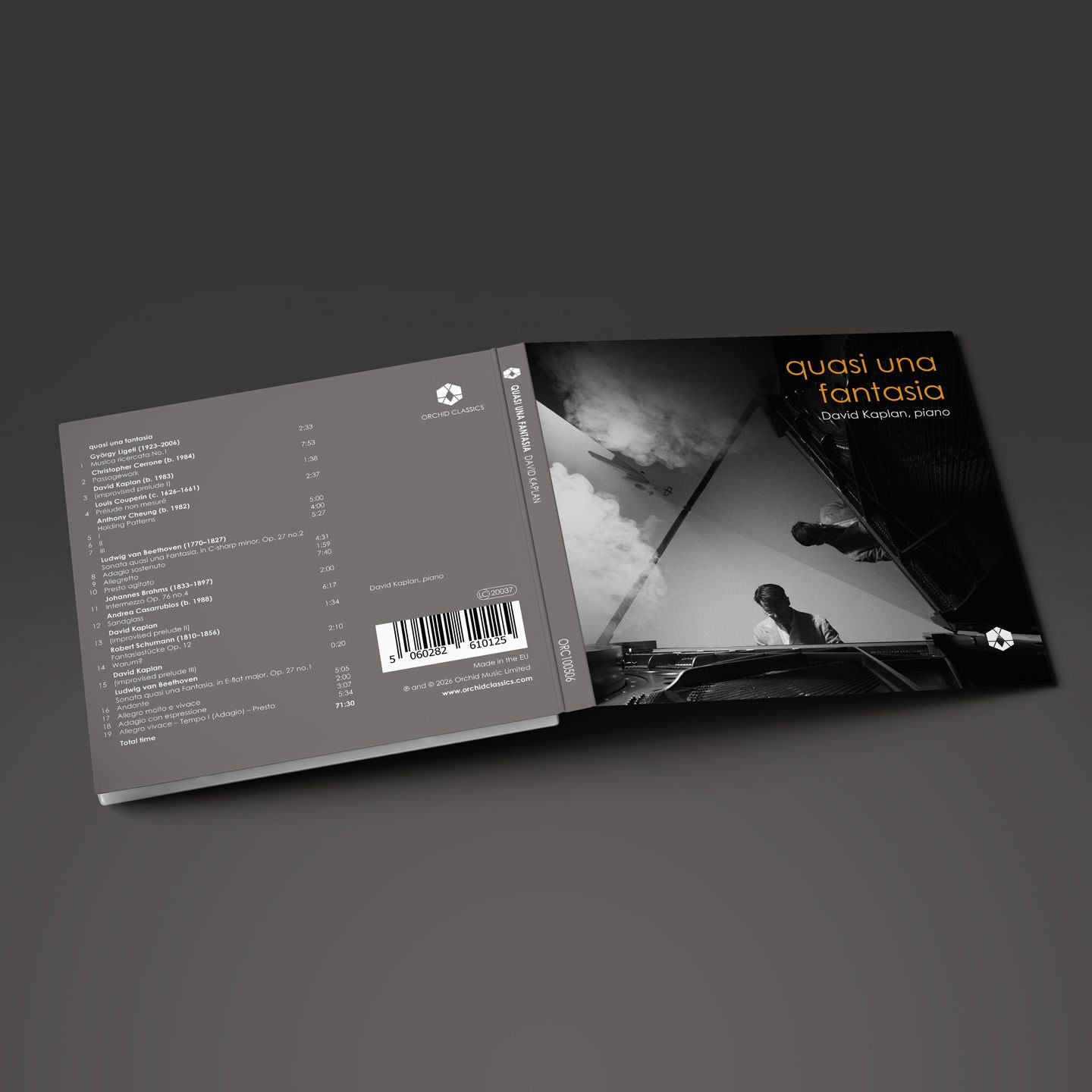
Track List:
quasi una fantasia
David Kaplan, piano
Orchid Classics | Release Date: November 20, 2026
György Ligeti (1923–2006)
1 Musica ricercata No. 1 [2:33]
Christopher Cerrone (b. 1984)
2 Passagework [7:53]
David Kaplan (b. 1983)
3 (improvised prelude I) [1:38]
Louis Couperin (c. 1626–1661)
4 Prélude non mesuré [2:37]
Anthony Cheung (b. 1982)
Holding Patterns
5 I [5:00]
6 II [4:00]
7 III [5:27]
Ludwig van Beethoven (1770–1827)
Sonata quasi una Fantasia in C-sharp minor, Op. 27 No. 2
8 Adagio sostenuto [4:31]
9 Allegretto [1:59]
10 Presto agitato [7:40]
Johannes Brahms (1833–1897)
11 Intermezzo, Op. 76 No. 4 [2:00]
Andrea Casarrubios (b. 1988)
12 Sandglass [6:17]
David Kaplan
13 (improvised prelude II) [1:34]
Robert Schumann (1810–1856)
Fantasiestücke, Op. 12
14 “Warum?” [2:10]
David Kaplan
15 (improvised prelude III) [0:20]
Ludwig van Beethoven
Sonata quasi una Fantasia in E-flat major, Op. 27 No. 1
16 Andante [5:05]
17 Allegro molto e vivace [2:00]
18 Adagio con espressione [3:07]
19 Allegro vivace – Tempo I (Adagio) – Presto [5:34]
Total time: 71:30
Credits
Recorded December 3–5, 2025 at the Recording Studio of the Evelyn and Mo Ostin Music Center at the UCLA Herb Alpert School of Music, Los Angeles, CA.
Producer: Silas Brown
Engineer: Sergey Parfenov
Additional editing: Ian Striedter
Bösendorfer 280VC piano provided by Yamaha Artist Services, prepared by Sean McLaughlin and Kayako Forrest
Cerrone’s Passagework, recorded July 18, 2023, UCLA Recording Studio.
Engineer: Benjamin Maas.
Editing and mixing: Mike Tierney.
Mastering: Silas Brown.
Yamaha D-CFX piano prepared by Sean McLaughlin
Liner notes: David Kaplan, with notes by Anthony Cheung, Christopher Cerrone, and Andrea Casarrubios
Photography: Anna Azarov
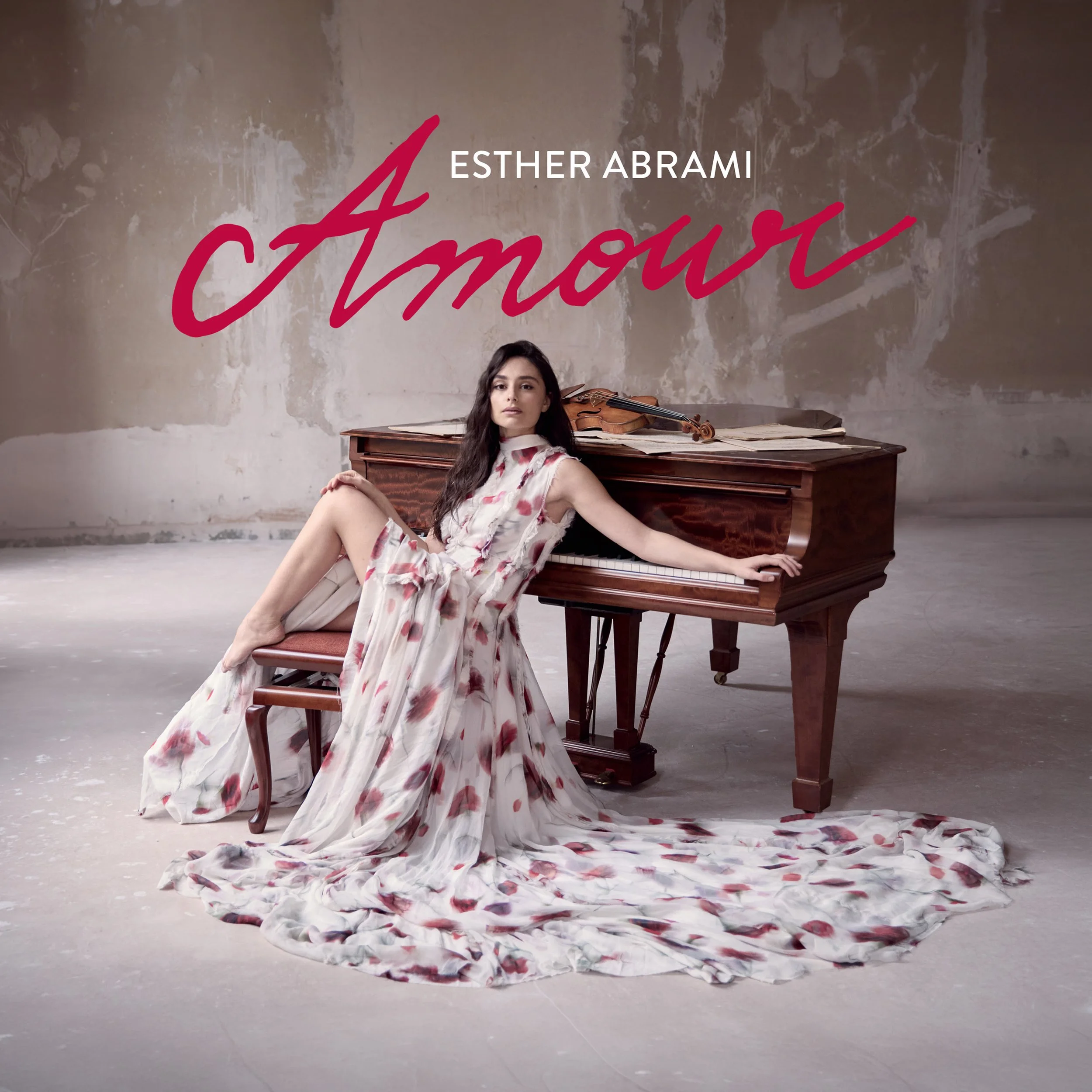
OUT TODAY: Violinist Esther Abrami Releases Amour – New Album on Sony Classical Featuring Abrami's Own Large Scale Composition
OUT TODAY: Violinist Esther Abrami Releases Amour – New Album on Sony Classical Featuring Abrami's Own Large Scale Composition
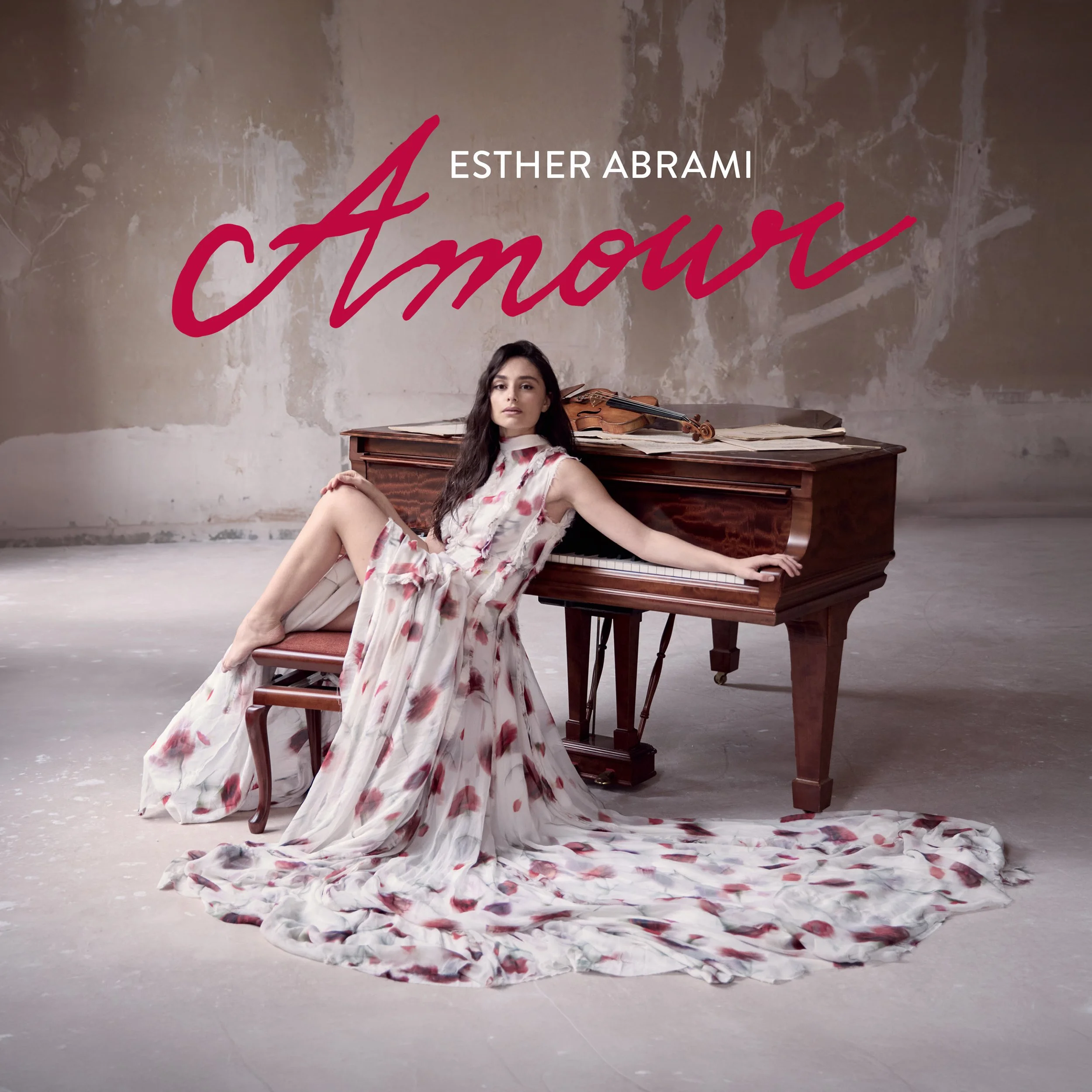
Acclaimed Violinist Esther Abrami Releases New Album Amour
Album Marks Major Artistic Milestone For Abrami
Presenting Her First Own Large-Scale Composition
Out Today on Sony Classical - Listen Here
Worldwide Release Date: Out Today
Today, October 9, 2026, celebrated violinist and social media sensation Esther Abrami releases her new album Amour on Sony Classical – listen here.
Marking a major artistic milestone, Amour is the first album where Abrami presents an original own large-scale composition at its core: a self-written nine-part suite. Conceived as an intimate and deeply expressive exploration of love in all its forms, the work captures the full spectrum of emotions, from tenderness and passion to longing and heartbreak, and stands at the heart of a project that blends original music with newly reimagined works for violin and orchestra.
“With Amour, I wanted to explore love in all its forms – not just the joy and beauty, but also the vulnerability, the longing, the anger and the pain that often comes with it. Writing my own suite of nine movements allowed me to express a range of very personal emotions, while the other pieces on the album reflect how universal these feelings are across time and genres. Love is something that we all experience, for the best and the worst but at the end, that’s what connects us all. I hope this album resonates with anyone who listens to it”, says Esther Abrami.
Beyond the central suite, Amour brings together a diverse selection of iconic classical works about love, each newly arranged for solo violin and orchestra. A particular highlight of the album is Nino Rota’s Romeo and Juliet: Love Theme, featuring the celebrated mezzo-soprano Marina Viotti. Viotti’s vocals add a captivating dimension to the piece as she engages in a duet with Esther’s violin. The programme further includes epic versions for violin and orchestra of Céline Dion’s All by Myself and Georges Bizet’s Carmen: L’amour est un oiseau rebelle from ‘Habanera’. New arrangements of Francis Poulenc’s Les chemins de l’amour, Christoph Willibald Gluck’s Orfeo ed Euridice: Dance of the Blessed Spirits (Melodie), and the virtuosic intensity of Tomaso Antonio Vitali’s Chaconne in G minor add even more musical colours to this collection of works centred around love. The album also features a new version arranged by Esther Abrami of Charlie Chaplin’s Désillusion amoureuse from the movie The Circus, a poignant composition that reveals the legendary filmmaker’s deeply expressive musical voice.
Throughout her career, Esther Abrami has been known for her ability to connect classical music with a wide and diverse audience, bringing fresh perspectives to the repertoire. With ‘Amour’, she reaches a new artistic dimension, uniting her work as a composer with her unique voice as an interpreter, thus shaping a musical language that is unmistakably her own.
This new chapter in her career follows a period of exceptional success. Since the release of her album ‘Women’ in April 2025, Esther Abrami has become one of the most visible young artists in classical music. Especially in her home country, France, she has appeared on major television programmes, performing for millions of viewers and captivating audiences through a series of highly successful concerts. Her book ‘La musique est (aussi) une affaire de femmes’ has quickly become a genre bestseller and will be released in English and German in September under the title ‘Music is (also) a Women’s Affair’. In recognition of her artistic impact, she will receive an Opus Klassik Award 2026, the most important classical music prize in the German speaking world.
‘Amour’ features the City of Prague Philharmonic Orchestra under the baton of conductor Irene Delgado-Jiménez and will be available for streaming and digital download in stereo and the immersive format Dolby Atmos. The album will also be released as CD and a limited-edition 2x Ecorecord InkPlosion Colour LP–available here.
Amour - Track List
1. Désillusion amoureuse (Charlie Chaplin)
2. – 10. Amour Suite (Esther Abrami)
11. Romeo and Juliet: Love Theme (Nino Rota) – feat. Marina Viotti
12. All by Myself (Céline Dion)
13. Carmen: L’amour est un oiseau rebelle (Bizet)
14. Moods, Impressions and Souvenirs, Op. 41: Lento (Fibich)
15. Les chemins de l’amour (Poulenc)
16. Orpheo and Euridice: Dance of the Blessed Spirits (Gluck)
17. Chaconne in G minor (Vitali)
* City of Prague Philharmonic Orchestra, Irene Delgado-Jiménez
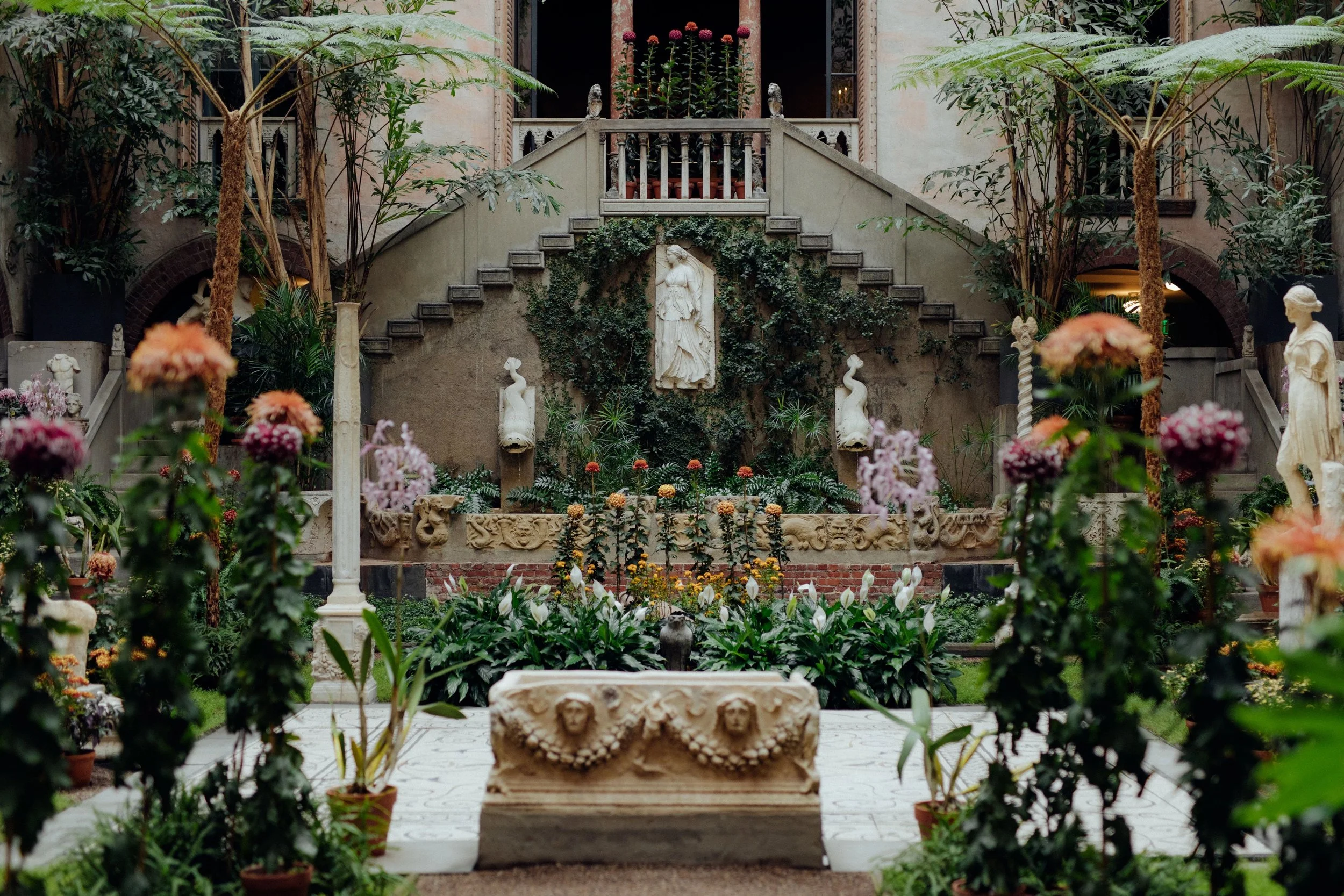
Oct 25: Gardner Museum Presents “Celebrating Chrysanthemums” Concert
Oct 25: Gardner Museum Presents “Celebrating Chrysanthemums” Concert
John Lowell Gardner Chrysanthemum Installation in the Courtyard of the Isabella Stewart Gardner Museum, photo by Ally Schmaling. Press photos available here.
The Isabella Stewart Gardner Museum Presents
Celebrating Chrysanthemums on October 25, 2026 in Calderwood Hall
A Concert in Celebration of the Museum’s Annual John Lowell Gardner Chrysanthemum Installation in the Courtyard
Sunday, October 25, 2026 at 1:30pm
Isabella Stewart Gardner Museum | Calderwood Hall | 25 Evans Way | Boston, MA
Tickets: www.gardnermuseum.org/calendar/celebrating-chrysanthemums-20261025
For press tickets, please contact Christina Jensen at christina@jensenartists.com
BOSTON, MA – The Isabella Stewart Gardner Museum continues its Fall 2026 Weekend Concert Series, presenting Celebrating Chrysanthemums on Sunday, October 25, 2026 at 1:30pm. This ten-concert autumn season curated by Abrams Curator of Music George Steel runs from September 13 through November 22, 2026 and features world-class artists in the Museum’s extraordinary Calderwood Hall—a 300-seat “sonic cube” with three levels of balconies designed so that 80% of seats are front row, creating a uniquely intense and intentional listening experience.
Celebrating Chrysanthemums coincides with the Museum’s annual John Lowell Gardner Chrysanthemum Installation and is an exploration of the flower as muse for musicians and writers. The concert will be hosted by the Gardner’s Stanley P. Kozak Director of Horticulture, Erika Rumbley, and Abrams Curator of Music, George Steel, who will read related poems, letters, and horticultural texts. An all-star cast including Kara Dugan, mezzo-soprano; Peter Dugan, piano; Katherine Winterstein, violin; Gabriela Díaz, violin; Mina Lavcheva, violin; Cara Pogossian, viola; Jia Kim, cello; Emi Ferguson, flute; and Cory Pesaturo, accordion will perform music by Jules Massenet, Léo Delibes, Giacomo Puccini, Scott Joplin, Dora Pejačević, Nikolai Kharito, Zbigniew Maciejowski, Ernesto Lecuona, Tōru Takemitsu, Xiaogang Ye, and Juantio Becenti.
The Gardner Museum’s annual John Lowell Gardner Chrysanthemum Installation has been a beloved tradition since Isabella Stewart Gardner lived in the Palace. Throughout autumn, chrysanthemums of various colors and species make an appearance. Most eye-catching of all are the Single Stem Chrysanthemums, grapefruit-sized flowers with sculpture-like petals that crown statuesque stems four feet tall. These are the result of a Japanese pruning technique called ogiku—the Gardner is one of just a small handful of institutions in the United States trained in this practice. On view from October to November, the Gardner’s chrysanthemum display inspires visitors and artists alike just as the days begin to grow dark.
Celebrating Chrysanthemums follows the chrysanthemum through more than a century of music, and through its varying meanings as a flower of autumn and grief, and a symbol of longevity and endurance. The program includes selections from Europe in the 1800s such as Massenet's wistful song C'est au temps de la chrysanthème or It is the season of the chrysanthemum; Delibes's French art song Chrysanthème for voice and piano setting text by Paul Fuchs; and Puccini's Crisantemi, a grief-stricken elegy for string quartet, which was written in a single night and invokes the use of these evocative flowers at funerals in Italy. Croatian composer Dora Pejačević’s late-Romantic work Chrysanthemums is the final movement of her piano cycle, symbolizing late life, and Kharito's The Chrysanthemums Have Faded is a bittersweet waltz about lost love. Songs by Zbigniew Maciejowski, and Ernesto Lecuona bring the chrysanthemum into the cafe and cabaret. Scott Joplin’s lyrical rag The Chrysanthemum is dedicated to his late wife, who died only weeks after their wedding. The concert features three contemporary works: Takemitsu's impressionistic, dreamlike From far beyond Chrysanthemums and November fog for violin and piano; Xiaogang Ye's haunting December Chrysanthemum for flute, written in memory of his infant daughter; and In the Greenhouse from Navajo composer Juantio Becenti’s 2019 piano trio, which was commissioned by the Gardner Museum.
George Steel’s music programming for the Museum continues founder and legendary arts patron Isabella Stewart Gardner’s vision of bringing together musicians and audiences for inspiring gatherings. Dating to 1927, the Gardner’s Weekend Concert Series is the longest-running museum music program in the country. Much like Isabella Stewart Gardner did in her time, Steel champions unknown repertoire and embraces new works, creates connections and builds community among musicians, and supports them by presenting them in new endeavors and collaborations. His programming also frequently draws on the history of the Gardner Museum, featuring instruments from the Museum’s collection and music by composers who were associated with its founder. In honoring Isabella Stewart Gardner’s musical legacy, Music at the Gardner remains strongly committed to broadening the repertoire of music presented to include previously overlooked and marginalized composers as well as performers of all backgrounds.
Fall 2026 At-a-Glance Concert Schedule
September 13: Rachel Barton Pine, violin
September 20: Twelfth Night Ensemble
September 27: Chamber Music Celebration
This annual concert celebrates the life and legacy of Scott Nickrenz, first Abrams Curator of Music at the Isabella Stewart Gardner Museum.
October 4: Ivalas Quartet
October 18: ACRONYM: Esther in the Age of Rembrandt
October 25: Celebrating Chrysanthemums
This performance is made possible by the Anne Hawley Fund for Programs.
October 29: Georg Friedrich Haas's in vain performed by Alarm Will Sound, conducted by Alan Pierson – Thursday Night Music
November 1: Eleanor Alberga with Green Room Ensemble
November 8: Poiesis Quartet
November 15: Lysander Piano Trio
November 22: Jean Rondeau, harpsichord
This concert is made possible by the generous support of David Scudder in memory of his wife, Marie Louise Scudder.
All concerts take place on Sundays at 1:30 pm in Calderwood Hall at the Isabella Stewart Gardner Museum (25 Evans Way, Boston, MA), except for the October 29 Thursday Night Music concert which starts at 7 pm.
Ticketing Information
Tickets ($25-$99) are available at gardnermuseum.org/about/music or by calling the Box Office at 617 278 5156. All concert tickets include Museum admission.
About the Isabella Stewart Gardner Museum
The Isabella Stewart Gardner Museum invites you to escape the ordinary in a magical setting where art and community come together to inspire new ways of envisioning our world. Embodying the fearless legacy of its founder, the Museum offers a singular invitation to explore the past through a contemporary lens, creating meaningful encounters with art and joyful connections for all. Modeled after a Venetian palazzo, unforgettable galleries surround a luminous Courtyard and are home to masters such as Rembrandt, Raphael, Titian, Michelangelo, Whistler, and Sargent. The Renzo Piano Wing provides a platform for contemporary artists, musicians, and scholars and serves as an innovative venue where creativity is celebrated in all of its forms.
Isabella Stewart Gardner Museum • 25 Evans Way, Boston, MA 02115 • Hours: Open Weekends from 10 am to 5 pm, Weekdays from 11 am to 5 pm, and Thursdays until 9 pm. Closed Tuesdays. • General admission: Adults $25; Seniors $22; Students $15; Free Thursdays from 5 – 9 pm and for members, children 17 and under, and everyone named Isabella • Information: 617 566 1401 • Box Office: 617 278 5156 • www.gardnermuseum.org
Music at the Gardner is supported by the Nora McNeely Hurley Foundation. The Museum thanks its generous concert donors: The Coogan Concert in memory of Peter Weston Coogan; Fitzpatrick Family Concert; James Lawrence Memorial Concert; Scott Nickrenz Concert; Alford P. Rudnick Memorial Concert; David Scudder in memory of his wife, Marie Louise Scudder; Wendy Shattuck Young Artist Concert; and Willona Sinclair Memorial Concert. The piano is dedicated as the Alex d’Arbeloff Steinway. The harpsichord was generously donated by Dr. Robert Barstow in memory of Marion Huse, and its care is endowed in memory of Dr. Barstow by The Barstow Fund. Music at the Gardner is also supported in part by Barbara and Amos Hostetter, Joseph Mari, Sallie and Jim McGregor, Nicie and Jay Panetta, and The Aaron Copland Fund for Music, Inc.
OUT TODAY: Classical Soul Pianist Alexis Ffrench Releases New Album 24 on Sony Masterworks
OUT TODAY: Classical Soul Pianist Alexis Ffrench Releases New Album 24 on Sony Masterworks
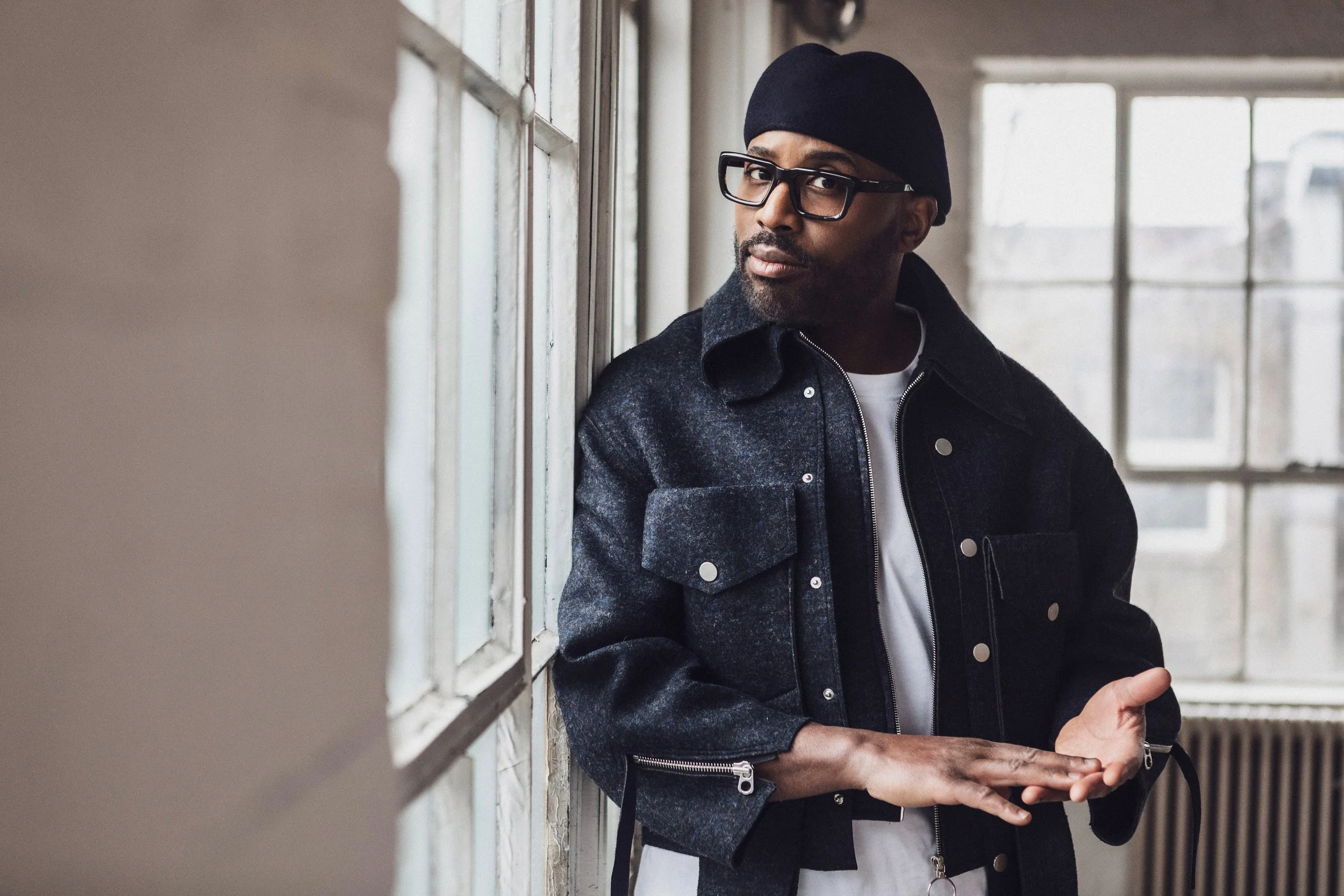
PR Photo – Credit: Alex Lake (Download)
Pioneering Composer and Pianist
Alexis Ffrench
Out Today - Listen Here
Worldwide Album Release Date: Out Today
New York, NY – Today, October 9, 2026, pioneering pianist, composer and chart-topping Classical Soul artist Alexis Ffrench, releases his new album 24 – listen here. Formed of 24 meticulously crafted piano pieces and intended as a musical companion to the clockwork regularity of everyday life, 24 unveils as an intimate and immersive snapshot of a singular day.
Gently guiding listeners from dawn to dusk – through the quiet of early morning into the busy heart of day and on to the evening’s golden hour – 24 is woven from daydreams, memories of human connection and the desire for authenticity amongst an ever evolving and increasingly simulated digital age.
Made at legendary Provençal studio Miraval, owned by Brad Pitt and Damien Quintard, Ffrench recorded 24 during ten-days of near-total immersion on an array vintage of grand pianos, upright pianos and organs. Adding delicate ripples of percussion to the record’s kaleidoscopic sound, 24 also enlists a string ensemble featuring harp and upright bass.
Inspired in part by the many messages Ffrench has received from listeners throughout his career, 24 finds Ffrench reflecting on what his music means to those who find solace in it and the cherished moments it has served to soundtrack. He explains: “I wanted this album to reflect the everyday miracles in people’s lives.”
Throughout his career, Ffrench has asked one question above all others: “what do my listeners need from me?” Now, with 24, the answer is both simple and profound: music to live by.
2026 also marks the 20th anniversary of Ffrench’s seminal debut album Piano Diaries. With each piece evoking the pull of a series of intimate and reflective moments, the record fuses cinematic simplicity with an emotionally direct and highly accessible composition that welcomes all listeners to step directly into Ffrench’s intimate and atmospheric world.
One of the world’s most exciting artists, Alexis Ffrench has played a pivotal role in bringing instrumental music to an ever-increasing audience. His accolades speak for themselves, with well over 1 billion streams across his catalogue, multiple No.1 albums and Gold-selling status in the USA for his single “Bluebird.”
Whether he’s performing at the King’s Coronation Concert to an audience of over 18 million, scooping an ARIA Award for his Apple Music show Classical Connections, hosting brand-new Classic FM series “Music to Live By”, performing at major festivals and selling out venues worldwide, hosting masterclasses with schools & charitable organizations or putting his own spin on contemporary pop hits for his enthusiastic social media audience, Alexis is driven by the desire to make music accessible to all.
Refusing to be penned in by genre, time period or the expectations of the kind of musician he should be, and rather than leaning into the traditional understanding of the ‘classical’ genre, Alexis instead leans outward – with his expansive perspective drawing on a multifarious mosaic of influences that takes his listeners by the hand and leads them on a journey through a world of possibility.
With the new album acting as a timelessly enchanting musical journey through the in numerous possibilities held inside one singular day, 24 is the first studio album from Alexis Ffrench since 2024’s Classical Soul Vol. 1 – welcoming in a contemplative and captivating new dawn for the forerunner of contemporary classical music.
Alexis Ffrench - New Album 24 Out Today
Listen to 24 here
About Alexis Ffrench
Alexis Ffrench is an artist with a special ability to create music for the soul. A pioneering superstar and trailblazer of ‘Classical Soul’, Alexis’ sound refuses to be penned in by genre, time period, or the expectations of the kind of musician he should be. Rather than leaning into the narrow, traditional understandings of ‘classical’, Alexis instead leans outward, expansive in his perspective, drawing on a multifarious mosaic of influences that takes the listener by the hand and leads them on a journey through a world of possibility.
Alexis’ accolades speak for themselves, as he has surpassed a staggering 1 billion streams across his catalogue, his record Evolution and his single ‘Bluebird’ achieved RIAA Gold status in the US.
A passionate advocate for music education, Alexis is the first-ever Artistic Director of the Associated Board of the Royal Schools of Music (ABRSM) in its 133-year history. He is also Trustee and Governing Body Member and Fellow of the Royal Academy of Music, London, and Honorary Fellow of Homerton College, Cambridge. Alexis is an Ambassador for Restore The Music, who work with state schools to provide funding to buy musical instruments and ensure every young person has access to music.
Alexis Ffrench Socials
Website | Instagram | X | TikTok | YouTube
Sony Music Masterworks comprises Masterworks, Sony Classical, Milan Records, XXIM Records, and Masterworks Broadway imprints. For email updates and information please visit www.sonymusicmasterworks.com/.
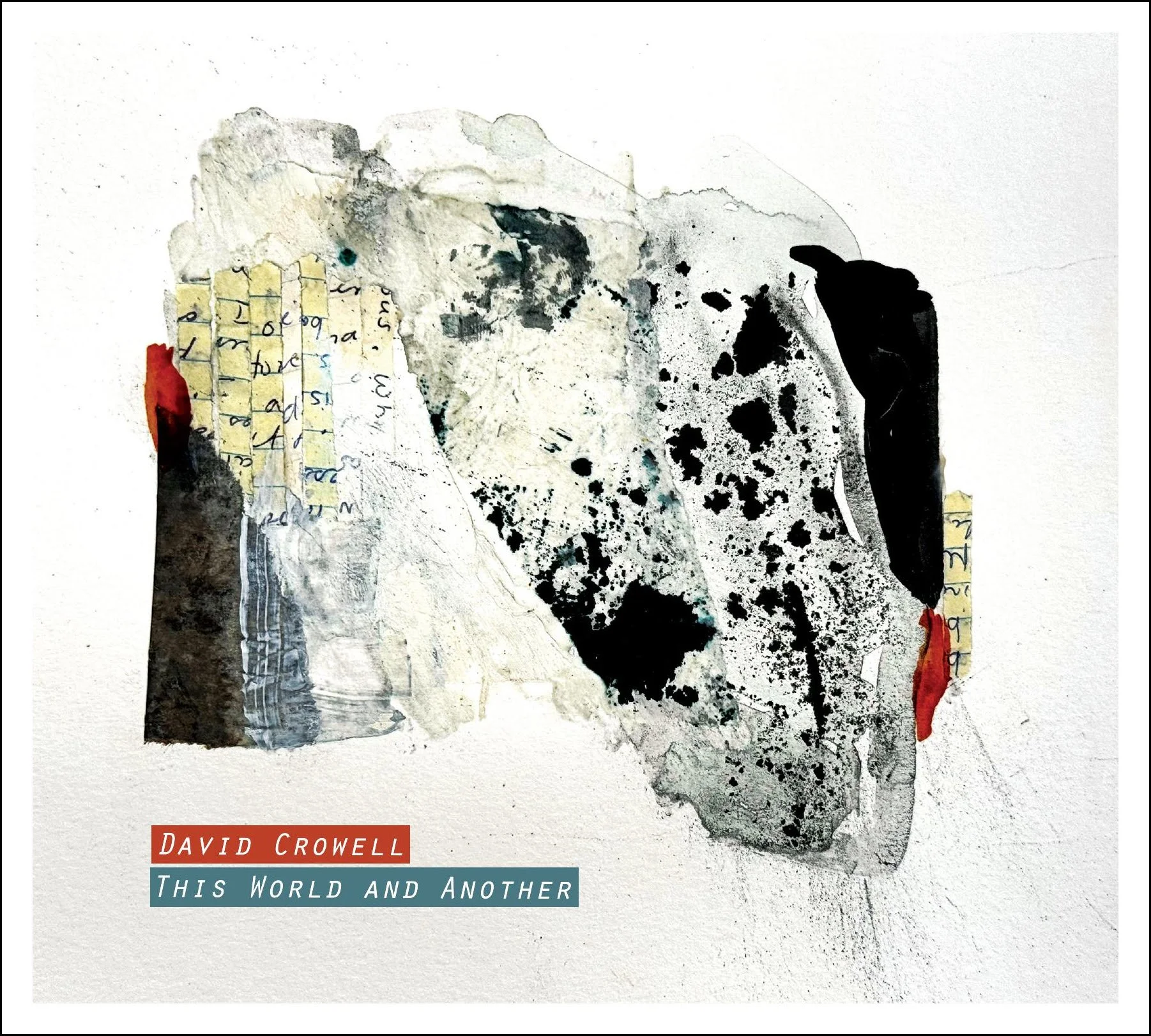
OUT TODAY: Composer and Multi-Instrumentalist David Crowell Releases New Album This World and Another on Better Company Records
OUT TODAY: Composer and Multi-Instrumentalist David Crowell Releases New Album This World and Another on Better Company Records
Composer and Multi-Instrumentalist David Crowell
Releases New Album This World and Another on Better Company Records
Out Today: Listen Here
Featuring Pianist Vicky Chow, Guitarist Gregg Belisle-Chi,
and Unheard-of Ensemble
“[David Crowell’s music] glistens, sparkles, and dances with joy.”
–John Lewis, The Guardian included in the “10 Best Contemporary Albums of 2024”
CDs or press downloads available upon request.
DavidCrowellMusic.com | BetterCompanyRecords.com
Today, October 9, 2026, New York-based composer, saxophonist, and guitarist David Crowell releases new album This World and Another via Better Company Records – listen here. The album features his music performed by pianist Vicky Chow, guitarist Gregg Belisle-Chi, Unheard-of Ensemble, and Crowell himself, and includes the works Memories of the Imagined, Exoplanet, and This World and Another.
Following the release of Point / Cloud in 2024, which The Guardian describes as “music that glistens, sparkles, and dances with joy,” the works on Crowell’s new album This World and Another consider the passage of time and how human memories – which have both essential truths and misremembered details – shape our perception of chronological movement and recollection of the past. “I recorded samples of the acoustic instrumentalists in each piece and then processed them into the electronics you hear on the album,” Crowell says. He describes each piece as representing an alternative reality, and as the artists perform they encounter a vision of themselves in the electronics, heavily altered but recognizable in the same way that people understand the distorted reality of their dreams.
Over the album’s ten tracks, Crowell shares three new works. Memories of the Imagined, composed for Unheard-of Ensemble harkens back to Point / Cloud’s finale, 2 Hours in Zadar. Both pieces feature singing cellist Iva Casian-Lakos alongside electronics, but Memories of the Imagined diverges from its predecessor in how it channels the floating, ethereal atmosphere into a more driven, frequently pulse-based musical world. “As the music progresses,” says Crowell, “performers are drawn progressively deeper into the complex, hazy swirl of electronics, only to emerge from the dream with cathartic clarity.”
“The contemplative, introspective nature of Memories of the Imagined is largely cast aside in Exoplanet,” says Crowell. While the music retains a degree of manipulated sampling, Crowell’s alto and tenor saxophones, alongside Gregg Belisle-Chi’s expressive guitar, embrace a heavy bassline and distinct beat-oriented direction, placing nostalgic saxophone loops and padded chordal textures at the forefront alongside dynamic and lively improvisation.
For the finale and the album’s title work, pianist Vicky Chow demonstrates stunning virtuosity as she navigates a dichotomy of electronic sounds, from noisy interruptions and interjections to graceful and melodic loops. Chow takes her piano on a sonic journey lined with disparate textures – metallic, chiming, glassy – an inspiring demonstration of transformation that encourages introspection and reflection. Crowell describes Chow’s elegant performance as “winding its way through a varied and occasionally intimidating landscape, ending the album as it began, with a beautifully played, introspective solo piano passage.”
This World and Another is a multilayered expression of sound, experience, memory, and the relationships that exist between each. The music showcases how these elements connect with and shape one another, uncovering new perspectives and highlighting the unique worlds – both internal and external – that form in the wake of writing, performing, and interpreting the music and stories David Crowell is striving to tell.
About David Crowell: David Crowell’s work crosses stylistic boundaries, encompassing contemporary classical composition, improvisation, jazz, and experimental rock and pop. Artistic processes vary piece by piece, from composing purely for acoustic instruments to the use of electronics and manipulations of originally sampled sound. Improvisation plays an important role in generating material, either to exist on its own terms or for later development in a more deliberate compositional manner. The New York Times has called his music “coiled and contained, but pulsing with small, ecstatic fibrillations.” His music has been released on New Amsterdam, Better Company, Innova, National Sawdust Tracks, Coviello Classics, and Skirl.
Crowell’s music has been performed at New York City’s Museum of Modern Art, Park Avenue Armory, Bravo! Vail, Lucerne Festival Spotlights Series, Brooklyn Academy of Music, Dumbarton Oaks, Library of Congress, Phillips Collection, Kennedy Center REACH, Bang on a Can Summer Marathon, the London Jazz Festival, Cortona Sessions for New Music, Kultursommer Wien, Caramoor Festival, Cleveland International Classical Guitar Festival, American Music Festival (EMPAC), Tribeca New Music Festival, MATA Festival, National Sawdust, Merkin Hall, Le Poisson Rouge, Barbes, and Joe’s Pub. Commissioning ensembles and institutions have included A Far Cry, JACK Quartet, Sandbox Percussion, New Morse Code, NOW Ensemble, icarus Quartet, Ensemble Illyrica, Dumbarton Oaks, Da Camera Los Angeles, Tribeca New MusicFestival, Arts at the Park, Boston Conservatory, University of Massachusetts, University of North Texas, University of Kentucky, and the University of Wisconsin.
Crowell’s music has been supported through composer fellowships, grants, and residencies at Dumbarton Oaks, New York State Council on the Arts, New York Foundation for the Arts, Canada Council for the Arts, I-Park Foundation, Ellis-Beauregard Foundation, Avaloch Farm Music Institute, Bang on a Can Summer Institute and the Mizzou International Composers Festival. He has presented numerous lectures on his work, including at Dumbarton Oaks, Manhattan School of Music, Duquesne University and California State University (Sacramento) where he was the featured composer at the Festival of New American Music.
As a member of the Philip Glass Ensemble (2007-16), and performing on saxophones and flute, Crowell toured four continents during the 2012-15 revival of Einstein on the Beach, cited by Alex Ross of The New Yorker as “the music event of the year ... a creation of timeless artifice ... whose beauty blazes on.” Crowell’s genre-defying, composer-led band, Empyrean Atlas, has been featured numerous times on WNYC’s New Sounds, and on Soundcheck for a live performance and interview with John Schaefer. Crowell received a PhD in composition at Stony Brook University and a Bachelor of Music in Jazz Saxophone Performance from the Eastman School of Music.
Track List:
This World and Another
Music by David Crowell
Release Date: October 9, 2026
Better Company Records
Featuring David Crowell (Saxophone and Electronics), Vicky Chow (Piano), Gregg Belisle-Chi (Guitar), and Unheard-of Ensemble
1. Memories of the Imagined (I)
2. Memories of the Imagined (II)
3. Memories of the Imagined (III)
4. Memories of the Imagined (IV)
Performed By Unheard-Of Ensemble: Iva Casian-Lakos (Voice, Cello), Matheus Souza (Violin), Ford Fourqurean (Bass Clarinet), Daniel Anastasio (Piano).
Engineered By Mike Tierney at The Bunker, Brooklyn, NY.
5. Exoplanet
Performed by David Crowell (Saxophones), Gregg Belisle-Chi (Guitar).
Engineered by David Crowell at Kensington Manor, Brooklyn, NY.
6. This World and Another (I)
7. This World and Another (II)
8. This World and Another (Interlude)
9. This World and Another (III)
10. This World and Another (IV)
Performed by Vicky Chow (Piano).
Engineered by Ryan Streber at Oktaven Audio, Mount Vernon, NY.
Total Time: [43:24]
David Crowell, electronics and saxophone; Vicky Chow, piano; Gregg Belisle-Chi, guitar; Unheard-of Ensemble: Ford Fourqurean, clarinet; Matheus Souza, violin; Iva Casian-Lakos, voice & cello; Daniel Anastasio, piano
All music by David Crowell
Produced and Mixed by David Crowell
Additional Mixing on Exoplanet by Christopher Botta
Mastered by Christopher Botta.
Cover Art by Rebecca Crowell
Album Design by Carlo Costa
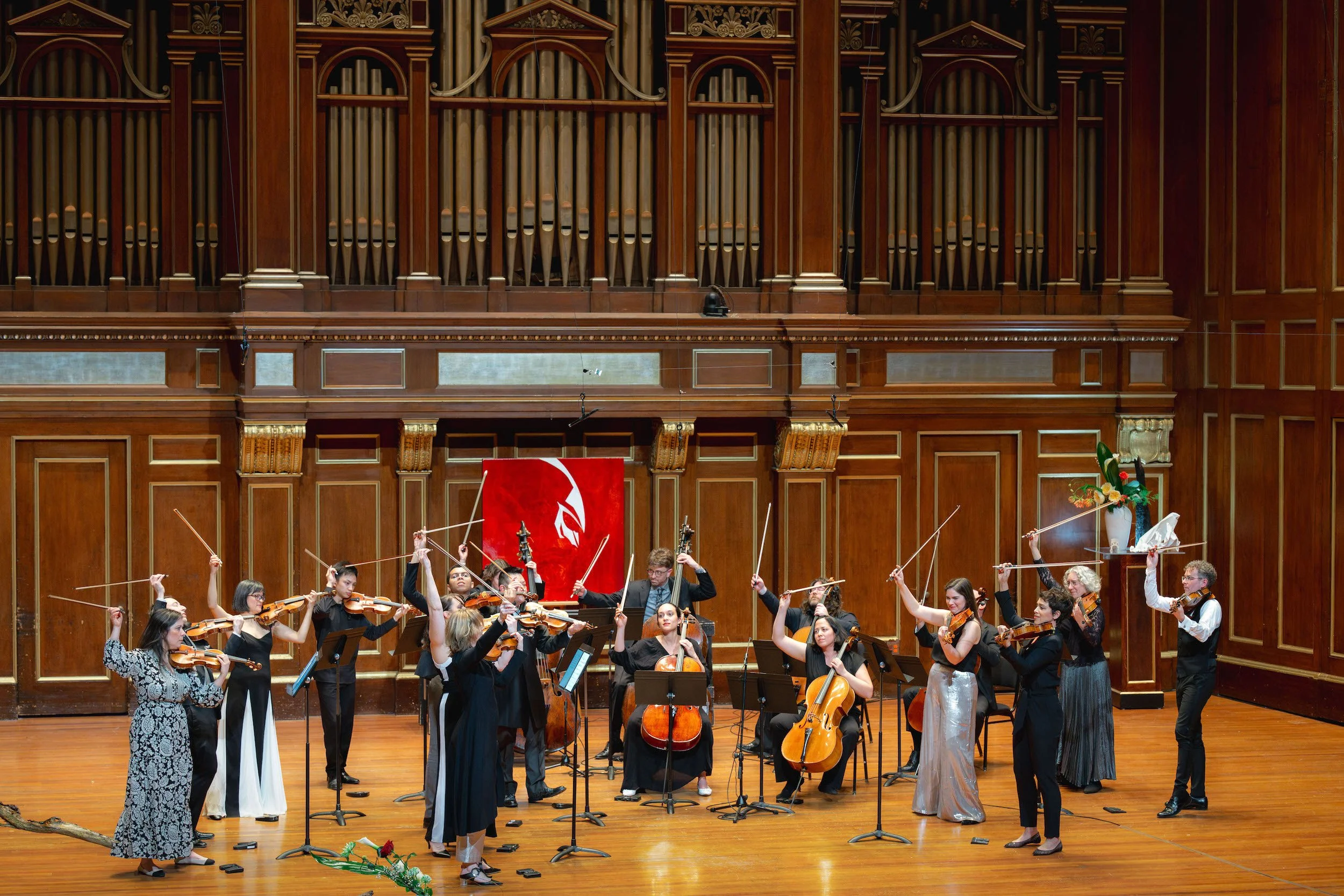
Nov. 7: GRAMMY®-Nominated A Far Cry Continues 20th Anniversary Season with Mighty Fortress
Nov. 7: GRAMMY®-Nominated A Far Cry Continues 20th Anniversary Season with Mighty Fortress
Photo by Nikolai Alexander / F Point Productions available in high resolution here.
GRAMMY®-Nominated A Far Cry Continues 20th Anniversary Season with Mighty Fortress on November 7, 2026
A Neighborhood Chamber Music Concert
Curated by A Far Cry Cellist Rafael Popper-Keizer
Saturday, November 7, 2026 7:30pm
Old South Church | 645 Boylston Street | Boston, MA
Tickets and More Information
Boston, MA – GRAMMY®-nominated chamber orchestra and “world-wide phenomenon” (WBUR) A Far Cry (AFC) continues its 20th anniversary season with a Mainstage Concert titled Mighty Fortress on Saturday, November 7, 2026 at 7:30pm at Old South Church (645 Boylston Street, Boston). Curated by A Far Cry violinist Alex Fortes, Mighty Fortress is a celebration of resilience in collaboration with Boston Children’s Chorus and vocal soloists soprano Ariadne Greif, mezzo-soprano Clare McNamara, tenor Brian Giebler, and bass Paul Max Tipton. The program features Talamh (land) by inti figgis-vizueta; Ein feste Burg ist unser Gott (A Mighty Fortress Is Our God), BWV 80 by J.S. Bach; and Gay Guerrilla by Julius Eastman. The latter two were inspired by the words and hymnal melody of Martin Luther:
“A mighty fortress God is still, a sturdy shield and weapon;
he'll keep us clear from all the ill that hath us now o'ertaken.”
The program opens with the depiction of a foundation and refuge. inti figgis-vizueta describes Talamh as a sonic landscape, “a way for me to connect to home and recall many of the rich and magical mountains, streams, and forests I walked through with my papa, Peter, in Ireland since very young.” Martin Luther’s words and hymnal melody were the source materials for both Bach and Eastman in the works on this program, for Bach in 1723 as a devout Lutheran, for Eastman in 1979 as a composer hoping to draw on a similar fighting spirit. Bach composed Ein feste Burg ist unser Gott (A Mighty Fortress Is Our God), BWV 80 for Protestant Reformation Day. The sacred cantata is based on the music and text of the “Battle Hymn of the Reformation,” Martin Luther’s chorale and one of the most well-known melodies of Christianity. Bach’s cantata channels a dramatic nature similar to Luther’s declarative work. In Eastman’s words, “a guerilla is someone who is sacrificing their life for a point of view. I use the word ‘guerrilla,’ in the hopes that I might be one if called upon.” While Gay Guerrilla premiered as a piece for four pianos, “for practical reasons,” Eastman spoke at the premiere, of envisioning another version of Gay Guerrilla for "let's say, 18 stringed instruments,” which A Far Cry is realizing at this performance.
Performed by the combined forces of orchestra, chorus, and soloists, Mighty Fortress celebrates the strength we summon when our communities stand together.
Violinist and curator Alex Fortes says, “Julius Eastman refers to the works he composed, such as Gay Guerilla, as ‘organic music,’ because his music evolves and grows like a living organism does. I'm excited for this concert’s celebration of ‘organic musicmaking,’ juxtaposing J.S. Bach’s and Eastman’s incredibly powerful takes on Luther’s Mighty Fortress hymn, separated by about 250 years, and also including the incredibly thoughtful and collaborative, iridescent soundscapes that inti figgis-vizueta creates in Talamh. A Far Cry always celebrates communal musicmaking, and we are excited to do so in these very special ways for one of our biggest collaborations in our 20 years making music.”
A Far Cry’s 20th anniversary season includes nine thoughtfully curated programs presented throughout the Boston area including a grand finale anniversary celebration, from September 2026 through June 2027 at venues including New England Conservatory’s Jordan Hall, St. John’s Episcopal Church in Jamaica Plan, Old South Church in Boston, First Church in Cambridge, and the Boston Center for the Arts Cyclorama. See schedule below.
A Far Cry was founded in 2007 on the belief that every voice deserves to be heard; so instead of one artistic director, the collective of musicians curate and submit program ideas inspired by individual curiosities, the greater musical community, and what is happening in the world at large. The result is a dynamic representation of music and collaborators across genres and backgrounds. The Criers believe it is this core value and sense of curiosity and mission that led The Boston Globe to write that, “even though A Far Cry has decisively established itself as a mainstay of the Boston musical community, something about it feels perpetually fresh with every performance.” In addition to its home season in Boston, the ensemble tours nationally, collaborates regularly with other world-class musicians throughout the country, and has twice been nominated for GRAMMY Awards in the Best Chamber Music/Small Ensemble Performance category. The group’s recording of Rounds by Jessie Montgomery with pianist Awadagin Pratt on his album Stillpoint garnered Montgomery the GRAMMY Award for Best Contemporary Classical Composition in 2024.
A Far Cry’s national tours have taken the ensemble to leading venues including The Kennedy Center, National Gallery of Art, Kaufman Music Center, the Naumburg Bandshell in Central Park, at Caramoor, the Ravinia Festival, Rockport Chamber Music Festival-Shalin Liu, Groton Hill Music Center, Newport Classical Music Festival, and many more. The Criers are proud to call Boston home, and maintain strong roots in the city. Collaborating with local students through educational partnerships with the New England Conservatory and Project STEP, A Far Cry aims to pass on the spirit of collaboratively-empowered music to the next generation.
More about A Far Cry: www.afarcry.org/group-bio
A Far Cry Season 20: At-a-Glance Concert Schedule
September 19: Goldberg Variations with Simone Dinnerstein, piano
October 24-25: Folie à deux
November 7: Mighty Fortress with Boston Children's Chorus, Ariadne Greif, soprano; Clare McNamara, alto; Brian Giebler, tenor; and Paul Max Tipton, bass
December 19-20: Brandenburgs (12/19), (12/20)
January 9-10, 2027: Coming to Boston: From Haiti with Charlot Lucien, Haitian poet (1/9), (1/10)
February 12, 2027: Heartstrings: The Most Beautiful Music in the World with Emmanuel Oppong-Yeboah, Boston Poet Laureate
March 13-14, 2027: The Greatest (3/13), (3/14)
April 10, 2027: Side by Side: Absolute Cinema with Students from New England Conservatory and Project STEP
June 5, 2027: Season 20 Celebration - Mix Tape for Boston: Costumes Change, Pulse Remains
A Far Cry’s full performance calendar: afarcry.org/all-concerts
For Calendar Editors:
Description: GRAMMY®-nominated chamber orchestra and “world-wide phenomenon” (WBUR) A Far Cry continues its 20th anniversary season with Folie à Deux, its first set of Neighborhood Chamber Concerts of the year, on Saturday, October 24 at St. John’s Episcopal Church and Sunday, October 25 at First Church Cambridge. Curated by A Far Cry cellist Rafael Popper-Keizer, Folie à Deux explores musical partnership through six striking duos for violin, viola, cello, and marimba.
Concert details:
Who: GRAMMY®-nominated chamber orchestra A Far Cry
What: Folie à Deux – A Neighborhood Community Concert
When: Saturday, October 24, 2026 at 3:00pm
Where: St. John’s Episcopal Church, 1 Roanoke Avenue, Jamaica Plain, MA 02130
Tickets and More Information: https://www.afarcry.org/all-concerts/folie-deux-jp
Who: GRAMMY®-nominated chamber orchestra A Far Cry
What: Folie à Deux – A Neighborhood Community Concert
When: Saturday, October 24, 2026 at 3:00pm
Where: First Church Cambridge, 11 Garden Street, Cambridge, MA 02138
Tickets and More Information: https://www.afarcry.org/all-concerts/folie-deux-cambridge

Nov. 6: Il Volo Announces Our Christmas – New Sony Album Celebrating The Magic Of The Holiday Season
Nov. 6: Il Volo Announces Our Christmas – New Sony Album Celebrating The Magic Of The Holiday Season
Il Volo Announces New Sony Album Our Christmas
Celebrating The Magic Of The Holiday Season
The Album Will Accompany the Tour Across Italy’s Leading Arenas
Throughout The Month Of December
Il Volo - Christmas Nights
Worldwide Album Release Date: November 6, 2026
Pre-Order Available Now
During the final evening of the concert event Uno Per Tutti, held in the prestigious setting of the Esedra at Palazzo Te in Mantua, Il Volo announced Our Christmas, the new album celebrating the magic of the holiday season.
The album will be released on Friday, November 6, 2026 via Epic Records / Sony Music Italy and is now available for pre-order in CD and White LP formats here.
Recorded with the accompaniment of a full orchestra, Our Christmas brings together the unmistakable voices of Piero Barone, Gianluca Ginoble and Ignazio Boschetto with the power and elegance of symphonic music.
The project gives life to a special album that evokes the atmosphere, emotions and musical traditions of Christmas through the trio’s unique interpretations: from timeless classics such as White Christmas, Astro del Ciel, Adeste Fideles and Amazing Grace, to iconic songs including Feliz Navidad and It’s Beginning to Look a Lot like Christmas, as well as solemn and deeply moving renditions of Schubert’s and Gounod’s Ave Maria.
The new album will take center stage during Il Volo - Christmas Nights, the tour that will see the trio return to perform live in Italy’s leading arenas throughout December, presenting their Christmas repertoire alongside the most beloved hits from their career.
Produced by MT Opera & Blues and Friends & Partners, the tour will kick off on December 7 at the Unipol Forum in Milan, before continuing on December 12 at the Nelson Mandela Forum in Florence, December 17 at the Palazzo dello Sport in Rome, December 19 at the Inalpi Arena in Turin, and December 20 at the Unipol Arena in Bologna. Tickets are available via TicketOne.
OUR CHRISTMAS
TRACKLIST
Angels We Heard on High
Amazing Grace
Adeste Fideles
Astro del ciel
Ave Maria by F. Schubert
Feliz Navidad
O Holy Night
Little Drummer Boy/Peace On Earth
I’ll Be Home For Christmas
Ave Maria by. C. Gounod
It’s Beginning to Look a Lot like Christmas
White Christmas
IL VOLO - CHRISTMAS NIGHTS
12/7/2026 – Milano @ Unipol Forum
12/12/2026 – Firenze @ Nelson Mandela Forum
12/17/2026 – Roma @ Palazzo dello Sport
12/19/2026 – Torino @ Inalpi Arena
12/20/2026 – Bologna @ Unipol Arena
IL VOLO
www.ilvolomusic.com
www.instagram.com/ilvolomusic
www.facebook.com/ilvolomusic