
Nov 7 & 8: California Symphony’s 40th Anniversary Season Continues with FROM TCHAIKOVSKY TO COPLAND – CLASSICAL CONTEMPORARIES
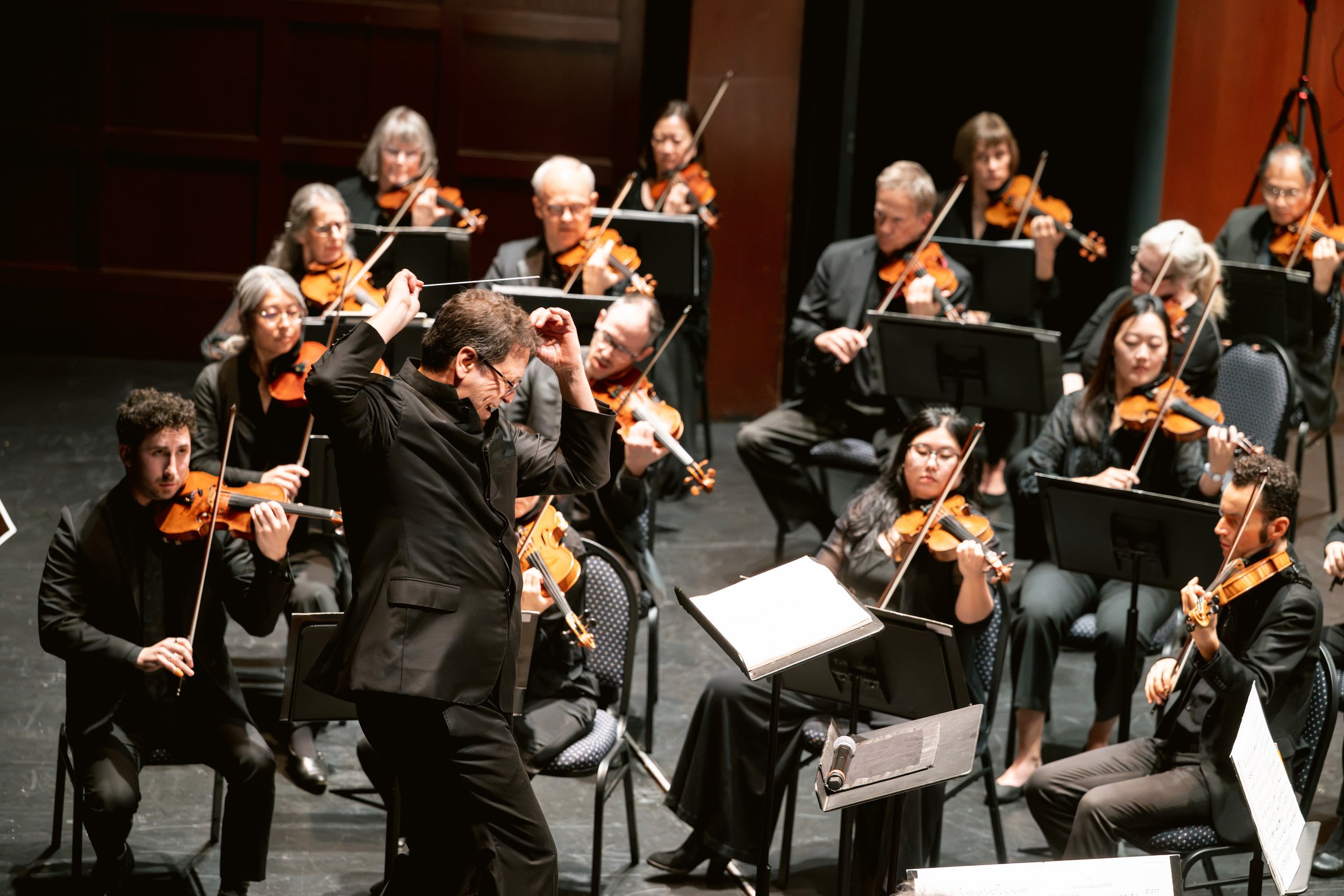
Photo by Kristen Loken. Hi res photos available here.
California Symphony’s 40th Anniversary Season Continues November 7 & 8 with FROM TCHAIKOVSKY TO COPLAND – CLASSICAL CONTEMPORARIES
Exploring the relationships between musical contemporaries across Russia and America
Led by Donato Cabrera, Artistic & Music Director
Featuring Cory Tiffin, Clarinet Soloist
In Concert Saturday, November 7 at 7:30pm & Sunday, November 8, 2026 at 4:00pm
At Walnut Creek's Lesher Center for the Arts
Tickets & Information
WALNUT CREEK, CA – California Symphony, led by Artistic and Music Director Donato Cabrera and Executive Director Lisa Dell, continues its 40th anniversary season with FROM TCHAIKOVSKY TO COPLAND – CLASSICAL CONTEMPORARIES on Saturday, November 7 at 7:30pm and Sunday, November 8, 2026 at 4:00pm in the Hofmann Theatre at the Lesher Center for the Arts (1601 Civic Drive, Walnut Creek). The concerts explore the relationships between musical contemporaries across Russia and America through music by Anton Arensky, Aaron Copland, Samuel Barber, and Pyotr Ilyich Tchaikovsky. Tickets include a free 30-minute pre-concert talk by award-winning instructor Scott Foglesong, one hour before each performance.
Russian composer Anton Arensky's Variations on a Theme by Tchaikovsky from 1894 honors his teacher Tchaikovsky, creating a direct musical and historical connection. The variations are based on a theme from Tchaikovsky's song Legend, transforming it into a work of lyrical beauty and emotional depth. Tchaikovsky's own Serenade for Strings from 1880 remains one of his most enduring and personal works, described by the composer himself as “a piece from the heart.” American composer Aaron Copland's Clarinet Concerto from 1948 was commissioned and premiered by jazz legend Benny Goodman, and fuses a lyrical and expressive first movement with a second movement influenced by popular music from North and South America, connected by a spectacular cadenza for the soloist. California Symphony's new principal clarinet, Cory Tiffin, takes center stage in this virtuosic showcase. Samuel Barber's Adagio for Strings from 1936, with its hauntingly beautiful melody, is one of the most recognizable pieces in American music, heard in concerts, films, and national moments of reflection.
The program highlights how musical contemporaries influenced one another: Arensky paid tribute to his mentor while shaping his own lyrical Russian style, while Barber and Copland—born the same year—explored complementary visions of American music, from Barber's expressive lyricism to Copland's folk-inspired “Americana.”
Donato Cabrera says, “Music is so often a conversation across time — between a teacher and the student who outlives him, between contemporaries who never meet yet breathe the same air. Arensky wrote his Variations as an elegy for Tchaikovsky, his mentor, turning a simple song into something of profound tenderness; half a world away, Barber and Copland were each inventing, in utterly distinct voices, what American music could sound like. Every note on this program carries the echo of someone else's. And with our new principal clarinet, Cory Tiffin, taking the solo spotlight in Copland's concerto — a work written for Benny Goodman himself — that conversation continues right into the present.”
Arensky’s Variations on a Theme by Tchaikovsky began as the slow movement from his String Quartet No. 2, written shortly after Tchaikovsky’s death in 1893. The movement proved to be so popular that Arensky created a version for string orchestra the following year. The theme is provided by Tchaikovsky’s song Legend, part of his set of Sixteen Children’s Songs. Over the seven variations, Arensky moves through many moods from lilting and delicate to solemn and reverent.
Tchaikovsky composed Serenade for Strings when he was in Ukraine, and included in its four movements an homage to Mozart (first movement), a Valse reminiscent of his ballet scores (second movement), a chorale-like Elegia (third movement), and a finale that draws on Russian folk songs. The premiere took place at a surprise concert for Tchaikovsky at the Moscow Conservatoire, performed by both students and professionals, in 1880. The work has persisted since then as one of the most enduring and beloved pieces for orchestra.
Copland’s Clarinet Concerto was commissioned by Benny Goodman in 1947, and Copland wrote it while he was in Rio de Janeiro working as a lecturer and conductor. Goodman premiered the concerto on an NBC radio broadcast, performing with the NBC Symphony Orchestra conducted by Fritz Reiner. The concerto incorporates many jazz elements. Copland wrote of the piece, “The instrumentation being clarinet with strings, harp, and piano, I did not have a large battery of percussion to achieve jazzy effects, so I used slapping basses and whacking harp sounds to simulate them. The Clarinet Concerto ends with a fairly elaborate coda in C major that finishes off with a clarinet glissando—or ‘smear’ in jazz lingo.”
Like Arensky’s Variations, Barber’s Adagio for Strings started as the slow movement of a string quartet. Barber was only 26 years old when he composed it. He arranged the Adagio for string orchestra at the request of the legendary conductor Arturo Toscanini, who performed it for the first time in 1938, broadcast by the NBC Symphony Orchestra (the same orchestra that would later give the first performance of Copland’s Clarinet Concerto). The piece has since been recorded hundreds of times and has been described by NPR as “America’s semi-official music for mourning,” played after John F. Kennedy’s assassination, at the funerals of Albert Einstein and Franklin D. Roosevelt, and at many memorials for the victims of September 11. Adagio for Strings was named by NPR as one of the 100 most important American musical works of the 20th century.
During the 2026-2027 season, California Symphony celebrates 40 years of bringing vibrant orchestral music to the Bay Area in five compelling programs over ten performances from September 2026 to May 2027, plus the return of California Symphony’s Holiday Traditions concerts in December 2026. California Symphony's signature programming approaches orchestral music as storytelling, and this season explores American connections across continents and generations; musical contemporaries from Russia and America; the grandeur of the Enlightenment era in Paris; California innovators alongside Beethoven's bold optimism; and evocative orchestral landscapes from Spain, Mexico, and Italy. World-class soloists join the orchestra in riveting concertos, including cellist Julian Schwarz in Jennifer Higdon's Cello Concerto, clarinetist Cory Tiffin in Aaron Copland's Clarinet Concerto, violinist Helen Kim in John Adams' Violin Concerto, and pianist Tanya Gabrielian in Manuel de Falla's Nights in the Gardens of Spain.
Founded in 1986, California Symphony has been led by Donato Cabrera since 2013. Its concert season at the Lesher Center for the Arts in Walnut Creek, California, serves a growing number of music lovers from across the Bay Area. California Symphony believes that the concert experience should be fun and inviting, and its mission is to create a welcoming, engaging, and inclusive environment for the entire community. Through this commitment to community, imaginative programming, and its support of emerging composers, California Symphony is a leader among orchestras in California and a model for regional orchestras everywhere.
During the 2026-2027 season, California Symphony will continue to serve its community beyond the stage through its nationally recognized educational initiative Sound Minds and its innovative lifelong learning program Fresh Look: The Symphony Exposed. It will also continue and expand its community partnerships with the Amateur Music Network and the Trinity Center Walnut Creek.
FOR CALENDAR EDITORS:
WHAT: California Symphony continues its 40th anniversary season with a program that explores the relationships between musical contemporaries across Russia and America. Russian composer Anton Arensky's Variations on a Theme by Tchaikovsky from 1894 honors his teacher Tchaikovsky, creating a direct musical and historical connection. The variations are based on a theme from Tchaikovsky's song Legend, transforming it into a work of lyrical beauty and emotional depth. Tchaikovsky's own Serenade for Strings from 1880 remains one of his most enduring and personal works, described by the composer himself as “a piece from the heart.” American composer Aaron Copland's Clarinet Concerto from 1948 was commissioned and premiered by jazz legend Benny Goodman, and fuses a lyrical and expressive first movement with a second movement influenced by popular music from North and South America, connected by a spectacular cadenza for the soloist. California Symphony's new principal clarinet, Cory Tiffin, takes center stage in this virtuosic showcase. Samuel Barber's Adagio for Strings from 1936, with its hauntingly beautiful melody, is one of the most recognizable pieces in American music, heard in concerts, films, and national moments of reflection. The program highlights how musical contemporaries influenced one another: Arensky paid tribute to his mentor while shaping his own lyrical Russian style, while Barber and Copland—born the same year—explored complementary visions of American music, from Barber's expressive lyricism to Copland's folk-inspired “Americana.”
Tickets include a free 30-minute pre-concert talk by award-winning instructor Scott Foglesong, one hour before each performance.
WHEN:
Saturday, November 7, 2026 at 7:30pm
Sunday, November 8, 2026 at 4pm
WHERE:
Hofmann Theatre at the Lesher Center for the Arts
1601 Civic Drive, Walnut Creek
CONCERT:
FROM TCHAIKOVSKY TO COPLAND – Classical Contemporaries
Donato Cabrera, conductor
California Symphony
PROGRAM:
Anton Arensky: Variations on Theme by Tchaikovsky (1894)
Aaron Copland: Clarinet Concerto (1948)
Cory Tiffin, clarinet
Samuel Barber: Adagio for Strings (1936)
Pyotr Ilyich Tchaikovsky: Serenade for Strings (1880)
TICKETS: Single tickets ($50-110) and student tickets ($25 for students 25 and under with valid Student ID) on sale now. Subscribe to a 5-, 4-, or 3-Concert Series for 20% savings on tickets. For more information or to purchase, visit CaliforniaSymphony.org or call (925) 280-2490.
PHOTOS: Available here
ABOUT THE CALIFORNIA SYMPHONY:
Founded in 1986, California Symphony has been led by Artistic and Music Director Donato Cabrera since 2013. It is distinguished by its vibrant concert programs that span the breadth of orchestral repertoire, including works by American composers and by living composers. Its concert season at the Lesher Center for the Arts in Walnut Creek, California serves a growing number of music lovers from across the Bay Area.
California Symphony believes that the concert experience should be fun and inviting, and its mission is to create a welcoming, engaging, and inclusive environment for the entire community. Through this commitment to community, imaginative programming, and its support of emerging composers, California Symphony is a leader among orchestras in California and a model for regional orchestras everywhere.
Since 1991, California Symphony's three-year Young American Composer-in-Residence program has provided a composer with a once-in-a-lifetime opportunity to collaborate with the orchestra over three consecutive years to create, rehearse, premiere, and record three major orchestra compositions, one each season. Every Composer-in-Residence has gone on to win top honors and accolades in the field, including the Rome Prize, Pulitzer Prize, Grammy Awards, and more.
The orchestra's nationally recognized educational initiative Sound Minds impacts students' trajectories by providing instruction for violin or cello and musicianship skills. Sound Minds has proven to contribute directly to improved reading and math proficiencies and character development, as students set and achieve goals, learn communication and problem-solving skills, and gain self-confidence. Inspired by the El Sistema program of Venezuela, the program is offered completely free of charge to the students and families of Downer Elementary School in San Pablo, California.
Through its innovative adult education program Fresh Look: The Symphony Exposed, California Symphony provides lifelong learners a fun-filled introduction to the orchestra and classical music. Led by celebrated educator and California Symphony program annotator Scott Foglesong, these live classes are held over four weeks in the summer annually.
In 2017, California Symphony became the first orchestra with a public statement of a commitment to diversity. Its website is available in both Spanish and English.
Reaching far beyond the performance hall, since 2020 the orchestra's concerts have been broadcast nationally on multiple radio series through Classical California (KUSC/KDFC) and the WFMT Radio Network, reaching over 1.5 million listeners across the country.
For more information, visit CaliforniaSymphony.org.
California Symphony’s 2026-27 season is sponsored by the Lesher Foundation.