
California Symphony Announces 2026-2027 40th Anniversary Season - Donato Cabrera, Artistic & Music Director
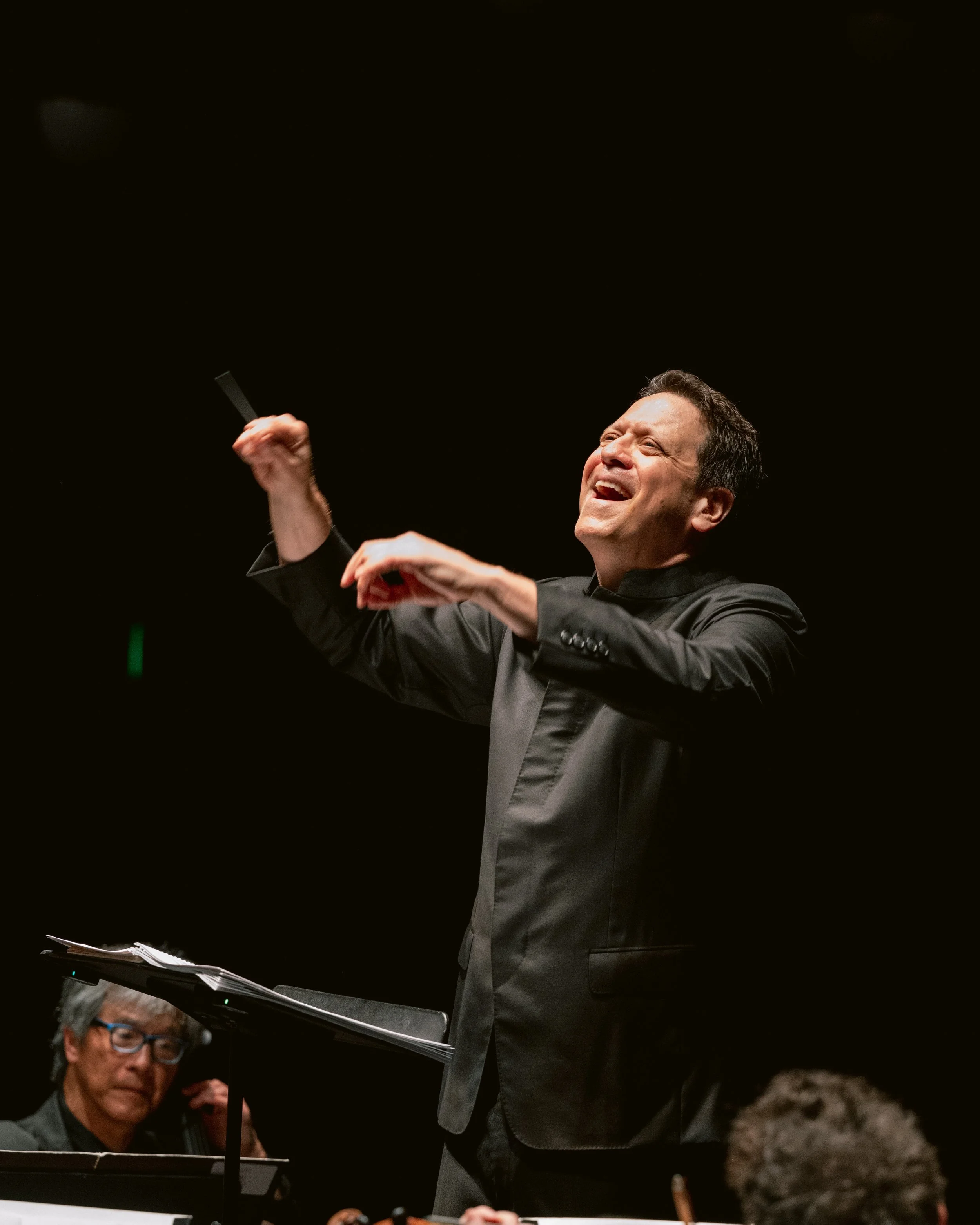
Photo by Kristen Loken. Hi res photos available here.
CALIFORNIA SYMPHONY ANNOUNCES 2026-2027
40TH ANNIVERSARY SEASON
Donato Cabrera, Artistic & Music Director
Celebrating Four Decades of Innovative Programming and Community
“Under the leadership of the irrepressible Mexican-American maestro Donato Cabrera since 2013, California Symphony takes its music seriously . . . But the educational agenda is no excuse for discounting the pleasure principle. Want to take selfies? Bring drinks to your seats? Clap when the spirit moves you? Please do! And prick up your ears for exciting new sounds! . . . Regional press is glowing” – Air Mail
Subscriptions available now. Single tickets go on sale in July.
WALNUT CREEK, CA (February 5, 2026) – California Symphony, led by Artistic and Music Director Donato Cabrera and Executive Director Lisa Dell, announces its 2026-2027 season – celebrating 40 years of bringing vibrant orchestral music to the Bay Area – in five compelling programs over ten performances at Hoffman Theatre at the Lesher Center for the Performing Arts from September 2026 to May 2027, plus the return of California Symphony’s Holiday Traditions concerts in December 2026. This season, California Symphony also welcomes its next Composer-in-Residence, Paul Novak, who will write three new works for the orchestra over the course of his three-season residency.
California Symphony's signature programming approaches orchestral music as storytelling, and this season explores American connections across continents and generations; musical contemporaries from Russia and America; the grandeur of the Enlightenment era in Paris; California innovators alongside Beethoven's bold optimism; and evocative orchestral landscapes from Spain, Mexico, and Italy. World-class soloists join the orchestra in riveting concertos, including cellist Julian Schwarz in Jennifer Higdon's Cello Concerto, clarinetist Cory Tiffin in Aaron Copland's Clarinet Concerto, violinist Helen Kim in John Adams' Violin Concerto, and pianist Tanya Gabrielian in Manuel de Falla's Nights in the Gardens of Spain.
Donato Cabrera says, “This season reflects on the artistic connections that have shaped orchestral music across time and place. From Sibelius's ocean-inspired journey to America, to the musical dialogue between Haydn and Mozart in Enlightenment Paris, to California's own pioneering composers like Cowell and Adams, these programs trace how music can capture and interpret the world around us, turning landscape, memory, and cultural identity into sound. I'm thrilled to welcome Paul Novak as our new Composer-in-Residence and to share these extraordinary works with our incredible soloists and this world-class orchestra.”
Founded in 1986, California Symphony has been led by Donato Cabrera since 2013. Its concert season at the Lesher Center for the Arts in Walnut Creek, California, serves a growing number of music lovers from across the Bay Area. California Symphony believes that the concert experience should be fun and inviting, and its mission is to create a welcoming, engaging, and inclusive environment for the entire community. Through this commitment to community, imaginative programming, and its support of emerging composers, California Symphony is a leader among orchestras in California and a model for regional orchestras everywhere.
During the 2026-2027 season, California Symphony will continue to serve its community beyond the stage through its nationally recognized educational initiative Sound Minds (September 2026 through May 2027) and will expand its innovative lifelong learning program Fresh Look: The Symphony Exposed to two communities in Lafayette and San Ramon (July 2026). It will also continue and expand its community partnerships with the Amateur Music Network and the Trinity Center Walnut Creek.
California Symphony Names Paul Novak 2026-2029 Composer-in-Residence
California Symphony will welcome Paul Novak as its next Composer-in-Residence, from fall 2026 through spring 2029. California Symphony’s Composer-in-Residence Program is unusual in that it gives early-career professional composers or graduate students in composition the opportunity to work with a professional orchestra over an extended period, composing a new orchestral work each season for three seasons and visiting the orchestra and community multiple times in order to build experience and relationships. Unique to this residency, Cabrera and the full orchestra offer three 30-minute workshops, providing an opportunity for the composer to experiment with sound and ideas in real time. The program has become one of the most sought-after in the country, with past participants going on to win major honors and awards, including GRAMMY Awards, the Rome Prize, the Barlow Prize, Guggenheim Fellowships, and more.
Paul Novak’s "spellbinding" (Washington Post) music immerses listeners in shimmering and subtly crafted musical worlds full of color, motion, light, and magic. His recent projects engage with dreams and memory, queer identity, climate change and the natural world, and psychosomatic illness. He has been commissioned by and collaborated with orchestras, chamber ensembles, and musicians around the world, and he has received awards from the Fromm Foundation, Barlow Endowment, ASCAP, BMI, American Academy of Arts and Letters, and more. Novak is the co-artistic director and flutist of Chicago-based ensemble Mycelium New Music and a PhD candidate at the University of Chicago.
“I'm so honored to be the next Composer-in-Residence of the California Symphony,” Novak says. “I look forward to collaborating with this fantastic and forward-thinking orchestra, which has a legacy of championing contemporary music, and following in the footsteps of some of my favorite composers. As a composer, I strongly believe in the power of music to build community, and I can't wait to connect with audiences in Walnut Creek and share my music with them.”
Composer Pierre Jalbert, who was California Symphony’s Composer-in-Residence from 1999 to 2002, says, “I was elated to learn that Paul Novak will be the next California Symphony Composer-in-Residence. Paul is an extremely talented composer and his music is full of energy, color, and drama. Many years ago, the residency had a huge impact on me as a composer and I know that Paul will gain so much from it as well. It was through this residency with the California Symphony and Barry Jekowsky that my music eventually traveled to the Boston Symphony, London Symphony, Hong Kong Philharmonic, and around the world. Having an orchestra read and try out different ideas is a composer's dream, and the practical as well as sonic lessons are lifelong. Congratulations to Paul and I look forward to hearing his new works!”
California Symphony 2026-2027 Concert Schedule:
SIBELIUS, HIGDON, AND BARTÓK – American Connections
Saturday, September 26, 2026 at 7:30pm
Sunday, September 27, 2026 at 4pm
Jean Sibelius: The Oceanides (1914)
Jennifer Higdon: Cello Concerto (Northern California Premiere)
Julian Schwarz, cello
Béla Bartók: Concerto for Orchestra (1943)
California Symphony opens its 40th anniversary season with a program celebrating American connections. All three works on the program share a common thread: they were premiered in the United States, a fitting nod as the nation marks its 250th anniversary and reflects on artistic ties across continents and generations. Finnish composer Jean Sibelius composed The Oceanides in 1914 for his only trip to America, creating a vivid representation that was hailed at its U.S. premiere as "the finest evocation of the sea." GRAMMY Award-winning American composer Jennifer Higdon's Cello Concerto receives its Northern California premiere, performed by the cellist for whom it was written, Julian Schwarz. The concerto showcases Higdon's distinctive voice—lyrical, rhythmically vibrant, and deeply expressive. Hungarian composer Béla Bartók fled to America during World War II, and while living in New York in 1943, composed his Concerto for Orchestra, commissioned by conductor Serge Koussevitzky for the Boston Symphony Orchestra. A true showpiece, the work turns every instrument in the orchestra into a soloist, offering dazzling displays across all five movements. From the serenity of Sibelius's ocean to Higdon's fresh contemporary voice and Bartók's exhilarating finale, this program offers a vivid musical arc.
FROM TCHAIKOVSKY TO COPLAND – Classical Contemporaries
Saturday, November 7, 2026 at 7:30pm
Sunday, November 8, 2026 at 4pm
Anton Arensky: Variations on a Theme by Tchaikovsky (1894)
Aaron Copland: Clarinet Concerto (1948)
Cory Tiffin, clarinet
Samuel Barber: Adagio for Strings (1936)
Pyotr Ilyich Tchaikovsky: Serenade for Strings (1880)
California Symphony's November concerts explore the relationships between musical contemporaries across Russia and America. Russian composer Anton Arensky's Variations on a Theme by Tchaikovsky from 1894 honors his teacher Tchaikovsky, creating a direct musical and historical connection. The variations are based on a theme from Tchaikovsky's song Legend, transforming it into a work of lyrical beauty and emotional depth. Tchaikovsky's own Serenade for Strings from 1880 remains one of his most enduring and personal works, praised by the composer himself as "a piece from the heart." American composer Aaron Copland's Clarinet Concerto from 1948 was commissioned and premiered by jazz legend Benny Goodman, and fuses a lyrical and expressive first movement with a second movement influenced by popular music from North and South America, connected by a spectacular cadenza for the soloist. California Symphony's new principal clarinet, Cory Tiffin, takes center stage in this virtuosic showcase. Samuel Barber's Adagio for Strings from 1936, with its hauntingly beautiful melody, is one of the most recognizable pieces in American music, heard in concerts, films, and national moments of reflection. The program highlights how musical contemporaries influenced one another: Arensky paid tribute to his mentor while shaping his own lyrical Russian style, while Barber and Copland—born the same year—explored complementary visions of American music, from Barber's expressive lyricism to Copland's folk-inspired "Americana."
HOLIDAY TRADITIONS
Friday, December 18, 2026 at 7:30pm
Saturday, December 19, 2026 at 2pm
Performances at the Walnut Creek Presbyterian Church
California Symphony’s holiday concerts are back by popular demand! Brass, percussion, and organ bring the season’s music into sharp focus, moving from quiet reflection to rhythmic celebration. Familiar carols such as Hark! the Herald Angels Sing and Carol of the Bells sit alongside selections from Bach’s Christmas Oratorio, creating a program that spans centuries of holiday tradition. Sacred and folk influences come together in clear, resonant arrangements that highlight both the power and the intimacy of these seasonal works, offering a direct and uplifting way to experience the music of the season.
MOZART AND HAYDN IN PARIS – Music of the Enlightenment
Saturday, January 23, 2027 at 7:30pm
Sunday, January 24, 2027 at 4pm
François Joseph Gossec: Symphony No. 2 in G Major (published 1769)
Wolfgang Amadeus Mozart: Symphony. No. 31 in D Major (1778)
Joseph Bologne, Chevalier de Saint-Georges: Symphony No. 1 in G Major (published 1779)
Franz Joseph Haydn: Symphony No. 85 in B-flat Major (1785)
California Symphony's first concerts in 2027 transport audiences to the vital musical world of late 18th-century Paris, where these four composers moved in overlapping artistic circles. Belgian-born composer François Joseph Gossec helped shape the early symphonic tradition in France, where opera had long dominated, and his Symphony No. 2 , published in 1769, demonstrates his skill in crafting elegant and balanced instrumental works. Wolfgang Amadeus Mozart's Symphony No. 31, the “Paris” Symphony from 1778, was written for a public concert series and showcases his flair for vibrant, energetic orchestration and dramatic contrasts. Joseph Bologne, Chevalier de Saint-Georges, was a virtuoso violinist and composer from the Caribbean island of Guadalupe whose music is being revived after centuries of neglect. He not only performed under Gossec's baton but also led his own orchestra. Around 1786, he commissioned and conducted the premiere of Franz Joseph Haydn's Symphony No. 85 in Paris. Known as “La Reine” (“The Queen”) because Queen Marie Antoinette particularly admired it, Haydn's symphony reveals his gift for wit, surprise, and inventive musical conversation. These composers contributed to a thriving cultural landscape where ideas, styles, and innovations traveled quickly among performers and audiences, making Paris a true center of the musical Enlightenment.
BEETHOVEN’S SECOND – Cowell, Adams, & Beethoven: Masterful Mavericks
Saturday, March 13, 2027 at 7:30pm
Sunday, March 14, 2027 at 4pm
Henry Cowell: Hymn and Fuguing Tune No. 10 (1955)
John Adams: Violin Concerto (1993)
Helen Kim, violin
Ludwig van Beethoven: Symphony No. 2 in D Major (1802)
California Symphony's March concerts celebrate bold innovators across three centuries. San Francisco-born composer Henry Cowell was a pioneering American modernist whose Hymn and Fuguing Tune No. 10 from 1955 blends mid-18th-century fuguing techniques—a distinctly American tradition—with modern rhythms and expressive harmonies. The result is music that feels both rooted in history and thoroughly contemporary. Fellow Californian John Adams' Violin Concerto from 1993 pulses with minimalist energy, contrasting soaring lyricism with dazzling virtuosity as the solo violin interacts with colorful orchestral textures. The second movement's chaconne is inspired by Pachelbel's famous canon, while the finale erupts in rhythmic drive and electric energy. Violinist Helen Kim, praised as "astoundingly gifted" (San Francisco Chronicle), brings technical brilliance and expressive depth to this demanding concerto. Ludwig van Beethoven composed his Symphony No. 2 in 1802 during a personal crisis—he was coming to terms with his hearing loss—yet the work radiates optimism, wit, and energy. The symphony represents Beethoven at a turning point, with the first hints of the heroic style that would define his later works. The musical connections resonate throughout: Cowell and Adams both draw on historical structures while Beethoven's Symphony No. 2 shares the bright, uplifting key of D major, subtly echoing this shared tonal center.
PINES OF ROME – Orchestral Landscapes
Saturday, May 8, 2027 at 7:30pm
Sunday, May 9, 2027 at 4pm
Paul Novak: World Premiere
Composer-in-Residence
Manuel de Falla: Nights in the Gardens of Spain (1909-15)
Tanya Gabrielian, piano
Manuel Ponce: Chapultepec (1929, rev. 1934)
Ottorino Respighi: Pines of Rome (1924)
California Symphony's season finale concerts feature landscapes from Spain, Mexico, and Italy, showcasing composers' abilities to transform place and memory into sweeping orchestral narratives. The program opens with the world premiere of a new work by Composer-in-Residence Paul Novak, whose shimmering, colorful music creates immersive sonic worlds. Spanish composer Manuel de Falla's Nights in the Gardens of Spain blends impressionistic textures with flamenco-inspired rhythms, creating evocative, luminous soundscapes that capture the mystery and romance of Andalusian gardens at night. Bay Area native Tanya Gabrielian brings expressive lyricism and technical brilliance to this concerto-like work for piano and orchestra. Mexican composer Manuel Ponce's Chapultepec celebrates the iconic park in Mexico City, blending folk influences with classical elegance in a work that evokes Mexico's rich cultural heritage. Italian composer Ottorino Respighi's Pines of Rome from 1924 uses the full orchestra to conjure vivid imagery, from dawn in the park to nocturnal city streets to the ancient Appian Way, showcasing Respighi's coloristic mastery. Across three countries, this program highlights music's power to evoke place, atmosphere, and memory.
Concert Details:
Locations: All concerts except for Holiday Traditions are held at Hofmann Theatre at the Lesher Center for the Arts; 1601 Civic Drive; Walnut Creek, CA. Holiday Traditions concerts are held at the Walnut Creek Presbyterian Church; 1801 Lacassie Ave.; Walnut Creek, CA.
Ticket Information: 5-Concert Subscriptions concerts start at $200 and are available now. 3- and 4-Concert subscriptions go on sale in late May, and single tickets ($50-110) and student tickets ($25 for students 25 and under with valid Student ID) on sale in July. For more information or to purchase tickets, visit CaliforniaSymphony.org or call (925) 280-2490.
About the California Symphony:
Founded in 1986, California Symphony has been led by Artistic and Music Director Donato Cabrera since 2013. It is distinguished by its vibrant concert programs that span the breadth of orchestral repertoire, including works by American composers and by living composers. Its concert season at the Lesher Center for the Arts in Walnut Creek, California serves a growing number of music lovers from across the Bay Area.
California Symphony believes that the concert experience should be fun and inviting, and its mission is to create a welcoming, engaging, and inclusive environment for the entire community. Through this commitment to community, imaginative programming, and its support of emerging composers, California Symphony is a leader among orchestras in California and a model for regional orchestras everywhere.
Since 1991, California Symphony's three-year Young American Composer-in-Residence program has provided a composer with a once-in-a-lifetime opportunity to collaborate with the orchestra over three consecutive years to create, rehearse, premiere, and record three major orchestra compositions, one each season. Every Composer-in-Residence has gone on to win top honors and accolades in the field, including the Rome Prize, Pulitzer Prize, Grammy Awards, and more.
The orchestra's nationally recognized educational initiative Sound Minds impacts students' trajectories by providing instruction for violin or cello and musicianship skills. Sound Minds has proven to contribute directly to improved reading and math proficiencies and character development, as students set and achieve goals, learn communication and problem-solving skills, and gain self-confidence. Inspired by the El Sistema program of Venezuela, the program is offered completely free of charge to the students and families of Downer Elementary School in San Pablo, California.
Through its innovative adult education program Fresh Look: The Symphony Exposed, California Symphony provides lifelong learners a fun-filled introduction to the orchestra and classical music. Led by celebrated educator and California Symphony program annotator Scott Foglesong, these live classes are held over four weeks in the summer annually.
In 2017, California Symphony became the first orchestra with a public statement of a commitment to diversity. Its website is available in both Spanish and English.
Reaching far beyond the performance hall, since 2020 the orchestra's concerts have been broadcast nationally on multiple radio series through Classical California (KUSC/KDFC) and the WFMT Radio Network, reaching over 1.5 million listeners across the country.
For more information, visit CaliforniaSymphony.org.