
April 10: Jonas Kaufmann Announces New Sony Classical Album Magische Töne – Title Track Out Today
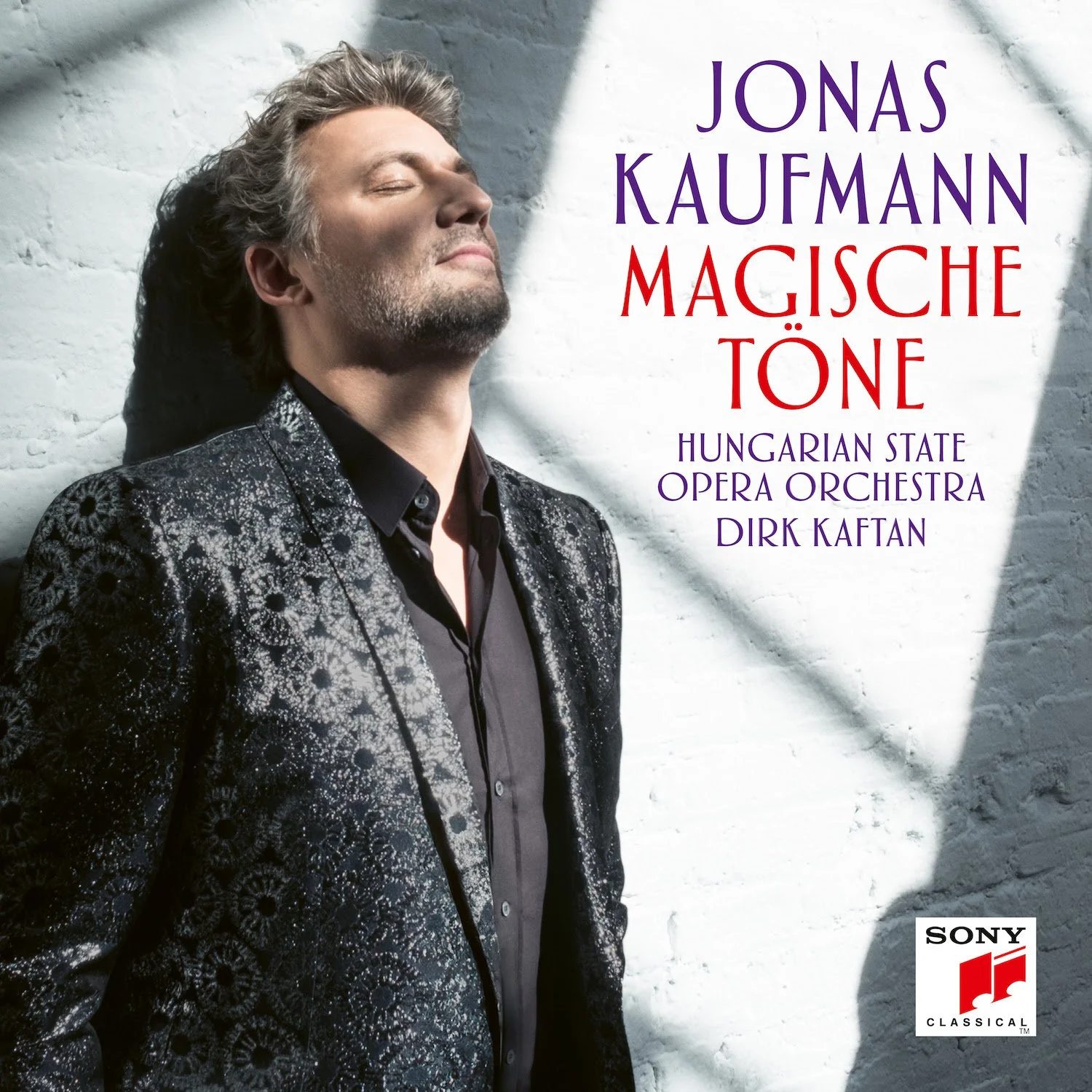
Jonas Kaufmann
Announces New Operetta Album on Sony Classical
Magische Töne
Title Track Out Today - Listen Here
Album Release Date: April 10, 2026
Pre-Order Available Now
Jonas Kaufmann’s new Sony Classical album, Magische Töne (Magical Sounds), features some of the most beautiful operetta and opera melodies. In addition to perennial favourites by Emmerich Kálmán, Franz Lehár, and Paul Abraham, the album also includes one of the most popular arias in the tenor repertoire: the eponymous Magische Töne from Karl Goldmark's opera Die Königin von Saba (The Queen of Sheba), which is out today – listen here. Pre-order is available now.
First Vienna, now Budapest: this is where Jonas Kaufmann recorded his new album with the Hungarian State Opera Orchestra, conducted by Dirk Kaftan. The album focuses on highlights by composers from the era of the Austro-Hungarian Empire (1867–1918), including perennial favourites from the operettas of Emmerich (Imre) Kálmán, Franz (Ferenc) Lehár, and Paul (Pál) Abraham.
According to Kaufmann, “this era produced an incredible wealth of music. In retrospect, it is fortunate that the majority of these works were premiered in Vienna and written in German, because that meant they quickly achieved international success.”
Had they used the Hungarian language, these works would probably have remained a national art form – like the operettas of Jenő Huszka (1875–1960), which, despite their quality, were rarely performed outside Hungary. For this album, Kaufmann has chosen one of Huszka’s “best known” pieces: Bob’s entrance aria from the operetta Bob herceg (Prince Bob).
“There, the whole world is still red, white, and green” – these are the final words of the duet Komm mit nach Varasdin (Come with me to Varasdin) from Kálmán’s Gräfin Mariza (Countess Maritza). Of course, the colors of the Hungarian flag are just as clearly audible in the music as they are in the lyrics, and thus represent an element of national identity. But this second heyday of operetta also represents the melancholic memory of a liberal, cosmopolitan, and culturally diverse Europe that perished with the First World War, and which Stefan Zweig described so vividly in his memoir Die Welt von gestern (The World of Yesterday). Jonas Kaufmann's duet partner is Nikola Hillebrand, currently one of the most “sought-after” sopranos of her generation.
For Dirk Kaftan, the conductor featured on the album, the recordings were a welcome reunion with a genre he had studied thoroughly during his time as general music director in Graz: “Above all, one must develop an understanding for a musical language that cannot be captured in notation. Gustav Mahler’s famous statement is particularly applicable to this repertoire: ‘The most important things are not written in the score!’ This is also why I found the recording sessions with the Hungarian State Opera Orchestra so rewarding: these musicians know exactly what it is all about and how to bring it to life.”
Kaftan sees a clear parallel between the innovative style of Paul Ábrahám, who enriched the genre with elements of jazz, foxtrot, and revue, and the works of Kurt Weill: both represent “a means of expression for a future that was destroyed by the Nazis.”
Two opera arias round off the new album: Hazám, hazám (My Homeland) from Ferenc Erkel’s opera Bánk bán – a passionate declaration of love for the Hungarian homeland – and Magische Töne, the famous aria from Karl (Károly) Goldmark’s Die Königin von Saba. These sounds become magical when the singer knows how to produce delicate, intimate pianissimo sounds in a high register – something that Jonas Kaufmann finds particularly enticing: “Someone once said to me: ‘Your loud notes are thrilling, but your soft ones drive me crazy.’ Dramatic sounds probably have more of an effect on the listener’s body and nervous system, while soft ones affect the heart and soul.”
Magische Töne with Jonas Kaufmann, the Hungarian State Opera Orchestra, conductor Dirk Kaftan, and soprano Nikola Hillebrand will be released digitally and on CD by Sony Classical on April 10, 2026.
Magische Töne Repertoire
Imre Kálmán (1882–1953): Komm Zigány [Gräfin Mariza, Act 1]
Imre Kálmán (1882–1953): Ich bitte, nicht lachen … Komm mit nach Varasdin! [Gräfin Mariza, Act 1, Duett] (mit Nikola Hillebrand, Sopran)
Imre Kálmán (1882–1953): Mondd meg, hogy imádom a pesti nőket (Grüß mir mein Wien) [Gräfin Mariza, Act 1]
Imre Kálmán (1882–1953): Holdes, berauschendes Bild … Liebe singt ihr Zauberlied [Kaiserin Josephine, Act 1, No. 4]
Imre Kálmán (1882–1953): Tanzen möcht’ ich … Tausend kleine Engel singen [Die Csárdásfürstin, Act 2, Duett] (mit Nikola Hillebrand, Sopran)
Imre Kálmán (1882–1953): So verliebt kann ein Ungar nur sein (Tief wie der Bergsee) [Der Teufelsreiter, Act 1, No. 2]
Ferenc Lehár (1870–1948): Allein! Wieder allein! (Es steht ein Soldat am Wolgastrand) [Der Zarewitsch, Act 1]
Ferenc Lehár (1870–1948): O Mädchen, mein Mädchen… [Friederike, Act 2]
Ferenc Lehár (1870–1948): Ich trete ins Zimmer … Immer nur lächeln [Das Land des Lächelns, Act 1]
Ferenc Lehár (1870–1948): Wer hat die Liebe uns ins Herz gesenkt [Das Land des Lächelns, Act 2, Duett] (mit Nikola Hillebrand, Sopran)
Ferenc Lehár (1870–1948): Schön wie die blaue Sommernacht [Giuditta, Act 2, Duett] (mit Nikola Hillebrand, Sopran)
Pál Ábrahám (1892–1960): Ein Paradies am Meeresstrand [Die Blume von Hawaii, Act 1]
Pál Ábrahám (1892–1960): Will Dir die Welt zu Füßen legen [Die Blume von Hawaii, Act 1]
Pál Ábrahám (1892–1960): Pardon Madame [Viktoria und ihr Husar, Act 1]
Pál Ábrahám (1892–1960): Nur ein Mädel gibt es auf der Welt [Viktoria und ihr Husar, Act 1]
Pál Ábrahám (1892–1960): Sing-Sing [Julia]
Pál Ábrahám (1892–1960): Der schönste Gedanke [Zigeuner der Nacht]
Fred Raymond (1900–1954): Die Juliska, die Juliska aus Buda-, Budapest [Maske in Blau, Drittes Bild, Nr. 11, Duett] (mit Nikola Hillebrand, Sopran)
Nico Dostal (1895–1981): Frag nur dein Herz, was Liebe ist [Die ungarische Hochzeit, Act 1, Duett] (mit Nikola Hillebrand, Sopran)
Jenő Huszka (1875–1960): Londonban hej! (Bob belépője) [Bob herceg, Act 1, No. 3]
Ferenc Erkel (1810–1893): Mint számûzött ki vándorol … Hazám, hazám [Bánk bán, Act 2]
Karl Goldmark (1830–1915): Magische Töne, berauschender Duft [Die Königin von Saba, Op. 27, Act 2]
Magische Töne Live Tour Dates
11.04. Hamburg, Laeiszhalle
15.04. München, Isarphilharmonie
18.04. Nürnberg, Meistersingerhalle
20.04. Paris, Théâtre des Champs-Élysées
22.04. Wien, Konzerthaus
24.04. Budapest, MüPa
26.04. Hannover, Kuppelsaal
28.04. Essen, Philharmonie
30.04. Freiburg, Konzerthaus
03.05. Stuttgart, Liederhalle
05.05. Luzern, KKL
07.05. Mannheim, Rosengarten / Mozartsaal
09.05. Frankfurt, Alte Oper
Tickets and information: jonaskaufmann.com