

Oct. 30: Movie Night Recital Presented by Telegraph Quartet – University of Michigan School of Music, Theatre & Dance Quartet-in-Residence
Oct. 30: Movie Night Recital Presented by Telegraph Quartet – University of Michigan School of Music, Theatre & Dance Quartet-in-Residence
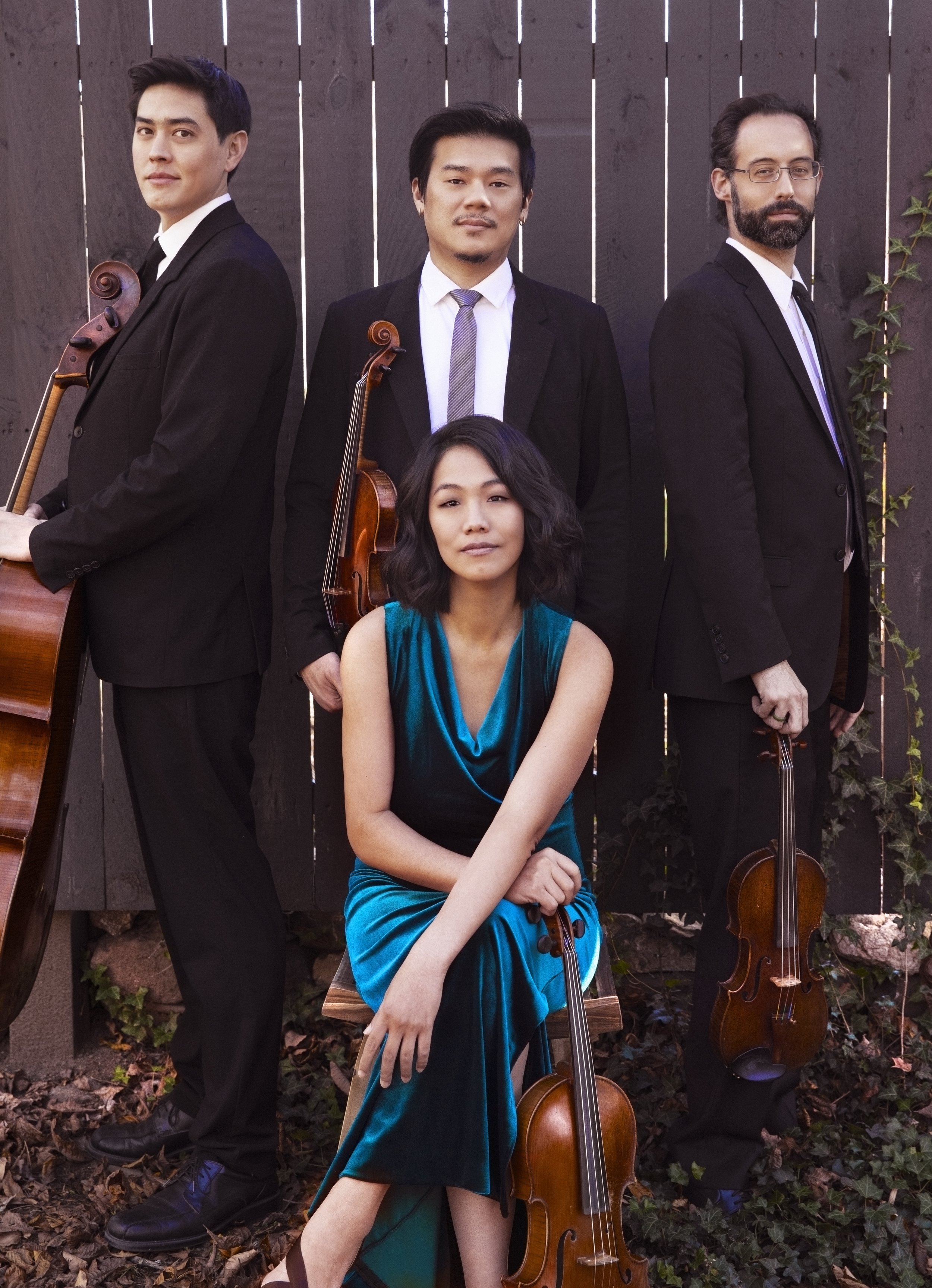
Photo of the Telegraph Quartet by Lisa Marie Mazzucco available in high resolution here.
Telegraph Quartet Presents Movie Night
University of Michigan School of Music, Theatre & Dance Quartet-in-Residence
Friday, October 30, 2026, at 7:30pm
Stamps Auditorium at the Walgreen Drama Center
1226 Murfin Ave. | Ann Arbor, MI | Free and Open to the Public
More Information | Livestream Here
“precise tuning, textural variety and impassioned communication” – The Strad
Ann Arbor, MI – On Friday, October 30, 2026, at 7:30pm, the Telegraph Quartet, quartet-in-residence with the University of Michigan School of Music, Theatre & Dance, will present its first university recital of the season in Stamps Auditorium at the Walgreen Drama Center. The concert, titled Movie Night, features a screening of the 1924 Buster Keaton silent film Sherlock Jr., with a film score by composer Stephen Prutsman performed live by the Telegraph Quartet with recent U-M doctoral graduate, pianist Takeshi Nagayasu. The program also includes two other works influenced by film or staged works – Dimitri Shostakovich’s Elegy and Polka, and Erich Wolfgang Korngold’s String Quartet No. 3 in D Major, Op. 34.
The Telegraph (Eric Chin and Joseph Maile, violins; Pei-Ling Lin, viola; Jeremiah Shaw, cello) formed in 2013 with an equal passion for standard and contemporary chamber music repertoire; they rose quickly, winning the prestigious 2016 Walter W. Naumburg Chamber Music Award and the Grand Prize at the 2014 Fischoff Chamber Music Competition. Today, they perform across the United States and abroad, at venues including New York City’s Carnegie Hall, Lincoln Center, and Town Hall; San Francisco’s Herbst Theatre; the Philharmonie de Paris; and at festivals including the Chautauqua Institute, Music in the Vineyards in Napa Valley, and the Emilia Romagna Festival in Italy.
A stylistically versatile composer, Prutsman has written scores to accompany several of Buster Keaton’s silent films – many of which are decidedly comedic. For this story, which involves a dream sequence, a secret theft, a wild villain chase, and pining after a love interest, Prutsman turns to an assortment of tones, rhythms, and musical techniques in order to emphasize the emotional stakes throughout the film. Shostakovich wrote Elegy and its companion piece Polka in a single night in 1931. Elegy is the transcription of a haunting aria from his opera Lady Macbeth of Mtsensk, while Polka is a version of a comical dance from his soccer-inspired ballet The Golden Age. These short pieces were lost for many years and not rediscovered until the 1980s, when they were made available by the USSR State Copyright Agency. Korngold’s String Quartet No. 3 was his last chamber music work, completed in 1945. Korngold was one of the most influential composers in Hollywood, and in his third string quartet he quoted from his scores for films, including Between Two Worlds (1944), The Sea Wolf (1941), and Devotion (1943).
The Telegraph Quartet released its celebrated debut album Into the Light in 2018 and is currently recording an extensive three-album series titled 20th Century Vantage Points for Azica Records, exploring string quartets of the 20th century. The first volume, Divergent Paths (2022), features two works that (to the best of the Telegraph Quartet’s knowledge) have never been recorded on the same album before: Maurice Ravel’s String Quartet in F Major and Arnold Schoenberg’s String Quartet No. 1 in D minor, Op. 7. In August 2025, the Telegraph released the second volume, Edge of the Storm, which examines the turbulent years of war and its aftermath from 1941-1951 through string quartets by Grażyna Bacewicz, Benjamin Britten, and Mieczysław Weinberg. Volume three will be released in fall 2027. In addition, the Telegraph released a recording of the string quartets of Robert Sirota in summer 2026 (Azica Records) and will release a recording of Kenji Bunch string quartets in spring 2027 (Phenotypic Records).
Beyond the concert stage, the Telegraph Quartet seeks to spread its music through education and audience engagement. The Telegraph has given master classes, served as artists-in-residence, and launched ChamberFEAST!, a chamber music workshop in Taiwan. In fall 2020, the Telegraph launched an online video project called TeleLab, in which the ensemble collectively breaks down the components of a movement from various works for quartet. In the summers of 2022 and 2024, the Telegraph Quartet traveled to Vienna to work with Schoenberg expert Henk Guittart in conjunction with the Arnold Schoenberg Center, researching all of Schoenberg's string quartets.
For more information, visit www.telegraphquartet.com.
Concert details:
Who: Telegraph Quartet Presents Movie Night
Presented by the University of Michigan
What: Music by Stephen Prutsman, Dimitri Shostakovich, and Erich Korngold
When: Friday, October 30, 2026, at 7:30pm
Where: Stamps Auditorium at the Walgreen Drama Center, 1226 Murfin Ave, Ann Arbor, MI 48109
More information: (Free and Open to the Public): https://smtd.umich.edu/event/30-october-2026-3/
Livestream: https://smtd.umich.edu/live-stream-stamps/
Description: The Telegraph Quartet – the quartet-in-residence at the University of Michigan School of Music, Theatre & Dance – presents Movie Night, the group’s first faculty recital of the 2026-2027 season. The program includes Sherlock Jr. by Stephen Prutsman, the score for Buster Keaton’s 1924 silent film of the same name; Dimitri Shostakovich’s Elegy and Polka; and Erich Wolfgang Korngold’s String Quartet No. 3 in D Major, Op. 34. The latter will be performed live by Telegraph and recent U-M doctoral graduate Takeshi Nagayasu on piano, alongside a screening of the film.

Oct. 11: Telegraph Quartet Performs at The Chapel at Camp Wi-Ne-Ma – Presented by Neskowin Chamber Music
Oct. 11: Telegraph Quartet Performs at The Chapel at Camp Wi-Ne-Ma – Presented by Neskowin Chamber Music

Photo of the Telegraph Quartet by Lisa Marie Mazzucco available in high resolution here.
Telegraph Quartet Performs at The Chapel at Camp Wi-Ne-Ma
Presented by Neskowin Chamber Music
“soulfulness, tonal beauty” – San Francisco Chronicle
“full of elegance” – The New York Times
Sunday, October 11, 2026 at 3pm
The Chapel at Camp Wi-Ne-Ma | 5195 Wi Ne Ma Road | Cloverdale, OR
More information
Cloverdale, OR – On Sunday, October 11, 2026 at 3pm, the Telegraph Quartet (Eric Chin and Joseph Maile, violins; Pei-Ling Lin, viola; Jeremiah Shaw, cello), a group described by The San Francisco Chronicle as being “an incredibly valuable addition to the cultural landscape,” will perform at The Chapel at Camp Wi-Ne-Ma (5195 Wi Ne Ma Road) presented by Neskowin Chamber Music.
The Telegraph formed in 2013 with an equal passion for standard and contemporary chamber music repertoire and rose quickly, winning the prestigious 2016 Walter W. Naumburg Chamber Music Award and the Grand Prize at the 2014 Fischoff Chamber Music Competition. Today, they perform across the United States and abroad, at venues including New York City’s Carnegie Hall, Lincoln Center, and Town Hall; San Francisco’s Herbst Theatre; the Philharmonie de Paris; and at festivals including the Chautauqua Institute, Music in the Vineyards in Napa Valley, and the Emilia Romagna Festival in Italy. They are the Quartet-in-Residence at the University of Michigan in Ann Arbor.
The Telegraph is known for its technical prowess and an appreciation for the history behind music. The celebrated group’s concert in Cloverdale features three emotionally rich works which all draw inspiration from other works in the composers’ catalogs, including Russian composer Dimitri Shostakovich’s Elegy and Polka; German composer Felix Mendelssohn’s String Quartet No. 2, Op. 13, “Es ist wahr?;” and Austrian-American composer Erich Wolfgang Korngold’s String Quartet No. 3 in D Major, Op. 34.
Of the program, the Telegraph Quartet says,
“Very much looking forward to returning to Neskowin Chamber Music and performing in the Wi-Ne-Ma Chapel again! This program mixes the earnest with the whimsical, juxtaposing Shostakovich's poignant Elegy and laugh-out-loud antics of the Polka as a microcosmic jumping-off-point for the program. This vein continues with Mendelssohn's youthfully earnest and masterful channelling of Beethoven's late quartet style in which Mendelssohn had immersed himself, while still retaining his characteristic scherzando nimbleness. And lastly, Korngold, the famed Hollywood composer of high adventure who imbedded themes of his popular scores into a work that contains the darkness and struggle of that war-time era, capped with the celebration of the victorious end of it!”
Shostakovich wrote Elegy and its companion piece Polka in a single night in 1931. Elegy is transcription of a haunting aria from his opera Lady Macbeth of Mtsensk, while Polka is a version of a comical dance from his soccer-inspired ballet The Golden Age. These short pieces were lost for many years and not rediscovered until the 1980s when they were made available by the USSR State Copyright Agency. Mendelssohn wrote his String Quartet No. 2 in 1827 when he was just 18 years old. The passionate piece is heavily influenced by another great German composer, Ludwig van Beethoven, who had recently died. The title that Mendelssohn added, “Ist es wahr?" or “Is it true?,” quotes the first line of a song he had written just a few months earlier, "Is it true that you wait for me in the arbour by the vineyard wall?". Korngold’s String Quartet No. 3 was his last chamber music work, completed in 1945. Korngold was one of the most influential composers in Hollywood, and in his third string quartet he quoted from his scores for films including Between Two Worlds (1944), The Sea Wolf (1941), and Devotion (1943).
The Telegraph Quartet released its celebrated debut album Into The Light in 2018 and is currently recording an extensive three-album series titled 20th Century Vantage Points for Azica Records, exploring string quartets of the 20th century, including music by Ravel, Schoenberg, Britten, Bacewicz, and Weinberg. Of the first installment, Divergent Paths, The New York Times reported, “Every minute of their account sounds gripping and purposeful.” The second installment, Edge of the Storm, was named Album of the Year by Chamber Music America in 2025. Volume three will be released in fall 2027. Committed to recording music by living composers as well, the Telegraph also releases the string quartets of Robert Sirota in summer 2026 (Azica Records) and of Kenji Bunch in spring 2027 (Phenotypic Records).
Beyond the concert stage, the Telegraph Quartet seeks to spread its music through education and audience engagement. The Quartet has given master classes, served as artists-in-residence, and launched ChamberFEAST!, a chamber music workshop in Taiwan. In fall 2020, Telegraph launched an online video project called TeleLab, in which the ensemble collectively breaks down the components of a movement from various works for quartet. In the summers of 2022 and 2024, the Telegraph Quartet traveled to Vienna to work with Schoenberg expert Henk Guittart in conjunction with the Arnold Schoenberg Center, researching all of Schoenberg's string quartets.
For more information, visit www.telegraphquartet.com.
For Calendar Editors:
Concert details:
Who: Telegraph Quartet
Presented by Neskowin Chamber Music
What: Music by Dimitri Shostakovich, Felix Mendelssohn, and Erich Korngold
When: Sunday, October 11, 2026 at 3pm
Where: The Chapel at Camp W-Ne-Ma; 5195 Wi Ne Ma Road; Cloverdale, OR 97112
Tickets and information: https://www.neskowinchambermusic.org/2026-2027-season.html
Description: The award-winning Telegraph Quartet, a group described by The San Francisco Chronicle as being “an incredibly valuable addition to the cultural landscape,” performs a concert presented by Neskowin Chamber Music. The emotionally rich, musically complex program features Shostakovich’s Elegy and Polka, Mendelssohn’s String Quartet No. 2, Op. 13, “Es ist wahr?” and Korngold’s String Quartet No. 3 in D Major, Op. 34.

Oct. 10: Telegraph Quartet Performs at Patricia Valian Reser Center for the Performing Arts (PRAx) – Presented by Chamber Music Corvallis
Oct. 10: Telegraph Quartet Performs at Patricia Valian Reser Center for the Performing Arts (PRAx) – Presented by Chamber Music Corvallis

Photo of the Telegraph Quartet by Lisa Marie Mazzucco available in high resolution here.
Telegraph Quartet Performs at
Patricia Valian Reser Center for the Performing Arts (PRAx)
Presented by Chamber Music Corvallis
“full of elegance” – The New York Times
“precise tuning, textural variety and impassioned communication”
– The Strad
Saturday, October 10, 2026 at 7pm
Patricia Valian Reser Center for the Performing Arts (PRAx)
470 SW 15th St. | Corvallis, OR
More information
Corvallis, OR – On Saturday, October 10, 2026 at 7pm, the Telegraph Quartet (Eric Chin and Joseph Maile, violins; Pei-Ling Lin, viola; Jeremiah Shaw, cello), a group described by The San Francisco Chronicle as being “an incredibly valuable addition to the cultural landscape,” will perform at the Patricia Valian Reser Center for the Performing Arts (PRAx) (470 SW 15th St.), presented by Corvallis Chamber Music.
The Telegraph formed in 2013 with an equal passion for standard and contemporary chamber music repertoire and rose quickly, winning the prestigious 2016 Walter W. Naumburg Chamber Music Award and the Grand Prize at the 2014 Fischoff Chamber Music Competition. Today, they perform across the United States and abroad, at venues including New York City’s Carnegie Hall, Lincoln Center, and Town Hall; San Francisco’s Herbst Theatre; the Philharmonie de Paris; and at festivals including the Chautauqua Institute, Music in the Vineyards in Napa Valley, and the Emilia Romagna Festival in Italy. They are the Quartet-in-Residence at the University of Michigan in Ann Arbor.
The Telegraph is known for its technical prowess and an appreciation for the history behind music. The celebrated group’s Corvallis performance features three emotionally rich works which all draw inspiration from other works in the composers’ catalogs, including Russian composer Dimitri Shostakovich’s Elegy and Polka; German composer Felix Mendelssohn’s String Quartet No. 2, Op. 13, “Es ist wahr?;” and Austrian-American composer Erich Wolfgang Korngold’s String Quartet No. 3 in D Major, Op. 34.
Shostakovich wrote Elegy and its companion piece Polka in a single night in 1931. Elegy is transcription of a haunting aria from his opera Lady Macbeth of Mtsensk, while Polka is a version of a comical dance from his soccer-inspired ballet The Golden Age. These short pieces were lost for many years and not rediscovered until the 1980s when they were made available by the USSR State Copyright Agency. Mendelssohn wrote his String Quartet No. 2 in 1827 when he was just 18 years old. The passionate piece is heavily influenced by another great German composer, Ludwig van Beethoven, who had recently died. The title that Mendelssohn added, “Ist es wahr?" or “Is it true?,” quotes the first line of a song he had written just a few months earlier, "Is it true that you wait for me in the arbour by the vineyard wall?". Korngold’s String Quartet No. 3 was his last chamber music work, completed in 1945. Korngold was one of the most influential composers in Hollywood, and in his third string quartet he quoted from his scores for films including Between Two Worlds (1944), The Sea Wolf (1941), and Devotion (1943).
Telegraph Quartet has this to say about the program:
“This program mixes the earnest with the whimsical, juxtaposing Shostakovich's poignant Elegy and laugh-out-loud antics of the Polka as a microcosmic jumping-off-point for the program. This vein continues with Mendelssohn's youthfully earnest and masterful channelling of Beethoven's late quartet style in which Mendelssohn had immersed himself, while still retaining his characteristic scherzando nimbleness. And lastly, Korngold, the famed Hollywood composer of high adventure who imbedded themes of his popular scores into a work that contains the darkness and struggle of that war-time era, capped with the celebration of the victorious end of it!”
The Telegraph Quartet released its celebrated debut album Into The Light in 2018 and is currently recording an extensive three-album series titled 20th Century Vantage Points for Azica Records, exploring string quartets of the 20th century, including music by Ravel, Schoenberg, Britten, Bacewicz, and Weinberg. Of the first installment, Divergent Paths, The New York Times reported, “Every minute of their account sounds gripping and purposeful.” The second installment, Edge of the Storm, was named Album of the Year by Chamber Music America in 2025. Volume three will be released in fall 2027. Committed to recording music by living composers as well, the Telegraph also releases the string quartets of Robert Sirota in summer 2026 (Azica Records) and of Kenji Bunch in spring 2027 (Phenotypic Records).
Beyond the concert stage, the Telegraph Quartet seeks to spread its music through education and audience engagement. The Quartet has given master classes, served as artists-in-residence, and launched ChamberFEAST!, a chamber music workshop in Taiwan. In fall 2020, Telegraph launched an online video project called TeleLab, in which the ensemble collectively breaks down the components of a movement from various works for quartet. In the summers of 2022 and 2024, the Telegraph Quartet traveled to Vienna to work with Schoenberg expert Henk Guittart in conjunction with the Arnold Schoenberg Center, researching all of Schoenberg's string quartets.
For more information, visit www.telegraphquartet.com.
For Calendar Editors:
Concert details:
Who: Telegraph Quartet
Presented by Chamber Music Corvallis
What: Music by Dimitri Shostakovich, Felix Mendelssohn, and Erich Korngold
When: Saturday, October 10, 2026 at 7pm
Where: Patricia Valian Reser Center for the Performing Arts (PRAx), 470 SW 15th St., Corvallis, OR 97331
Tickets and information: https://prax.oregonstate.edu/events/chamber-music-corvallis-telegraph-quartet
Description: The award-winning Telegraph Quartet, a group described by The Strad as having “precise tuning, textural variety and impassioned communication,” performs a concert presented by Chamber Music Corvallis. The emotionally rich, musically complex program features Shostakovich’s Elegy and Polka, Mendelssohn’s String Quartet No. 2, Op. 13, “Es ist wahr?” and Korngold’s String Quartet No. 3 in D Major, Op. 34.

Nov. 6: Composer and Multi-Instrumentalist Amir ElSaffar Announces Ashwaaq on Maqām Records – New Single Out Today
Nov. 6: Composer and Multi-Instrumentalist Amir ElSaffar Announces Ashwaaq – New Album on Maqām Records
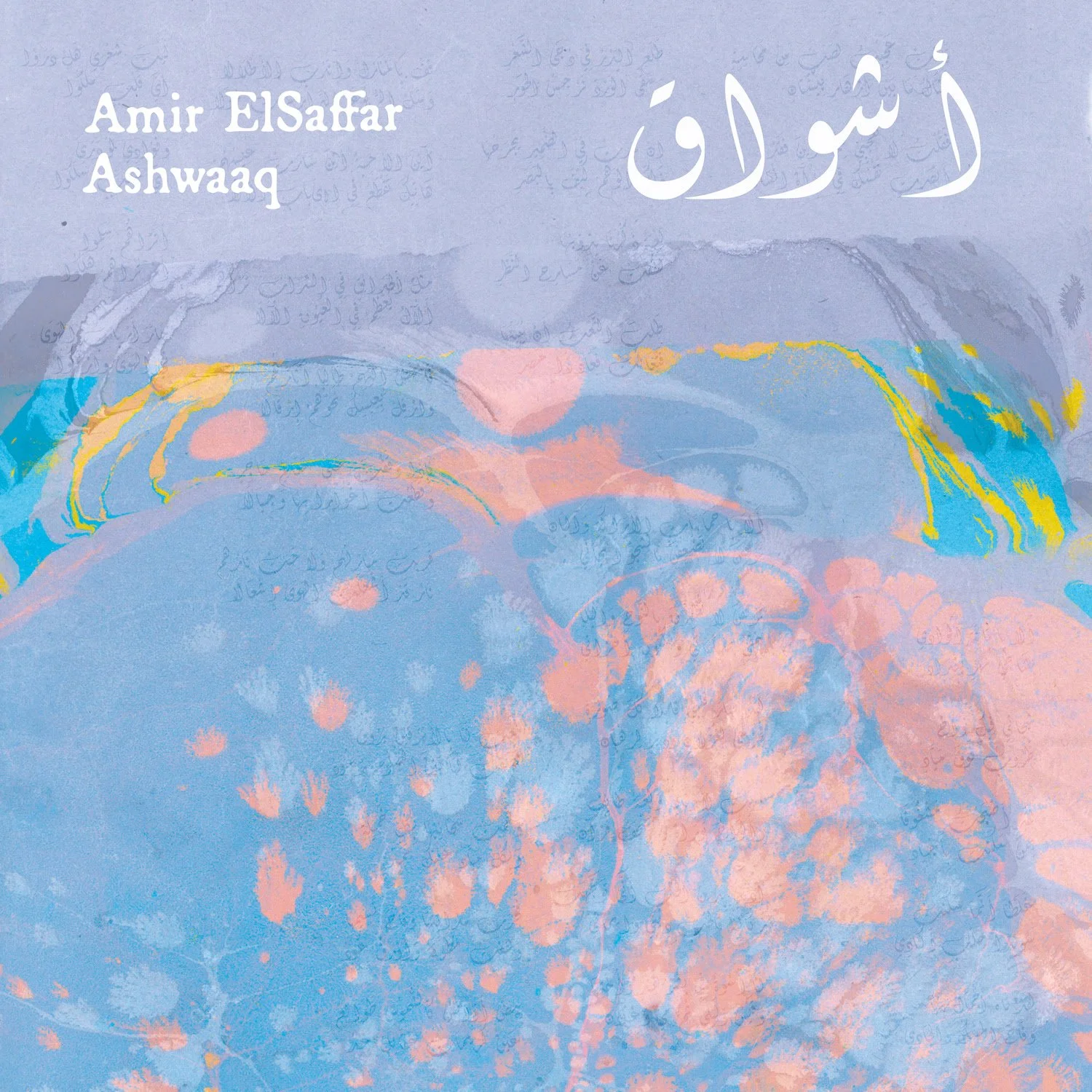
Composer and Multi-Instrumentalist Amir ElSaffar
Announces New Album Ashwaaq
Out November 6, 2026 on Maqām Records
Pre-Order Available Now
AlHubbu Dini (Love is My Religion) الحُبُّ دِينِي وِإِيمَانِي
New Single Out Today - Listen Here
Ashwaaq Album Release Concert
Friday, November 6, 2026 at 5:00pm
Maqām Studio | 250 44th St. | Brooklyn, NY
More Information
CDs or press downloads available upon request.
On November 6, 2026, New York City-based Iraqi-American composer, trumpeter, santur player, vocalist, and modular synthesist Amir ElSaffar will release his new album Ashwaaq on Maqām Records, part of Maqām Studio, of which ElSaffar is the founder and Artistic Director. Ashwaaq is Amir ElSaffar’s ninth studio album and his second on Maqām Records. This recording is comprised of an original seven-movement composition for string quartet, voice, and santur (Iraqi hammered-dulcimer) by ElSaffar, that pairs his music with verses of poetry by thirteenth-century poet Ibn Arabi. New single, AlHubbu Dini (Love is My Religion) الحُبُّ دِينِي وِإِيمَانِي, is out today - listen here.
Alongside ElSaffar, Ashwaaq features renowned Syrian vocalist Khaled AlHafez, a carrier of traditional singing from Aleppo, and a string quartet with whom ElSaffar has deep musical relationships: his sister, Dena El Saffar on viola, with whom he co-leads an Iraqi Maqam ensemble; violinist Megan Gould, a major player in the Arabic music scene in New York who has played with Dena for over 30 years; Eylem Basaldi, an innovative violinist and improviser rooted in Turkish music; and cellist Naseem AlAtrash, a virtuoso and composer in his own right and member of the Turtle Island String Quartet.
Amir ElSaffar works at the intersections of jazz, Western classical, electro-acoustic music, and Iraqi and Arabic Maqam. Described as “the celebrated trumpeter and composer who explores vital connections between jazz and Arabic music” (New York Times), and “The Innovator” (SPIN), ElSaffar has created a unique microtonal language that merges the Arabic maqam modal system with jazz and Western classical harmony.
Muhyiddin Ibn Arabi, or simply Ibn Arabi (1165-1240), is one of the most revered Sufi philosophers and mystics, whose work embodies the ideals of love and transcendence. The epic Turjuman Al-Ashwaq (Translator of Desires) is a collection of 61 poems that explores the divine and ecstatic nature of unity amid the diversity and variety of the manifest world. On Ashwaaq, selections from Ibn Arabi’s verses are paired with voice and string quartet, using the natural and inherent sound of string instruments to interpret and reflect upon the deeper meanings of Ibn Arabi’s texts.
“My heart can take on any form: a meadow for gazelles, a cloister for monks,
For the idols, sacred ground, Ka'ba for the circling pilgrim,
the tables of the Torah, the scrolls of the Qur'án.
I profess the religion of love; wherever its caravan turns along the way, that is the
belief, the faith I keep.”
The final lines of this poem are among the most widely read and quoted in Arabic poetry, about love of the divine in its constantly changing manifestations. Here, Ibn Arabi finds the unity in all religions, faiths, and philosophies from a place free of dogma. That which is infinite cannot be grasped or contained and is perceived through an open heart “capable of every form.”
The musical side of Ashwaaq is built on much more than the series of melodies and rhythms. ElSaffar is driven by a transcultural perspective which draws on the universality of composing, listening, and reacting to music, reflecting the sentiments of Ibn Arabi’s verses. In his approach to this composition, ElSaffar explores the vast possibilities of sound, melody, harmony, and rhythm through the combination of traditional Arabic singing with the string quartet, to create a work that’s less about conventional analysis or structure and more about expressing the ecstasy, spirituality, and emotion of the poetry.
In order to best achieve his artistic vision, ElSaffar embraced a musical language known as maqam, a system of modes that has been practiced for centuries in North Africa, Western Asia, and Central Asia. These modes – similar to Western scales but with microtones and greater melodic specificity – determine the feeling and spiritual quality of a piece of music.
“Rather than relying on Western harmony or counterpoint, two approaches that conflict with the maqam’s inherent logic,” says ElSaffar, “the harmonies of Ashwaaq emerge from sustained microtonal resonances inherent to the maqam, and heterophony — the simultaneous renderings of a single melodic phrase with variation.”
ElSaffar finds even more inspiration in Arab musicality for Ashwaaq, using overtones of the Arab takht – chamber ensemble – as well as rhythmic pulsations that conjure folk instruments and dance. He then brings these elements together with string techniques and aspects of contemporary music. The choice to include a string quartet of Western instruments, as opposed to traditional Arab musical instruments, was guided by ElSaffar’s desire to express the plurality and multitude of meanings in Ibn Arabi’s text, a departure from the single-melody approach characteristic of traditional Maqam music. The work proposes a new form of polyphony based on the microtonal maqam, a delicate undertaking few have attempted, making it a unique contribution in both maqam music as well as Western chamber music.
Composed in 2014 on a commission from the Royaumont Foundation in France, where ElSaffar was composer-in-residence for three years, the work premiered at the Festival d’Avignon and Festival d’Aix-en-Provence, and had follow-up performances throughout Europe.
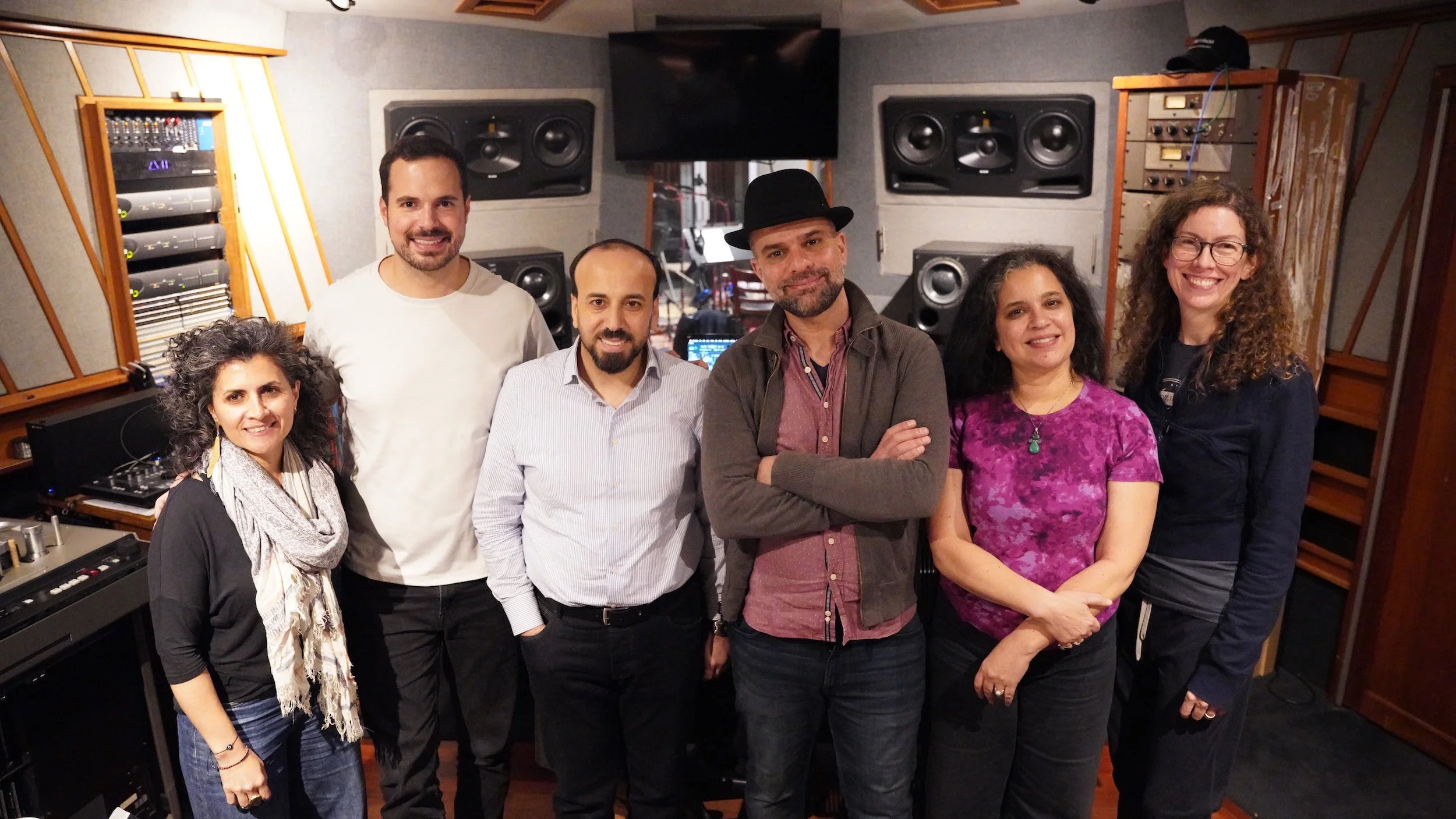
Left to right: Eylem Basaldi, Naseem AlAtrash, Khaled AlHafez, Amir ElSaffar, Dena El Saffar, Megan Gould
More about Amir ElSaffar: Amir ElSaffar leads the acclaimed six-piece Two Rivers ensemble and 17-piece Rivers of Sound Orchestra, and recently founded his New Quartet featuring microtonal piano. He is also the santur player and musical director for vocalist Hamid Al-Saadi, one of the last living practitioners of the Iraqi Maqam.
ElSaffar is the founder and Artistic Director of Maqam Studio and Maqam Records, an initiative supported by the Mellon Foundation, which seeks to preserve and foster innovation within the Maqam musical tradition of the Middle East. He is also composing an Arabic-language Maqam opera, which will have its concert premiere in 2027.
ElSaffar’s compositional output includes works for jazz ensembles, string quartets, mixed chamber ensembles, and symphony orchestras. In addition, he has led numerous hybrid projects with Raga, Flamenco, Stambeli (Tunisian Gnawa) and Subsaharan African trance music. In his most recent works he has incorporated electronic elements, such as analog modular synthesizer.
He has premiered new works at the Newport Jazz Festival, Berlin Jazz Festival, Dream City Festival (Tunisia), Festival d’Aix-en-Provence, Festival d’Avignon (France), Flamenco Biennale (Netherlands), the Mostly Mozart Festival at Lincoln Center, and Pierre Boulez Saal, among others.
ElSaffar’s awards and honors include a Mellon Foundation Arts and Culture grant (2023-2028), Doris Duke Performing Artist Award (2013), United States Artists Fellowship (2018), a Hodder Fellowship at Princeton University (2020-2021), an Opera America IDEA Grant (2025-2026) and Creative Capital Award (2026), in support of hisopera. in Arabic.
Ashwaaq
Music by Amir ElSaffar
Release Date: November 6, 2026
Maqām Records
Featuring Amir ElSaffar (santur and composition); Khaled AlHafez (voice); Megan Gould, Eylem Basaldi (violin); Dena El Saffar (viola); Naseem AlAtrash (cello)
Tracklist:
1. Introduction - Nizam [1:36]
2. I - Layta Shi'ri [2:29]
3. II - Qif Bil-Manazili [6:09]
4. III - Tal'a Al-Badru [4:28]
5. VI - Qalat [3:20]
6. V - Lam’at Lana Bil-Abraqayn [4:17]
7. VI - Al Hubbu Dini (Love is My Religion) [7:32]
8. VII - Ala Ya Banat Al-Wadi [2:37]
Total Time: [32:31]
Poetry by Ibn Arabi (1165-1240 AD)
Music by Amir ElSaffar
Produced by Maqām Records
Recorded by Marc Urselli at EastSide Sound, New York, NY on November 10, 2025
Mixed & Mastered by Marc Urselli at Audio Confidential, New York, NY
Cover Art by Amina Ahmed
Design by Buyana Jargalsaikhan
Commissioned by the Royaumont Foundation in 2014
Premiered at Festival d’Avignon and Festival d’Aix-en-Provence in July, 2014
Dedicated to the memory of Frederic Deval (1951-2016)
Excerpts from Ibn Arabi’s collection of mystical love poems, Turjumān al-Ashwāq (The Translator of Desires), written in Mecca in 1215. Excerpts from a translation into English by Michael Sells (Princeton University Press, 2021) are included in the linear notes.

Newport Classical Celebrates the Holiday Season with Six December Concerts over Two Festive Weekends
Newport Classical Celebrates the Holiday Season with Six December Concerts over Two Festive Weekends
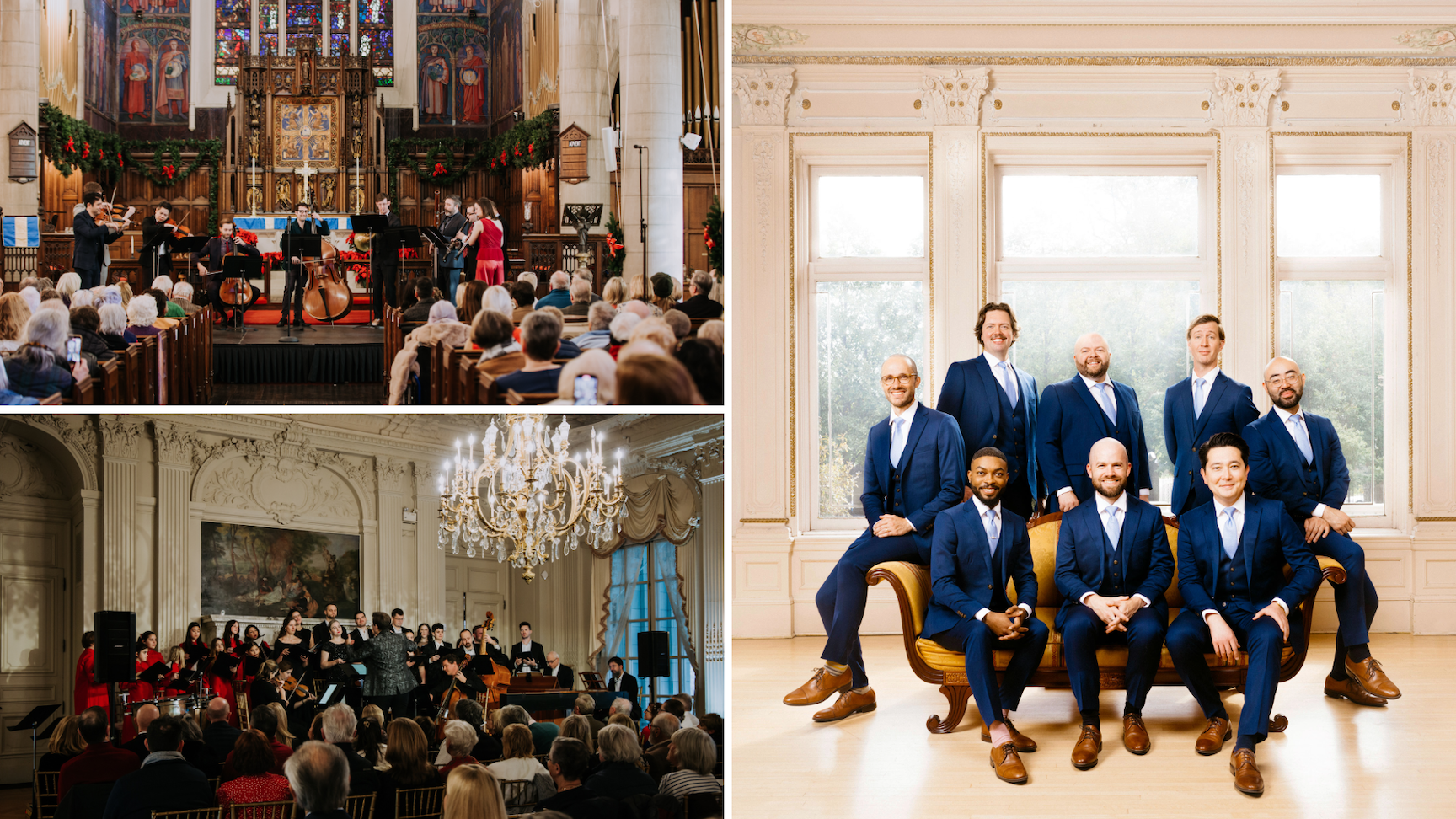
Clockwise: Photos of Frisson by Lisette Rooney, Cantus by Nate Ryan, Messiah at the Mansion by Lisette Rooney. Available in high resolution here.
Newport Classical Celebrates the Holiday Season with Six December Concerts
Christmas with Cantus
Saturday, December 5, 2026 | 1pm and 3:30pm
Newport Classical Recital Hall | Newport, RI
Messiah at the Mansion
Sunday, December 6, 2026 | 1pm and 3:30pm
Rosecliff | 548 Bellevue Ave. | Newport, RI
Classical Christmas with Frisson
Saturday, December 12, 2026 | 1pm and 3:30pm
Emmanuel Church | 42 Dearborn St. | Newport, RI
Tickets On Sale October 6: www.newportclassical.org
Newport, RI – Newport Classical celebrates the holiday season with six performances across two festive weekends in December – Christmas with Cantus on Saturday, December 5, 2026 at 1pm and 3:30pm at the Newport Classical Recital Hall (42 Dearborn St.); Messiah at the Mansion on Sunday, December 6, 2026 at 1pm and 3:30pm at Rosecliff (548 Bellevue Ave.); and Classical Christmas with Frisson on Saturday, December 12, 2026 at 1pm and 3:30pm at Emmanuel Church (42 Dearborn St.). Tickets will go on sale on Tuesday, October 6, 2026 at www.newportclassical.org.
After two sold-out performances in 2024, Cantus returns to Newport on December 5 for an afternoon of beloved Christmas carols and contemporary choral works. This premier low-voice ensemble is known worldwide for its incomparably rich and resonant blend. With music ranging from Silent Night and O Come, All Ye Faithful to fresh, new works from today’s acclaimed composers including Zanaida Robles and Eric Whitacre, Christmas with Cantus will be a warm and moving celebration of the season. Set in the intimate and acoustically exceptional Newport Classical Recital Hall, these two festive one-hour performances at 1pm and 3:30pm offer a beautiful mix of familiar traditions and new perspectives on the season.
Set in the stunning Rosecliff Mansion, Newport Classical invites you to experience Handel’s legendary oratorio Messiah on December 6, a cherished tradition during Newport’s holiday season, featuring Rhode Island’s acclaimed vocal ensemble Ensemble Altera and the Professional Choristers of The Choir School of Newport County conducted by Christopher Lowrey. A bold reimagining of a beloved masterpiece, this one-hour chamber version (to be performed at 1pm and 3:30pm) brings together some of the most moving moments of Handel's timeless oratorio, including the iconic Hallelujah Chorus – perfect for longtime Messiah lovers and first-time listeners alike. These performances are made possible through Cynthia Sinclair’s generous philanthropic support of The Choir School of Newport County.
Hailed as “the classical group that does it all,” the dynamic 11-piece chamber orchestra Frisson returns to Newport on December 12 for two holiday concerts at 1pm and 3:30pm in the stunning English Gothic Revival setting of Emmanuel Church. Featuring selections from Tchaikovsky’s Nutcracker Suite, Vivaldi’s Winter, Bach’s Brandenburg Concerto No. 4, Carol of the Bells, and a Christmas sing-along, this festive program brings together classical favorites and seasonal traditions for a joyful afternoon of music audiences of all ages will enjoy.
Up next on October 9 as part of Newport Classical’s Chamber Series at the Newport Classical Recital Hall, the rising Trio Azura, a recent Grand Prize and Gold Medal winner at the Fischoff National Chamber Music Competition that has been praised by Gramophone for “intelligence and imagination,” invites audiences to explore the world of the piano trio across eras from the Impressionist and Romantic works of Maurice Ravel and Felix Mendelssohn to the contemporary voice of Jennifer Higdon.
On October 18, Newport Classical presents two free concerts at 1pm and 3:30pm as part of its Community Concerts Series presented by BankNewport, performed by Ensemble Mélange at Newport Classical Recital Hall. Ensemble Mélange puts the audience in the driver's seat for a pair of interactive concerts unlike any other. With a menu of more than 30 selections spanning classical favorites, jazz, Latin, Broadway, and beyond, audience members are randomly chosen to select what the ensemble performs next. The result is an engaging, high-energy concert where no two performances are ever the same, offering an exciting musical adventure for concertgoers of all ages.
The Chamber Series continues on October 23 when the Boston-based Rasa String Quartet makes its Newport Classical debut with "Portraits of an American Patchwork," a musical quilt that weaves together the cultural traditions that have shaped the nation’s identity, spanning jazz, bluegrass, Latin pop, Indigenous traditions, global folk music, and classical favorites, including music by Billy Strayhorn, Shelley Washington, Jerod Impichchaachaaha’ Tate, William Grant Still, Hong Nan-pa, and Bad Bunny. Pianist Michael Leonardo Davidman, winner of the 2025 American Piano Awards and praised by Upstage for his “thunderous authority and loads of interpretive nuance,” makes his Newport debut on November 6 with a program of J.S. Bach, Franz Schubert, César Franck, and Franz Liszt. On November 20, Raphaël Feuillâtre, hailed as one of the leading classical guitarists of his generation, performs “Latin Passions,” a vibrant survey of Spanish and Latin American repertoire by Francisco Tárrega, Isaac Albéniz, Astor Piazzolla, Heitor Villa-Lobos, and more.
The Newport Classical Chamber Series continues in 2027 with cellist Sterling Elliott and pianist Elliot Wuu on January 29, in the sonatas of Maurice Ravel, Richard Strauss, and Sergei Rachmaninoff. Elliott, a 2021 Avery Fisher Career Grant recipient, has been described by The Millbrook Independent as a cellist who has "risen beyond hopeful promise," while Wuu, a 2018 Gilmore Young Artist, is recognized for his “power, speed and finesse” (Tribune Star). On February 19, flutist Anna Urrey and harpist Kristi Shade perform a program of Nino Rota, Lili Boulanger, Jules Mouquet, Gabriel Fauré, Claude Debussy, and Astor Piazzolla, exploring the coloristic possibilities of flute and harp across centuries and styles. Urrey has appeared at leading venues including Carnegie Hall, David Geffen Hall, Le Poisson Rouge, and National Sawdust. A sought-after collaborator, Shade has appeared with artists ranging from Andrea Bocelli and John Legend to Florence + The Machine. The Dorian Wind Quintet, praised by the Los Angeles Times for delivering “chamber music as it was meant to be,” performs on March 12 in “Preludes and Variations,” pairing J.S. Bach chorale arrangements with Antonín Dvořák's Wind Quintet, Op. 105 and a set of Anniversary Variations by Richard Rodney Bennett, George Perle, Billy Childs, Bruce Adolphe, and Lee Hoiby on a theme from a wind quintet by Antonin Reicha written specifically for the Dorian Wind Quintet to celebrate the ensemble’s 40th anniversary. Versatile artist Chelsea Guo, the first musician to win the Young Concert Artists auditions in both voice and piano, and hailed by Gramophone as “clearly a special talent,” takes the stage on April 9 in a program of Frédéric Chopin, Pauline Viardot, Johannes Brahms, and Robert Schumann's Dichterliebe, singing while accompanying herself on piano.
On April 23, Newport Classical presents violinist Rubén Rengel and Friends, with pianist Gabriel Chakarji and percussionist Juan Diego Villalobos, who come together for an evening celebrating the music of Latin America, from their native Venezuela to the vibrant traditions displayed throughout the region. Rengel was the winner of the Robert F. Smith Prize at the 2018 Sphinx Competition, and has appeared as soloist with the Philadelphia Orchestra, Dallas Symphony Orchestra, Detroit Symphony Orchestra, Houston Symphony, New Jersey Symphony, and more. Accordionist Radu Ratoi, winner of the 2024 Young Concert Artists “Susan Wadsworth” International Auditions and recipient of Denmark’s prestigious Léonie Sonning Talent Prize, has established himself as a pioneer in expanding the accordion’s repertoire. He is joined by violinist Alexandra Tirsu, a 2021 ARD Competition prizewinner, on May 7 for a program of J.S. Bach, Igor Stravinsky, Béla Bartók, Antonio Vivaldi, Astor Piazzolla, and more. The 2026-2027 Chamber Series concludes on June 4 with violinist Njioma Grevious, a Juilliard graduate and founding member of the Abeo Quartet, who appears regularly at Carnegie Hall, Wigmore Hall, and the Concertgebouw. In Newport, she presents a program featuring the music of J.S. Bach, Johannes Brahms, W.A. Mozart, Oliver Messiaen, Edvard Grieg, and Clarence Cameron White. Grevious has been praised for her “violin pyrotechnics” and “sheer intensity” by the Washington Classical Review.
The 2027 Newport Classical Music Festival will take place from July 1-18, 2027.
Newport Classical 2026-2027 Chamber Series Schedule At-A-Glance:
September 18: Opening Night: Invoke performs "American Voices"
October 9: Trio Azura performs "Piano Trio Through Time"
October 23: Rasa String Quartet performs “Portraits of an American Patchwork”
November 6: Michael Leonardo Davidman, Winner of the American Piano Awards
November 20: Guitarist Raphaël Feuillâtre performs "Latin Passions"
January 29: Cello Sonatas with Sterling Elliott and Elliot Wuu
February 19: Anna Urrey & Kristi Shade perform Works for Flute and Harp
March 12: Dorian Wind Quintet performs "Preludes and Variations"
April 9: Voice and Piano with Chelsea Guo
April 23: Rubén Rengel and Friends
May 7: Radu Ratoi & Alexandra Tirsu perform Vivaldi, Piazzolla, and more
June 4: Chamber Series Finale: Violinist Njioma Grevious
Complete concert details can be found at www.newportclassical.org/concerts. All Chamber Series concerts are held on select Fridays at 7:30pm at Newport Classical Recital Hall (42 Dearborn Street).
About Newport Classical
Newport Classical is a premier performing arts organization that welcomes people of every age, culture, and background to intimate, immersive musical experiences. The organization presents world-renowned and up-and-coming artistic talents at stunning, storied venues across Newport – an internationally sought-after cultural and recreational destination.
Originally founded in 1969 as Rhode Island Arts Foundation at Newport, Inc., Newport Classical has a rich legacy of musical curiosity having presented the American debuts of hundreds of international artists and is most well-known for hosting three weeks of concerts in the summer in the historic mansions throughout Newport and Aquidneck Island. In the 56 years since, Newport Classical has become the most active year-round presenter of live performing arts on Aquidneck Island, and an essential pillar of Rhode Island’s cultural landscape, welcoming thousands of patrons all year long.
Newport Classical invests in the future of classical music as a diverse, relevant, and ever-evolving art form through its four core programs – the one-of-a-kind Music Festival; the Chamber Series in the Newport Classical Recital Hall; the free, family-friendly Community Concerts Series; and the Music Enrichment and Engagement Initiative that inspires students in local schools and community organizations to become the arts advocates and music lovers of tomorrow. These programs illustrate the organization’s ongoing commitment to presenting “timeless music for today.”
In 2021, the organization launched a new commissioning initiative – each year, Newport Classical will commission a new work by a Black, Indigenous, person of color, or woman composer as a commitment to the future of classical music. To date, Newport Classical has commissioned and presented the world premiere of works by Stacy Garrop, Shawn Okpebholo, Curtis Stewart, Clarice Assad, and Cris Derksen.
After a year-long community-driven process, and rooted in the organization’s mission “to celebrate the living art form of classical music in intimate and iconic locations,” Newport Classical released its 2025-2028 Strategic Plan, presenting a clear roadmap to become a stronger, healthier, and more vibrant organization that enhances its programs and community engagement, promotes responsible financial growth and sustainability, and centers artistic excellence in every decision, as the organization aspires to open its doors even wider.

Oct. 6-7: The Jupiter String Quartet Gives Two Performances in Buffalo Presented by the Buffalo Chamber Music Society & University at Buffalo
Oct. 6-7: The Jupiter String Quartet Gives Two Performances in Buffalo Presented by the Buffalo Chamber Music Society & University at Buffalo
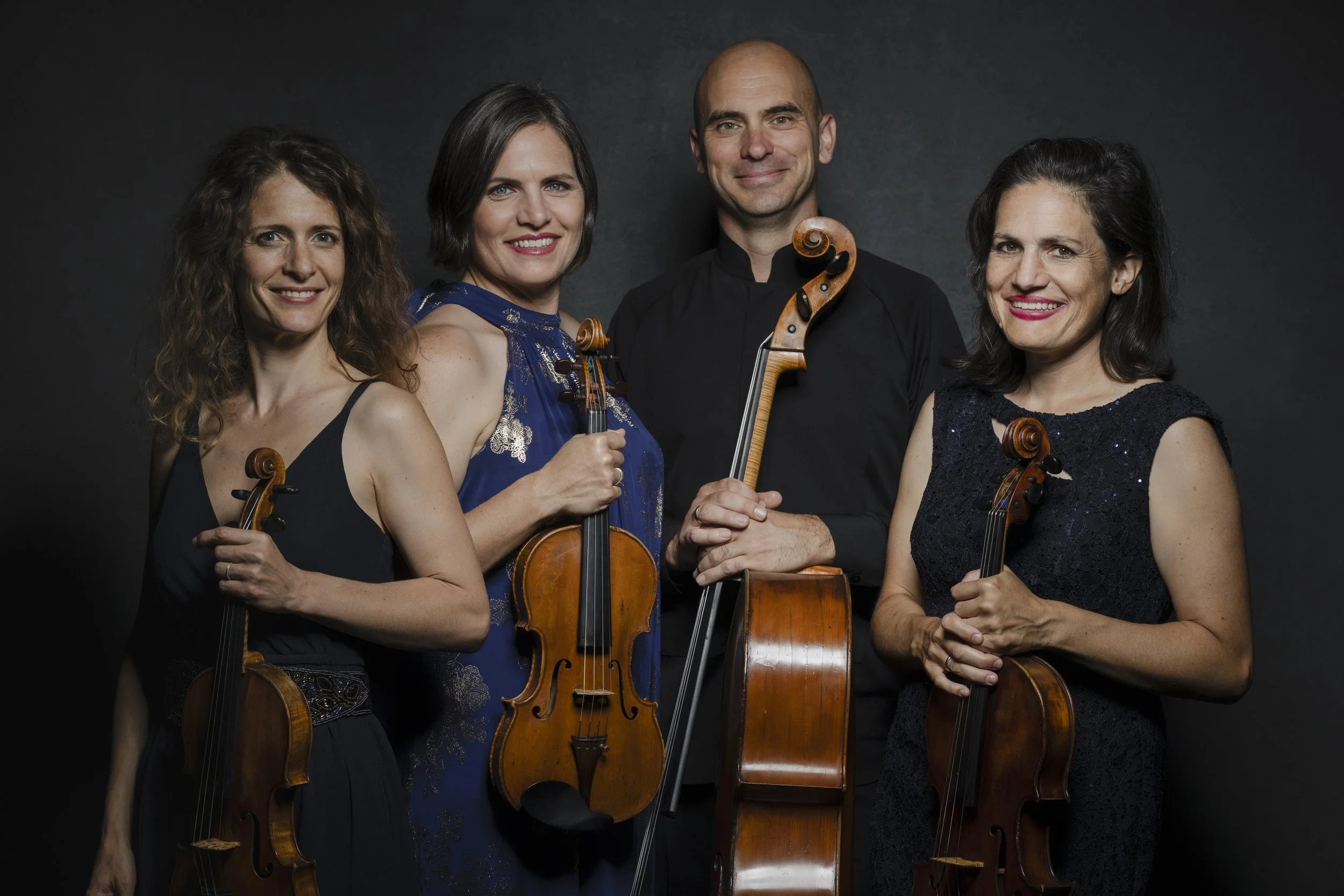
Photo of the Jupiter Quartet by Todd Rosenberg available in high resolution at www.jensenartists.com/artists-profiles/jupiter-string
The Jupiter String Quartet
Gives Two Performances in Buffalo on October 6 and 7
Presented by the Buffalo Chamber Music Society & University at Buffalo
“technical finesse and rare expressive maturity” – The New Yorker
Tuesday, October 6, 2026 at 7:30pm
Presented by the Buffalo Chamber Music Society (BCMS)
Mary Seaton Room, Kleinhans Music Hall | 3 Symphony Circle | Buffalo, NY
Tickets and Information
Wednesday, October 7, 2026 at 7:30pm
Presented by the University at Buffalo in Partnership with BCMS
Slee Hall, Lippes Concert Hall | 120 Coventry Rd. | Buffalo, NY
Tickets and Information
Buffalo, NY – The Jupiter String Quartet, described by The Cleveland Plain-Dealer as “an alert and energetic ensemble, with plenty of communication and an individual sonic sheen,” will give two concerts in Buffalo in early October. On Tuesday, October 6, 2026 at 7:30pm, they perform at Kleinhans Music Hall (3 Symphony Circle) presented by the Buffalo Chamber Music Society (BCMS). On Wednesday, October 7, 2026 at 7:30pm, they perform in Lippes Concert Hall (120 Coventry Road) co-presented by BCMS and the University at Buffalo.
The Jupiter String Quartet is a particularly intimate group, consisting of violinists Mélanie Clapiès and Meg Freivogel, violist Liz Freivogel (Meg’s older sister), and cellist Daniel McDonough (Meg’s husband, Liz’s brother-in-law). Founded in 2001, the ensemble is firmly established as an important voice in the world of chamber music, and exudes an energy that is at once friendly, knowledgeable, and adventurous. They give concerts all over the country, and are artists-in-residence and faculty at the University of Illinois, Urbana-Champaign. The quartet chose its name because Jupiter was the most prominent planet in the night sky at the time of its formation and the astrological symbol for Jupiter resembles the number four.
The Jupiter’s program on October 6 features music by Austrian composers from three centuries, each very different in style and mood, from the extroverted expressions of Joseph Haydn’s String Quartet in C Major, Op 76 No. 3 “Emperor” from 1797; to the heartfelt passion felt in Franz Schubert’s String Quartet in A minor, D 804, “Rosamunde” from 1824; and the intense emotional arc of Alban Berg’s Lyric Suite from 1925. Haydn’s “Emperor” quartet was the result of his becoming acquainted with an emerging genre of music, the national anthem, during his visits to London in the 1790s. When he returned to Vienna, he proposed to music patron Baron von Swieten that he should compose a new work that would serve a similar function in Austria as “God Save the King” did in England. He did so in 1797, and the song became an instant success, later becoming the Austrian national anthem in 1847. Haydn made it the focal point of his bold new string quartet, incorporating the melody and a set of variations into the piece. Alban Berg was inspired to write his Lyric Suite by his infatuation with Hanna Fuchs-Robettin – he hid her initials in the piece using the musical notes, and encoded other symbols and messages about their love in the six-movement work. Franz Schubert’s “Rosamunde” quartet represents a turning point in his music from lighter and more fanciful work, to a more intense, darker tone. Schubert’s failing health and a troubled love affair are thought to be the causes behind his artistic shift. The piece was the only one of his chamber works to be published during his lifetime. Its nickname is the title of a play for which Schubert wrote incidental music, that includes some of the same music as this quartet.
The Jupiter’s concert on October 7 will include four pieces, each showcasing the human connections that are often inextricably woven into music – Clarice Assad’s Canções da America; Juri Seo’s Respiri; Shulamit Ran’s Quartet No. 3, Glitter, Doom, Shards, Memory; and Johannes Brahms’ Quartet No. 2 in A minor, Op. 51, No. 2. Brazilian American composer, pianist, vocalist, and educator Clarice Assad is known for writing music with evocative colors and rich textures, which she imparts to Canções da America, a work celebrating the many cultures and histories found in South America through its own musical styles, from the Milonga dance of Uruguay to the choro of Brazil and the Tango of Argentina. Assad dedicated the piece to Argentine composer Claudia Montero, who died in 2021. Korean-born American composer Juri Seo wrote her piece Respiri in 2016, in memory of British composer Jonathan Harvey. Seo wrote her dissertation on Harvey’s string quartets and corresponded extensively with him during his final year of life. Israeli-American composer Shulamit Ran’s third string quartet – Glitter, Shards, Doom, Memory – is a tribute to the Jewish artist Felix Nussbaum and other victims of the Holocaust. The work’s name is tied to “Glitter and Doom,” the title of an exhibition previously on display at the Metropolitan Museum of Art. Brahms’s expansive and lyrical Quartet No. 2 in A minor, Op. 51, No. 2 was premiered in 1873 by the string quartet of his good friend, Hungarian violinist Joseph Joachim. Joachim's motto was “Frei, aber einsam” (Free, but lonely). In the opening movement of the quartet, Brahms encoded a special message for his friend, using the pitches F-A-E and also F-A-F to counter with, “Frei, aber froh” (Free, but glad). This personal connection between composer and performer was also evident in Brahms' use of Hungarian melodies and musical gestures in the second movement and the Finale.
The Jupiter Quartet has performed in some of the world’s finest halls, including New York City’s Carnegie Hall and Lincoln Center, London’s Wigmore Hall, Boston’s Jordan Hall, Mexico City's Palacio de Bellas Artes, Washington, D.C.’s Kennedy Center and Library of Congress, Austria’s Esterhazy Palace, and Seoul’s Sejong Chamber Hall. Their major music festival appearances include the Aspen Music Festival and School, Bowdoin International Music Festival, Cape Cod Chamber Music Festival, Rockport Music Festival, Caramoor International Music Festival, Music at Menlo, Tucson Winter Chamber Music Festival, the Banff Centre, the Seoul Spring Festival, and many others. In addition to their performing career, they have been artists-in-residence at the University of Illinois Urbana-Champaign since 2012, where they maintain private studios and direct the chamber music program. Their chamber music honors and awards include the grand prizes in the Banff International String Quartet Competition and the Fischoff National Chamber Music Competition; the Young Concert Artists International auditions in New York City; the Cleveland Quartet Award from Chamber Music America; an Avery Fisher Career Grant; and a grant from the Fromm Foundation. From 2007-2010, they were in residence at the Chamber Music Society of Lincoln Center’s Chamber Music Two. The Jupiter has recorded extensively for the Marquis Classics label, Azica Records, and Orchid Classics.
For more information, visit www.jupiterquartet.com.

Oct. 4: The Jupiter String Quartet Performs Free Concert at Vassar College – Music Shaped by Deep Expressions of Love and Admiration
Oct. 4: The Jupiter String Quartet Performs Free Concert at Vassar College – Music Shaped by Deep Expressions of Love and Admiration

Photo of the Jupiter Quartet by Todd Rosenberg available in high resolution here
The Jupiter String Quartet Performs Free Concert at Vassar College
Music Shaped by Deep Expressions of Love and Admiration
“An ensemble of eloquent intensity, has matured into one of the mainstays of the American chamber-music scene” – The New Yorker
Sunday, October 4, 2026 at 3pm
Skinner Hall of Music | Vassar College | 100 Raymond Ave. | Poughkeepsie, NY
Free and Open to the Public
More Information
Poughkeepsie, NY – On Sunday, October 4, 2026 at 3pm, the Jupiter String Quartet – an ensemble described by The New Yorker as having “technical finesse and rare expressive maturity” – will perform a free concert at Vassar College in Skinner Hall of Music (100 Raymond Ave.). The concert will include Canções da America by Clarice Assad, Lyric Suite by Alban Berg, Respiri by Juri Seo, and String Quartet in A minor, D 804, “Rosamunde” by Franz Schubert.
The Jupiter String Quartet is a particularly intimate group, consisting of violinists Mélanie Clapiès and Meg Freivogel, violist Liz Freivogel (Meg’s older sister), and cellist Daniel McDonough (Meg’s husband, Liz’s brother-in-law). Founded in 2001, the ensemble is firmly established as an important voice in the world of chamber music, and exudes an energy that is at once friendly, knowledgeable, and adventurous. They give concerts all over the country, and are artists-in-residence and faculty at the University of Illinois, Urbana-Champaign. The quartet chose its name because Jupiter was the most prominent planet in the night sky at the time of its formation and the astrological symbol for Jupiter resembles the number four.
The program the Jupiter Quartet will perform at Vassar is composed of music from across cultures and time periods, shaped by deep expressions of love and admiration. Brazilian American composer, pianist, vocalist, and educator Clarice Assad is known for writing music with evocative colors and rich textures, which she imparts to Canções da America, a work celebrating the many cultures and histories found in South America through its own musical styles, from the Milonga dance of Uruguay to the choro of Brazil and the Tango of Argentina. Assad dedicated the piece to Argentine composer Claudia Montero, who died in 2021. Austrian composer Alban Berg was inspired to write his Lyric Suite in 1925, when he first became infatuated with Hanna Fuchs-Robettin – he hid her initials in the piece using the musical notes, and encoded other symbols and messages about their love in the six-movement work. Korean-born American composer Juri Seo wrote her piece Respiri in 2016, in memory of British composer Jonathan Harvey. Seo wrote her dissertation on Harvey’s string quartets and corresponded extensively with him during his final year of life. Respiri is influenced by Harvey’s Buddhist beliefs as well as his musical approach. Austrian composer Franz Schubert wrote his “Rosamunde” string quartet in 1824, and the piece represents a turning point in his music from lighter and more fanciful work, to a more intense, darker tone. Schubert’s failing health and a troubled love affair are often thought to be the causes behind his artistic shift.
The Jupiter Quartet has performed in some of the world’s finest halls, including New York City’s Carnegie Hall and Lincoln Center, London’s Wigmore Hall, Boston’s Jordan Hall, Mexico City's Palacio de Bellas Artes, Washington, D.C.’s Kennedy Center and Library of Congress, Austria’s Esterhazy Palace, and Seoul’s Sejong Chamber Hall. Their major music festival appearances include the Aspen Music Festival and School, Bowdoin International Music Festival, Cape Cod Chamber Music Festival, Rockport Music Festival, Caramoor International Music Festival, Music at Menlo, Tucson Winter Chamber Music Festival, the Banff Centre, the Seoul Spring Festival, and many others. In addition to their performing career, they have been artists-in-residence at the University of Illinois Urbana-Champaign since 2012, where they maintain private studios and direct the chamber music program. Their chamber music honors and awards include the grand prizes in the Banff International String Quartet Competition and the Fischoff National Chamber Music Competition; the Young Concert Artists International auditions in New York City; the Cleveland Quartet Award from Chamber Music America; an Avery Fisher Career Grant; and a grant from the Fromm Foundation. From 2007-2010, they were in residence at the Chamber Music Society of Lincoln Center’s Chamber Music Two. The Jupiter has recorded extensively for the Marquis Classics label, Azica Records, and Orchid Classics.
For more information, visit www.jupiterquartet.com.
For Calendar Editors:
Description: The Jupiter Quartet, described by The New Yorker as having “technical finesse and rare expressive maturity,” performs a free concert at Vassar College. The award-winning ensemble’s program features music shaped by deep expressions of love and admiration from across cultures and time periods, featuring the works of Clarice Assad, Alban Berg, Juri Seo, and Franz Schubert. This performance is free and open to the public.
Concert details:
Who: Jupiter String Quartet
Presented by Vassar College
What: Music by Clarice Assad, Alban Berg, Juri Seo, and Franz Schubert
When: Sunday, October 4, 2026 at 3pm
Where: Vassar College, Skinner Hall of Music, 100 Raymond Ave, Poughkeepsie, NY 12603
Tickets and information: https://www.vassar.edu/news/events/jupiter-string-quartet

Oct. 23: Pianist Igor Levit Releases Resistance – New Album on His Label NO SILENCE RECORDS
Oct. 23: Pianist Igor Levit Releases Resistance
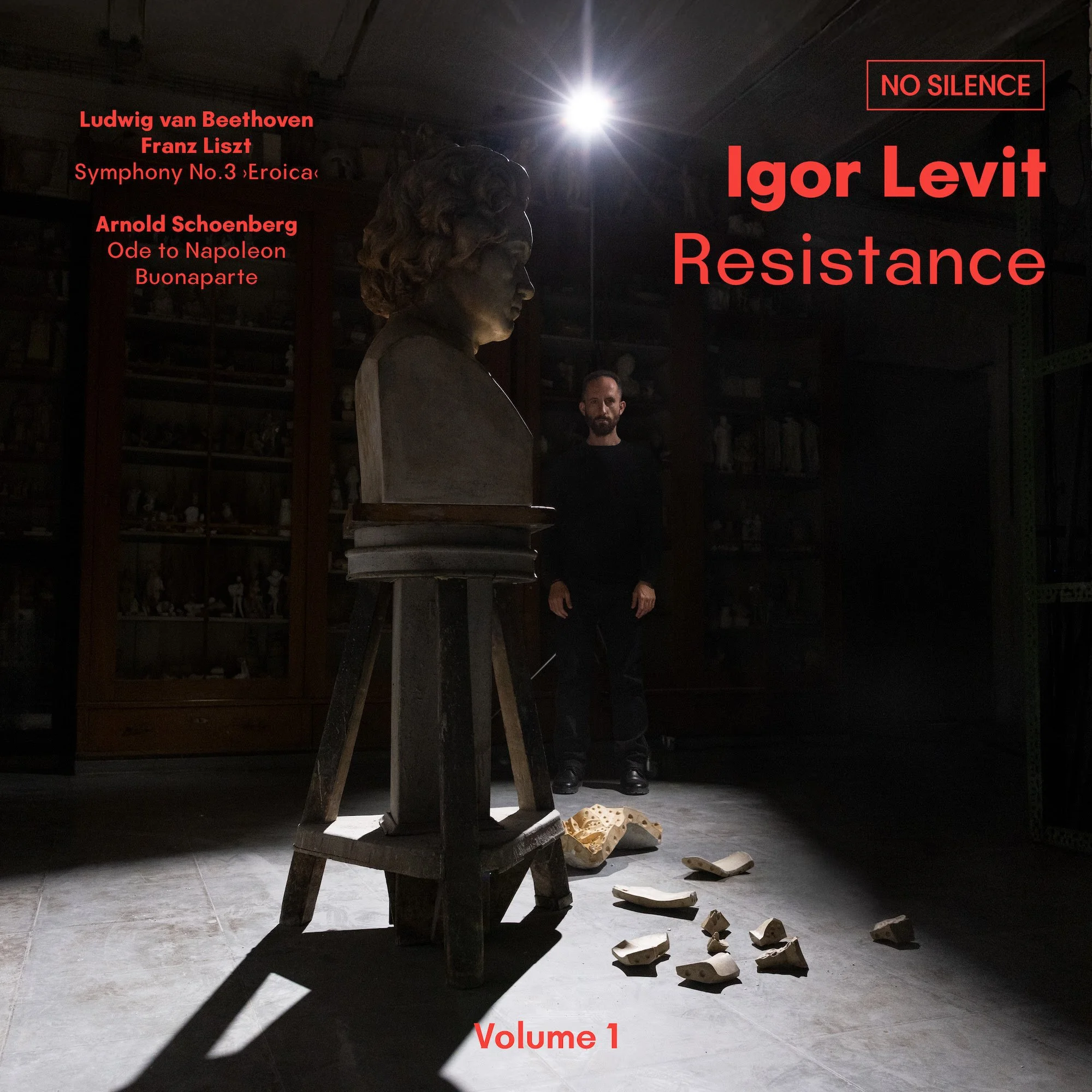
Pianist Igor Levit Releases New Album Resistance
on His Label NO SILENCE RECORDS
Ludwig van Beethoven’s Eroica in Franz Liszt’s Transcription
and Arnold Schoenberg’s Ode to Napoleon
Album Release Date: October 23, 2026
Pre-Order Available Now
With his new album Resistance, released on his own label NO SILENCE RECORDS (in collaboration with Sony Classical) on October 23, 2026, pianist Igor Levit turns his attention to two works that explore resilience and the exercise of political power. The program features Ludwig van Beethoven’s Symphony No. 3, Eroica, in Franz Liszt’s piano transcription, alongside Arnold Schoenberg’s Ode to Napoleon, recorded with the Kammerakademie Potsdam under the direction of Antonello Manacorda. The spoken narration is performed by acclaimed actress Dörte Lyssewski. Pre-order is available now.
At the heart of the album lies the story of a profound disillusionment. Beethoven originally dedicated his Third Symphony to Napoleon Bonaparte, whom he admired as an embodiment of the ideals of liberty and progress. However, when Napoleon crowned himself Emperor, Beethoven angrily scratched out his name from the title page. The Bonaparte Symphony became the Eroica, a work that continues to stand as a musical symbol of human determination and inner strength.
For Igor Levit, however, the symphony’s heroism resides less in political figures than in Beethoven himself: “Here is a man who is losing his hearing, who finds himself on the brink of suicide, and yet carries on. Through his art, Beethoven writes himself back into life.”
A key role in this story is played by Franz Liszt, whose piano transcriptions of Beethoven’s symphonies set new standards in the art of transcription. For Levit, Liszt’s version of the Eroica is far more than a mere piano arrangement: “In essence, he transforms the Eroica into an independent piano symphony.” The combination of orchestral power, technical challenge and visionary imagination makes the work one of the crowning achievements of the piano repertoire.
Set against Beethoven’s revolutionary spirit is Arnold Schoenberg’s Ode to Napoleon. Composed in exile in 1942 in the United States, the work sets Lord Byron’s condemnation of Napoleon while simultaneously turning its gaze towards the tyrant of Schoenberg’s own time: Adolf Hitler. Having himself fled Nazi persecution, Schoenberg created a powerful musical manifesto against dictatorship and oppression.
The result is a compelling programme that examines ideals of heroism, the abuse of power and the moral imperative of resistance. Across more than a century, Beethoven, Liszt and Schoenberg enter into a dialogue that feels more relevant today than ever.
Igor Levit – Resistance: Beethoven, Symphony No. 3 “Eroica” (Liszt Transcription) & Schoenberg: Ode to Napoleon
Kammerakademie Potsdam; Antonello Manacorda, conductor; Dörte Lyssewski, narrator
Release date: October 23, 2026 on NO SILENCE RECORDS / Sony Classical, available on CD and digital formats.

Oct. 16: Acclaimed UK Pianist Jeneba Kanneh-Mason Releases Songs Without Words EP on Sony Classical – First Single Out Today (Copy)
Oct. 16: Acclaimed UK Pianist Jeneba Kanneh-Mason Releases Songs Without Words EP on Sony Classical – New Single Out Today
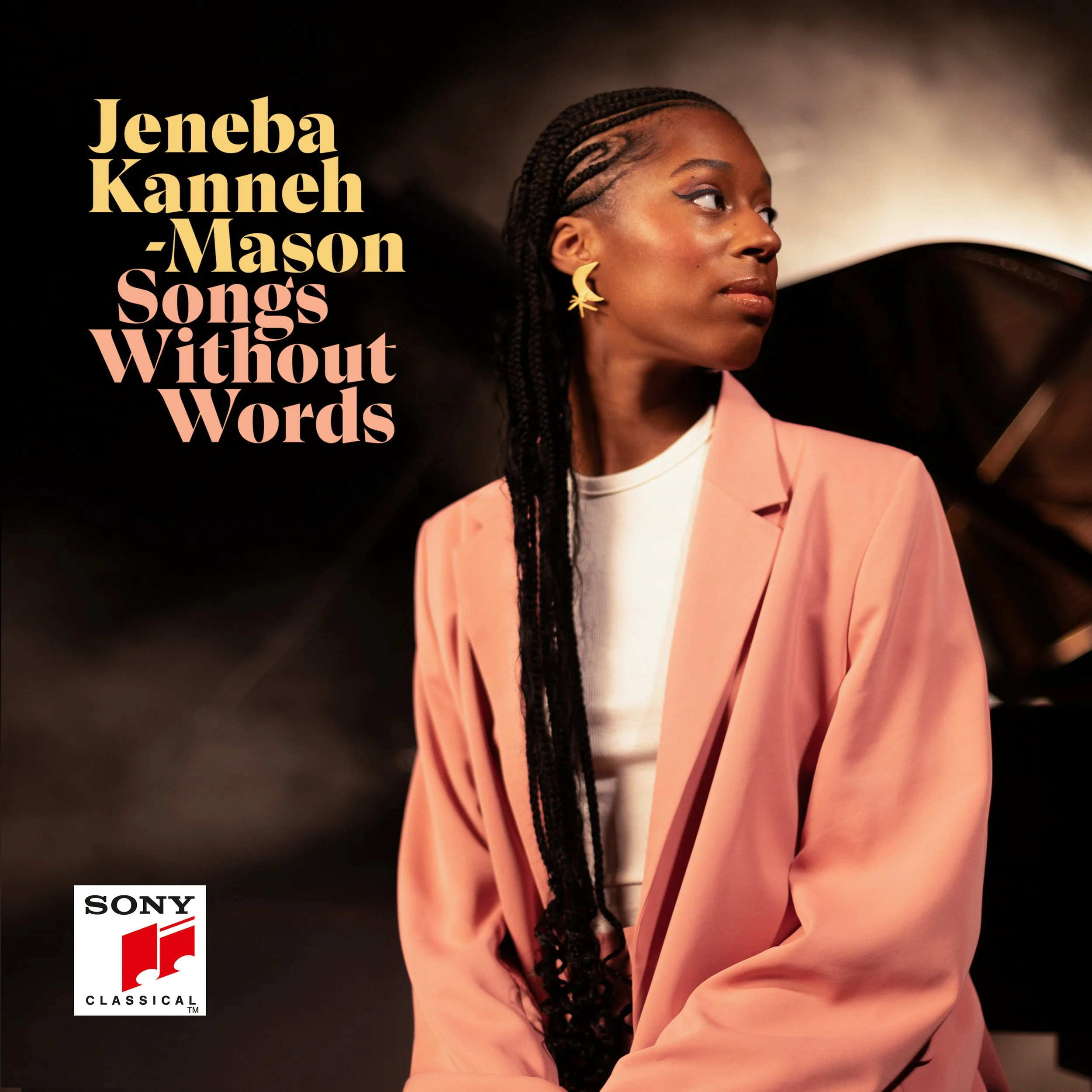
Acclaimed UK Pianist Jeneba Kanneh-Mason
Releases Songs Without Words EP on Sony Classical
New Single Out Today
Song Without Words in A Major by Florence Price
Listen Here
Today, from acclaimed young pianist, Jeneba Kanneh-Mason, comes the first single from her forthcoming EP Songs Without Words, scheduled for release on October 16, 2026 on Sony Classical. Thoughtfully curated by the artist, the EP brings together music by Felix Mendelssohn, Florence Price, Margaret Bonds, Camille Saint-Saëns and Nina Simone, continuing Jeneba's passion for championing overlooked voices and tracing the evolution of the Songs Without Words tradition across generations, musical styles and genres. Jeneba Kanneh-Mason's new single, Song Without Words in A Major by Florence Price, is out today, September 25, 2026 - listen here.
Jeneba Kanneh-Mason, of whom Gramophone wrote: “her future will surely be dazzling” and who impressed BBC Music Magazine with her “sparkle and self-possession”, has chosen a remarkable piece as the first single from this EP. In a tribute to the legendary pianist, singer, songwriter and activist, Nina Simone (1933-2003), Jeneba performs Saint-Saëns’ (1835-1921) popular aria ‘Mon coeur s’ouvre à ta voix’ (‘Softly awakes my heart’) from his opera ‘Samson and Delilah’, Op. 67. Nina Simone famously performed her own arrangement of this work as a solo piano piece during her 1963 debut solo concert at New York’s Carnegie Hall, enriching the piece with embellishments and improvisatory flourishes. Jeneba honours this seminal artist with a transcription of that singular 1963 live performance.
Of this first single, Jeneba Kanneh-Mason remarks, "I've always loved Nina Simone, and when I discovered her solo piano version of Saint-Saëns' 'Mon coeur s'ouvre à ta voix', I was completely captivated. I love the freedom and individuality she brings to the music, while never losing sight of the original melody. Including a transcription of her performance on this EP felt like a natural way to celebrate her artistry alongside the more traditional Songs Without Words, bringing together so many of the musical worlds that inspire me."
To acknowledge the origins of the genre Songs Without Words, the theme of her forthcoming EP, Jeneba Kanneh-Mason has chosen Felix Mendelssohn’s Song Without Words in G major, Op. 62 No. 1 Andante espressivo. Felix Mendelssohn (1809-1847) and his sister, Fanny Hensel Mendelssohn (1805-1847), were among the first composers to write ‘Lieder ohne Worte’, Felix Mendelssohn writing eight volumes of six songs, which became hugely popular.
Continuing her commitment to championing music by black women composers and bringing their often-overlooked repertoire to a wider audience, Jeneba returns to African American composers, Florence Price (1887-1953) and Margaret Bonds (1913-1972), both of whom were featured on her debut album, ‘Fantasie’. For Songs Without Words, she has chosen two rarely recorded works by Price: Song Without Words in G major ‘Pleading’ (c. 1928) and the lyrical yet dramatic Song Without Words in A major (1932). These sit alongside Bonds' The Bells, the second movement from her ‘Spiritual Suite for Piano’ and based on the spiritual Peter, Go Ring Dem Bells, which Bonds developed into an elaborate piano piece.
Having made her mark in March 2025 with her debut album on Sony Classical, Fantasie, featuring works by Frederic Chopin, Florence Price, Margaret Bonds, William Grant Still, Claude Debussy and Alexander Scriabin, of which International Piano magazine noted “…This is a debut recording of exceptional bravura and insight… Already she compels attention”, this much in demand young artist and member of the supremely talented Kanneh-Mason family of musicians, followed it in December 2025 with an exceptionally fine self-curated EP ‘Jane Austen’s Piano’, exploring the musical world of fellow pianist and world-famous author, Jane Austen, to celebrate the 250th anniversary of her favourite writer’s birth.
TRACKLIST:
1. Felix Mendelssohn: Lieder ohne Wrote V, op. 62: I. Andante espressivo
2. Florence Price: Song Without Words in A Major
3. Margaret Bonds: Spiritual Suite: II. The Bells
4. Florence Price: Song Without Words in G Major ("Pleading”)
5. Camille Saint-Saëns: Theme from Samson and Delilah (arr. Nina Simone)

OUT TODAY: New Single from Violinist Esther Abrami's Sony Classical Album Amour - VIII. Deuxième Chance from Abrami's Amour Suite
OUT TODAY: New Single from Violinist Esther Abrami's Sony Classical Album Amour - VIII. Deuxième Chance from Abrami's Amour Suite
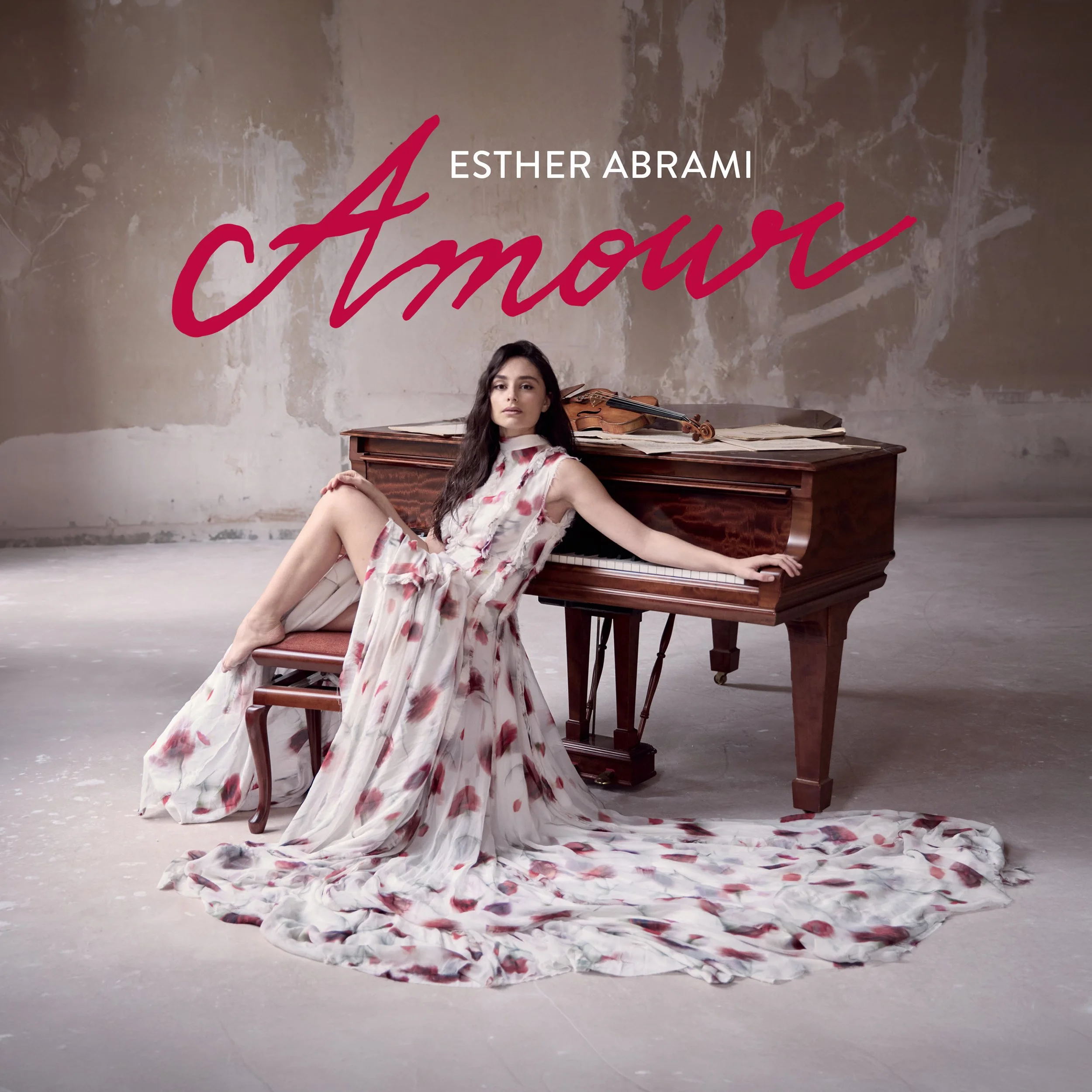
Acclaimed Violinist Esther Abrami
Releases New Album Amour on Sony Classical
Album Marks Major Artistic Milestone For Abrami
Who Presents Her First Own Large-Scale Composition
New Single: Movement VIII. Deuxième Chance
from Esther Abrami's Amour Suite
Out Today - Listen Here
Worldwide Album Release Date: October 9, 2026
Pre-Order Available Now
Celebrated violinist and social media sensation Esther Abrami will release her new album Amour on October 9, 2026 on Sony Classical. New single, Movement VIII. Deuxième Chance from Esther Abrami's Amour Suite is out today.
Marking a major artistic milestone, Amour is the first album where Abrami presents an original own large-scale composition at its core: a self-written nine-part suite. Conceived as an intimate and deeply expressive exploration of love in all its forms, the work captures the full spectrum of emotions, from tenderness and passion to longing and heartbreak, and stands at the heart of a project that blends original music with newly reimagined works for violin and orchestra.
“With ‘Amour’, I wanted to explore love in all its forms – not just the joy and beauty, but also the vulnerability, the longing, the anger and the pain that often comes with it. Writing my own suite of nine movements allowed me to express a range of very personal emotions, while the other pieces on the album reflect how universal these feelings are across time and genres. Love is something that we all experience, for the best and the worst but at the end, that’s what connects us all. I hope this album resonates with anyone who listens to it”, says Esther Abrami.
Beyond the central suite, ‘Amour’ brings together a diverse selection of iconic classical works about love, each newly arranged for solo violin and orchestra. A particular highlight of the album is Nino Rota’s ‘Romeo and Juliet: Love Theme’, featuring the celebrated mezzo-soprano Marina Viotti. Viotti’s vocals add a captivating dimension to the piece as she engages in a duet with Esther’s violin. The programme further includes epic versions for violin and orchestra of Céline Dion’s All by Myself’ and Georges Bizet’s Carmen: L’amour est un oiseau rebelle from Habanera. New arrangements of Francis Poulenc’s Les chemins de l’amour, Christoph Willibald Gluck’s Orfeo ed Euridice: Dance of the Blessed Spirits (Melodie), and the virtuosic intensity of Tomaso Antonio Vitali’s Chaconne in G minor add even more musical colours to this collection of works centred around love. The album also features a new version arranged by Esther Abrami of Charlie Chaplin’s Désillusion amoureuse from the movie “The Circus”, a poignant composition that reveals the legendary filmmaker’s deeply expressive musical voice.
Throughout her career, Esther Abrami has been known for her ability to connect classical music with a wide and diverse audience, bringing fresh perspectives to the repertoire. With ‘Amour’, she reaches a new artistic dimension, uniting her work as a composer with her unique voice as an interpreter, thus shaping a musical language that is unmistakably her own.
This new chapter in her career follows a period of exceptional success. Since the release of her album ‘Women’ in April 2025, Esther Abrami has become one of the most visible young artists in classical music. Especially in her home country, France, she has appeared on major television programmes, performing for millions of viewers and captivating audiences through a series of highly successful concerts. Her book ‘La musique est (aussi) une affaire de femmes’ has quickly become a genre bestseller and will be released in English and German in September under the title ‘Music is (also) a Women’s Affair’. In recognition of her artistic impact, she will receive an Opus Klassik Award 2026, the most important classical music prize in the German speaking world.
Amour features the City of Prague Philharmonic Orchestra under the baton of conductor Irene Delgado-Jiménez and will be available for streaming and digital download in stereo and the immersive format Dolby Atmos. The album will also be released as CD and a limited-edition 2x Ecorecord InkPlosion Colour LP – pre-order here.
Amour - Track List
1. Désillusion amoureuse (Charlie Chaplin)
2. – 10. Amour Suite (Esther Abrami)
11. Romeo and Juliet: Love Theme (Nino Rota) – feat. Marina Viotti
12. All by Myself (Céline Dion)
13. Carmen: L’amour est un oiseau rebelle (Bizet)
14. Moods, Impressions and Souvenirs, Op. 41: Lento (Fibich)
15. Les chemins de l’amour (Poulenc)
16. Orpheo and Euridice: Dance of the Blessed Spirits (Gluck)
17. Chaconne in G minor (Vitali)
* City of Prague Philharmonic Orchestra, Irene Delgado-Jiménez

Oct. 16: Caramoor Continues 2026-2027 Rosen House Concert Series with Indie-Folk-Pop Trio Bandits on the Run
Oct. 16: Caramoor Continues 2026-2027 Rosen House Concert Series with Indie-Folk-Pop Trio Bandits on the Run

Photo of Bandits on the Run by Hunter Brown. Available in hi-resolution here.
Caramoor Continues 2026-2027 Rosen House Concert Series
with Indie-Folk-Pop Trio Bandits on the Run
Friday, October 16, 2026 at 7:30pm
Caramoor Center for Music and the Arts | Rosen House
149 Girdle Ridge Drive | Katonah, NY
Tickets & Information
“[Bandits on the Run] bring a theatrical feel to their performances,” –Strings
“[Bandits on the Run blends] rotating lead vocals, vibrant instrumentation, and a shared storytelling spirit that feels at once timeless and entirely their own.” –Atwood Magazine
KATONAH, NY – Caramoor Center for Music and the Arts, a vibrant cultural destination nestled on 81 acres of historic gardens and woodlands in Katonah, NY, continues its intimate Rosen House Concert Series for 2026-2027 with a performance by Brooklyn based indie-folk-pop trio, Bandits on the Run, on Friday, October 16, 2026 at 7:30pm. Caramoor, once the estate of music and art lovers Walter and Lucie Rosen, is one of the region’s most distinctive destinations for live performance, cultural engagement, and exploration. Caramoor’s Rosen House Concert Series runs from October through May, held in the exquisite Music Room of the historic home – a Mediterranean-style villa from 1939 filled with treasures from around the world. Audiences enjoy performances by some of today’s most in-demand artists in the same living room salon setting where the Rosens once entertained their many friends.
Bandits on the Run is an indie-folk-pop group consisting of cellist and vocalist Sydney Shepherd, guitarist and vocalist Adrian Enscoe, percussionist, xylophonist, toy sound player, and vocalist Regina Strayhorn. The trio hail from Brooklyn, NY and are known for their vivacious performance style, genre-defying sound, soaring harmonies, and ability to make music-magic happen everywhere from subway platforms to concert halls. Their three-part harmonies have been heard filling iconic venues while opening for The Wood Brothers’ 2025 East Coast tour, on the main stages at Colorado’s Rocky Mount Folks Fest and Michigan’s Blissfest, and in a sold out residency at Manhattan’s Bowery Electric.
About Bandits on the Run
Bandits on the Run are a musical trio from the Brooklyn-Queens border. Born from a chance encounter busking on the subway, Adrian Blake Enscoe, Sydney Shepherd, and Regina Strayhorn defy convention with an impressive trade-off of lead vocals and instruments. The Bandits marry acoustic, electric, and bass guitar sounds with cello, accordion, suitcases-turned-kick drums, and (if you’re lucky) sometimes even a megaphone.
The Bandits’ songs have been featured by NPR’s Tiny Desk and The Moth Story Slam, as well as in Netflix’s Ask the StoryBots and the feature film The Same Storm. The Bandits tour nationally and internationally, with appearances at Cambridge Folk Festival, Floydfest, Summerfest Milwaukee, Americanafest, F1 Singapore Grand Prix, Mile of Music, and more. Their theatrical indie-folk lends itself quite well to storytelling and their work adapting text for a musical production of As You Like It later became their EP The Shakespeare Tapes.
In addition to all their touring and recording work, Bandits on the Run are also in the business of writing musicals, sometimes as a trio and sometimes with collaborators. The stage musical adaptation of the novel What’s Eating Gilbert Grape with actor-musician-longtime friend Christopher Sears and newfound friend Academy Award Nominee Peter Hedges, supported by MCC Theater,will be opening off-Broadway in June 2027. Bandits on the Run are also developing an original musical, Yukon Ho, about a group of Black prospectors in the Alaskan gold rush. Yukon Ho was researched on the ground in Skagway, Alaska with support from the NEA, and has been workshopped with support from Prospect Musicals. They are alumni of several musical theater writing development programs, including Berkeley Rep Ground Floor, Rhinebeck Writers Retreat, and the Johnny Mercer Songwriters Grove at Goodspeed Musicals.
Adrian, Sydney, and Regina bring their individual corners of the creative universe into the room when they collaborate. Adrian Blake Enscoe made their Broadway debut in The Avett Brothers’ Swept Away in 2024 and can be seen playing Austin Dickinson in the Apple TV+ Series Dickinson. Sydney Shepherd was most recently seen in the 2025 world premiere of The Ruins at the Guthrie Theater. Regina Strayhorn also works in casting, bringing to life shows for HBO, Amazon, Apple TV, CBS & Hulu.
Beyond the Music: Yoga, Teas, Talks, & More
Caramoor has expanded its slate of community and family programming to include tours, teas, yoga and more, giving visitors a wide variety of ways to experience this unique setting in addition to its world-class concerts. Caramoor offers Rosen House Signature Tours on Fridays and Saturdays, inviting visitors to explore the historic Rosen House through a docent-led experience which shares the stories behind the House’s carefully assembled treasures. Caramoor will also continue its popular Afternoon Teas, offering a variety of tea sandwiches, scones with crème fraîche and preserves, delicious desserts, and a selection of fragrant teas. Tea is served in the Music Room, a unique opportunity to relax with friends and family in a breathtaking historic setting. In addition, Caramoor invites the community to unwind and restore in a serene setting with Sunset Yoga in the Sunken Garden in September and Yoga in the Music Room in January. This special yoga series is designed to nurture both body and mind. Each session offers a gentle, mindful practice led by an experienced instructor, with an emphasis on breath, alignment, and presence. Caramoor also offers family activities in all seasons including making Halloween treats and winter wreaths during Halloween Dessert Decorating Kids Cooking Class and Winter Wreath-Making for Families. Caramoor also offers Rosen House Studio Nights: Art and Aperitifs for adults on select Wednesday evenings, with themes including ceramic tile painting, stained glass mosaics, and jewelry design.
New this season, Caramoor is teaming up with The Juilliard School to offer a series of six Extension classes, no pre-requisite knowledge required, offering audiences the opportunity to dive deeper into the themes presented on stage throughout the Rosen House Concert Series. Participants will learn from some of the most acclaimed professors and lecturers and engage in thoughtful discussion with fellow music lovers. Classes can be taken individually or as an entire series. Topics include Beethoven to Bartók: The Expanding World of Chamber Music; The String Quartet Across Three Centuries; Music, Faith, and Power in the Baroque World; and more.
Please visit the Caramoor website for the full schedule of Beyond the Music programs, which are announced on a rolling basis: caramoor.org/events/beyond-the-music
About Caramoor
Caramoor Center for Music and the Arts is a vibrant cultural destination nestled on 81 acres of historic gardens and woodlands in Katonah, NY. Once the home of music and art lovers Walter and Lucie Rosen, Caramoor has evolved into one of the region’s most distinctive destinations for live performances, cultural engagement, and exploration – a sanctuary for music, art, and nature.
Each year, Caramoor presents an exciting array of concerts across genres – from classical, opera, and chamber music to jazz, American roots, global sounds, and the American songbook. Caramoor’s acclaimed Summer Season brings audiences together for unforgettable outdoor performances from June into August in five distinct settings (the Venetian Theater, Friends Field, Spanish Courtyard, Sunken Garden, and the Music Room), while the intimate Rosen House Concert Series runs from October through May in the historic Rosen House, a Mediterranean-style villa listed on the National Register of Historic Places and filled with treasures from around the world. With a mission to engage audiences of all ages, Caramoor also offers a selection of concerts and programs for families and our youngest listeners.
Caramoor is a place where music, history, and nature come together to create moments of beauty and connection for all who visit. In addition to hearing concerts, visitors to Caramoor can tour the spectacular Rosen House, explore its intriguing collections, enjoy a picnic, and experience the lush gardens and grounds – including Caramoor’s unique collection of site-specific Sound Art, permanently installed sound sculptures that draw inspiration from their environment. Caramoor also offers a formal afternoon tea service year-round in the Music Room (by reservation), the summer seasonal concessions Bravo Bar, and a selection of public programs such as yoga, art classes, and large-scale community events.
Ticketing Information
Concert tickets are available for purchase online at caramoor.org; by phone at 914.232.1252 Tuesdays through Fridays from 10am-4pm; and on site from the Box Office two hours before each performance.
Caramoor is located at 149 Girdle Ridge Road in Katonah, NY.
How to get to Caramoor: caramoor.org/visit-us/amenities
More information about visiting Caramoor: caramoor.org/visit
At-a-Glance Calendar: 2026-27 Rosen House Concert Series Performances
Friday, October 2, 2026 at 7:30pm: Nobuntu
Friday, October 16, 2026 at 7:30pm: Bandits on the Run
Sunday, October 18, 2026 at 3:00pm: Countertenor Iestyn Davies and Harpist Oliver Wass
Sunday, October 25, 2026 at 3:00pm: Pianist Jonathan Biss
Saturday, October 31 and Sunday, November 1, 2026 at 3:00pm: Evnin Rising Stars
Friday, November 6, 2026 at 7:30pm: Pianist Aaron Diehl
Sunday, November 15, 2026 at 3:00pm: Renaissance Quartet
Sunday, December 6, 2026 at 2:00pm and 4:00pm: Christmas with Cantus
Sunday, March 7, 2027 at 3:00pm: Schwab Vocal Rising Stars
Sunday, April 4, 2027 at 3:00pm: Viano Quartet
Friday, April 9, 2027 at 7:30pm: The Summer Camargo Quintet
Sunday, April 11, 2027 at 3:00pm: ACRONYM and Countertenor Reginald Mobley
Sunday, April 25, 2027 at 3:00pm: Pianist Inon Barnatan
Sunday, May 2, 2027 at 3:00pm: Renaissance Quartet
Friday, May 7, 2027 at 7:30pm: Sister Sadie
Friday, May 14, 2027 at 7:30pm: Cabaret in the Music Room with Vocalist Mandy Gonzalez
For Caramoor's complete schedule, including the Rosen House Concert Series and Beyond the Music events: caramoor.org/events/calendar
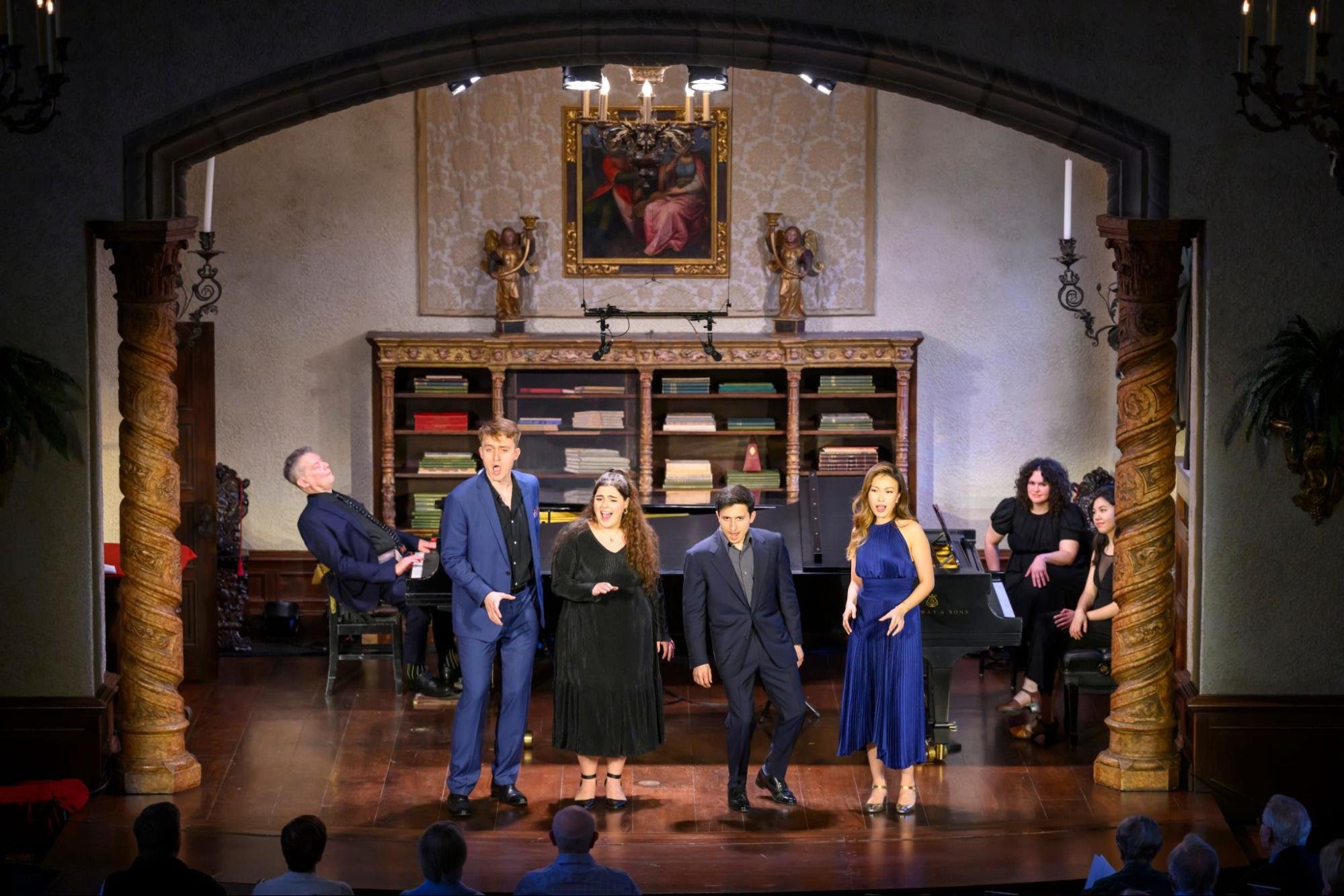
Caramoor’s Rosen House Concert Series runs from October through May, held in the exquisite Music Room of the Rosens’ historic home – a Mediterranean-style villa from 1939 filled with treasures from around the world.
Photo by Gabe Palacio available in high resolution here.

Oct. 24-25: A Far Cry Continues 20th Anniversary Season with Folie à Deux – A Neighborhood Chamber Music Concert Curated by Rafael Popper-Keizer
Oct. 24-25: A Far Cry Continues 20th Anniversary Season with Folie à Deux – A Neighborhood Chamber Music Concert Curated by Rafael Popper-Keizer
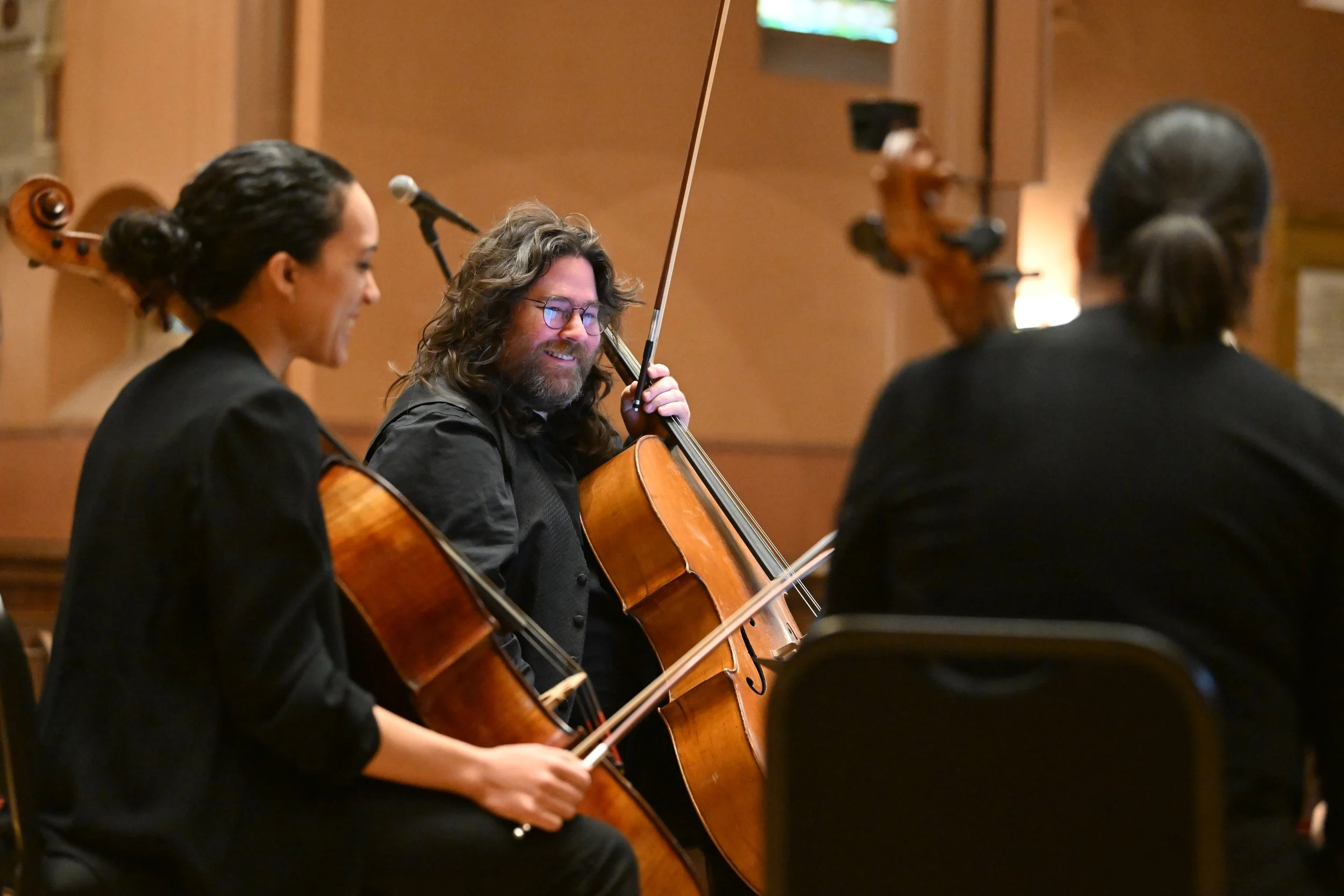
Photo by Josh Reynolds available in high resolution here.
GRAMMY®-Nominated A Far Cry Continues 20th Anniversary Season with Folie à Deux on October 24 and 25
A Neighborhood Chamber Music Concert
Curated by A Far Cry Cellist Rafael Popper-Keizer
Saturday, October 24, 2026 3:00pm
St. John’s Episcopal Church | 1 Roanoke Avenue | Jamaica Plain, MA
Tickets and More Information
Sunday, October 25, 2026 at 3:00pm
First Church Cambridge | 11 Garden Street | Cambridge, MA
Tickets and More Information
Boston, MA – GRAMMY®-nominated chamber orchestra and “world-wide phenomenon” (WBUR) A Far Cry (AFC) continues its 20th anniversary season with Folie à Deux, its first set of Neighborhood Chamber Concerts of the year, on Saturday, October 24, 2026 at 3pm at St. John’s Episcopal Church (1 Roanoke Avenue, Jamaica Plain) and Sunday, October 25, 2026 at 3pm at First Church Cambridge (11 Garden Street, Cambridge).
Curated by A Far Cry cellist Rafael Popper-Keizer, Folie à Deux explores musical partnership through six striking duos for violin, viola, cello, and marimba. Moving through every two-part permutation of the ensemble’s four instruments, this program reveals how intimacy, tension, and joy emerge when two voices come together.
The performance will showcase a colorful assortment of vibrant works by contemporary composers, ranging from the shimmering stillness of Akshaya Avril Tucker’s Breathing Sunlight to the mournful echoes of Osvaldo Golijov’s Mariel; from the playful textures of Caroline Shaw’s Limestone and Felt to the profound gravity of Penderecki’s Ciaccona, to the spirit of perseverance fueling Fabian Otten’s L’Assillo, to the American and Japanese folk influences shaping Paul Wiancko’s American Haiku. Together the full program forms a kaleidoscopic meditation on memory, identity, and the power of shared experience.
“Making music with another person is an act of mutual trust and shared vulnerability; it requires an open mind and a willingness to live in the space where the sound of one instrument ends and the other begins,” says Rafael Popper-Keizer. “In Folie à Deux, I wanted to celebrate this intimacy with six remarkable duos, each of which creates a richly complex world of sound and emotion with the smallest possible ensemble.”
A Far Cry’s 20th anniversary season includes nine thoughtfully curated programs presented throughout the Boston area including a grand finale anniversary celebration, from September 2026 through June 2027 at venues including New England Conservatory’s Jordan Hall, St. John’s Episcopal Church in Jamaica Plan, Old South Church in Boston, First Church in Cambridge, and the Boston Center for the Arts Cyclorama. See schedule below.
A Far Cry was founded in 2007 on the belief that every voice deserves to be heard; so instead of one artistic director, the collective of musicians curate and submit program ideas inspired by individual curiosities, the greater musical community, and what is happening in the world at large. The result is a dynamic representation of music and collaborators across genres and backgrounds. The Criers believe it is this core value and sense of curiosity and mission that led The Boston Globe to write that, “even though A Far Cry has decisively established itself as a mainstay of the Boston musical community, something about it feels perpetually fresh with every performance.” In addition to its home season in Boston, the ensemble tours nationally, collaborates regularly with other world-class musicians throughout the country, and has twice been nominated for GRAMMY Awards in the Best Chamber Music/Small Ensemble Performance category. The group’s recording of Rounds by Jessie Montgomery with pianist Awadagin Pratt on his album Stillpoint garnered Montgomery the GRAMMY Award for Best Contemporary Classical Composition in 2024.
A Far Cry’s national tours have taken the ensemble to leading venues including The Kennedy Center, National Gallery of Art, Kaufman Music Center, the Naumburg Bandshell in Central Park, at Caramoor, the Ravinia Festival, Rockport Chamber Music Festival-Shalin Liu, Groton Hill Music Center, Newport Classical Music Festival, and many more. The Criers are proud to call Boston home, and maintain strong roots in the city. Collaborating with local students through educational partnerships with the New England Conservatory and Project STEP, A Far Cry aims to pass on the spirit of collaboratively-empowered music to the next generation.
More about A Far Cry: www.afarcry.org/group-bio
A Far Cry Season 20: At-a-Glance Concert Schedule
September 19: Goldberg Variations with Simone Dinnerstein, piano
October 24-25: Folie à deux
November 7: Mighty Fortress with Boston Children's Chorus, Ariadne Greif, soprano; Clare McNamara, alto; Brian Giebler, tenor; and Paul Max Tipton, bass
December 19-20: Brandenburgs (12/19), (12/20)
January 9-10, 2027: Coming to Boston: From Haiti with Charlot Lucien, Haitian poet (1/9), (1/10)
February 12, 2027: Heartstrings: The Most Beautiful Music in the World with Emmanuel Oppong-Yeboah, Boston Poet Laureate
March 13-14, 2027: The Greatest (3/13), (3/14)
April 10, 2027: Side by Side: Absolute Cinema with Students from New England Conservatory and Project STEP
June 5, 2027: Season 20 Celebration - Mix Tape for Boston: Costumes Change, Pulse Remains
A Far Cry’s full performance calendar: afarcry.org/all-concerts
For Calendar Editors:
Description: GRAMMY®-nominated chamber orchestra and “world-wide phenomenon” (WBUR) A Far Cry continues its 20th anniversary season with Folie à Deux, its first set of Neighborhood Chamber Concerts of the year, on Saturday, October 24 at St. John’s Episcopal Church and Sunday, October 25 at First Church Cambridge. Curated by A Far Cry cellist Rafael Popper-Keizer, Folie à Deux explores musical partnership through six striking duos for violin, viola, cello, and marimba.
Concert details:
Who: GRAMMY®-nominated chamber orchestra A Far Cry
What: Folie à Deux – A Neighborhood Community Concert
When: Saturday, October 24, 2026 at 3:00pm
Where: St. John’s Episcopal Church, 1 Roanoke Avenue, Jamaica Plain, MA 02130
Tickets and More Information: https://www.afarcry.org/all-concerts/folie-deux-jp
Who: GRAMMY®-nominated chamber orchestra A Far Cry
What: Folie à Deux – A Neighborhood Community Concert
When: Saturday, October 24, 2026 at 3:00pm
Where: First Church Cambridge, 11 Garden Street, Cambridge, MA 02138
Tickets and More Information: https://www.afarcry.org/all-concerts/folie-deux-cambridge

Oct 23: GRAMMY-Winning Experiential Orchestra Opens Season with The Music of Anna Clyne Featuring Cellist Inbal Segev in the New York City Premiere of DANCE
Oct 23: GRAMMY-Winning Experiential Orchestra Opens Season with The Music of Anna Clyne Featuring Cellist Inbal Segev in the New York City Premiere of DANCE
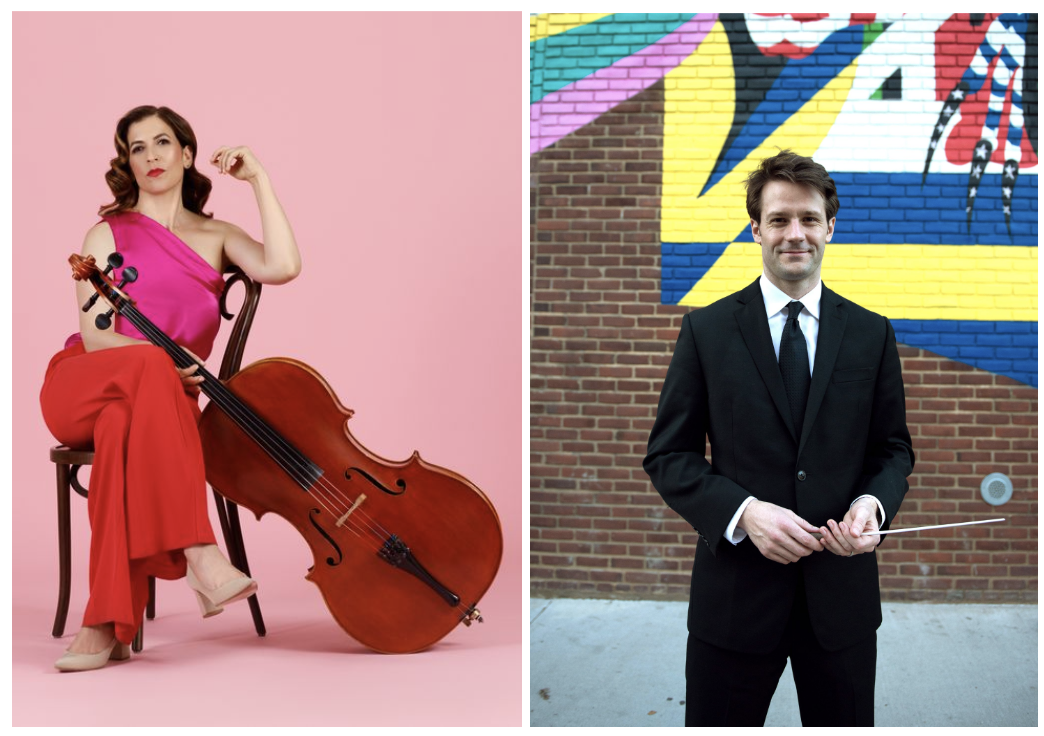
GRAMMY®️-Winning Experiential Orchestra (EXO) Opens 2026-2027 Season on October 23 with An Embrace of Sound: The Music of Anna Clyne
Featuring Cellist Inbal Segev in the New York City Premiere of Clyne’s DANCE
James Blachly, Music Director
Friday, October 23, 2026 at 8pm
Pre-Concert Conversation with Anna Clyne at 7:15pm
The DiMenna Center for Classical Music | 450 W. 37th St., New York, NY
Tickets & Information
New York, NY – The GRAMMY®️-winning Experiential Orchestra (EXO) led by founding Music Director James Blachly will open its 2026-2027 season, titled Beauty in the Face of Adversity and running from October 2026 through June 2027, with An Embrace of Sound: The Music of Anna Clyne, on Friday, October 23, 2026 at 8pm at The DiMenna Center for Classical Music (450 W. 37th St.). A pre-concert conversation with Anna Clyne, moderated by New Music USA President & CEO Vanessa Rose, starts at 7:15pm. EXO will present four immersive programs this season, each reflecting the mission of the orchestra – to curate programs that embrace the unique acoustics and characters of each venue, creating a one-of-a-kind listening environment and a new experience of sound.
This season opening concert on October 23, An Embrace of Sound, is a celebration of the music of composer Anna Clyne and features the New York City premiere of her piece DANCE for cello and orchestra, performed with cello soloist Inbal Segev (who commissioned and recorded the work). The program also includes Clyne’s This Midnight Hour, an evocative tour de force for orchestra, which was written in part as a response to the poetry of Charles Baudelaire and Juan Ramón Jiménez. Clyne’s Within Her Arms, written in the wake of the death of her mother, opens the program, with the EXO strings surrounding the audience at the DiMenna Center in a sound embrace.
Experiential Orchestra Music Director James Blachly says, “This season brings together extraordinary composers, internationally acclaimed soloists, and beautiful venues to create concerts that we hope will speak directly to our audience from a place of strength and comfort. For our season opening concert, we embrace the way that Anna Clyne's music is uniquely attuned to the way we can turn to music and poetry in life's hardest moments. The program includes Within Her Arms, written after the death of Anna’s mother, an elegy for string orchestra – this is music that is imbued with grief. The work opens with a short descending theme that becomes the basis for a musical meditation on love and life and loss. I couldn’t be more honored to present the New York City premiere of Anna’s DANCE for cello and orchestra, with the incredible soloist Inbal Segev. Each of the concerto’s five movements corresponds to a line of the Rumi poem that inspired the piece. I am greatly looking forward to bringing this expansive and lyrical piece to New York with the cellist for whom it was written.”
After co-commissioning Anna Clyne’s concerto DANCE, Inbal Segev premiered the work under Cristian Măcelaru’s leadership at the 2019 Cabrillo Festival of Contemporary Music in California and recorded it alongside Elgar’s iconic concerto with Marin Alsop and the London Philharmonic Orchestra. Released by Avie, the album was an instant success, topping the Amazon Classical Concertos chart and inspiring glowing praise from The Guardian, BBC Radio 3 and other outlets; DANCE’s opening movement was named among NPR Music’s “Favorite Songs of 2020,” receiving more than twelve million listens on Spotify. Combining “thrillingly projected, vibrato-rich playing” (Washington Post) with “complete dedication and high intelligence” (San Francisco Classical Voice), Inbal Segev makes solo appearances at leading international venues and with preeminent orchestras and conductors worldwide. Celebrated for her fresh insights into music’s great masterworks, the New York-based Israeli American cellist is equally committed to reinvigorating the cello repertoire and has commissioned and premiered major new works from an international who’s who of today’s foremost contemporary composers.
Up next in EXO’s season, on February 20, 2027 at Roulette Intermedium (509 Atlantic Ave., Brooklyn, NY), the orchestra presents Music in a Time of War, a concert featuring three acclaimed soloists: Paul Neubauer, Stewart Goodyear, and Michelle Barzel Ross. On May 22, 2027 at the New York Society for Ethical Culture (2 W 64th St., New York, NY), EXO performs the choral music of Arvo Pärt, expanding the orchestra’s ongoing relationship with the Estonian composer. The final event of the season is a reprise of EXO’s celebrated collaboration with composer Brad Balliett in his A Field Guide to Imaginary Birds, to be held outdoors at Inwood Hill Park in Spring 2027 (details TBA).
About Experiential Orchestra:
The GRAMMY®️-winning Experiential Orchestra (EXO) brings audiences close to the music by engaging listeners through imaginative, immersive, and interactive concert experiences. Founded by Music Director James Blachly in 2009, EXO’s performances and recordings have been described as “strikingly persuasive” by the San Francisco Chronicle and “immaculate” by Musical America, and have been praised for having “luscious tone and poise” by Classics Today.
EXO was founded to forge transformative concerts in community, where each curated performance is imbued with a generous spirit of celebration, facilitating the exploration of what Blachly calls, “a new experience of sound” by audiences. The orchestra’s performances take place in and outside the concert hall with audiences invited to participate in unorthodox ways. EXO has performed the music of Arvo Pärt in the Temple of Dendur at The Metropolitan Museum of Art, invited audiences to dance during Stravinsky’s Rite of Spring and Tchaikovsky’s Nutcracker at National Sawdust, enveloped the audience in concerts at Lincoln Center with audience and orchestra members sitting together, and presented Symphonie fantastique and Petrushka with circus choreography at The Muse in Brooklyn.
Recent highlights have included a concert at The Library of Congress in Washington, DC; an immersive performance of Strauss’s Four Last Songs with cellist Andrew Yee and soprano Sarah Brailey; and an ongoing close relationship with the Arvo Pärt Centre, Michael Pärt, and the Estonian Embassy in yearly presentations of the music of Arvo Pärt. In January 2024, EXO performed Pärt’s masterwork Passio at the Cathedral Church of St. John the Divine, offering audiences the opportunity to experience the concert while reclining on yoga mats. In March 2024, the orchestra co-presented a four-day Julia Perry Centenary Celebration and Festival in New York, coinciding with Perry’s 100th birthday that month.
EXO is known for imaginative and groundbreaking programming that frequently advocates for under-celebrated masterpieces and composers. The orchestra’s world premiere recording of Dame Ethel Smyth’s The Prison (1930) was released on Chandos Records in 2020 to international critical acclaim in The New York Times, Gramophone, The New Yorker, The Guardian, and many other publications. The album won the GRAMMY for Best Classical Solo Vocal Album in 2021 – the first GRAMMY ever awarded for Smyth’s music. EXO’s world premiere recording of Julia Perry’s Violin Concerto, with soloist Curtis Stewart, was released on the Bright Shiny Things label in March 2024 and earned two GRAMMY nominations.
EXO is led by Founder and Music Director James Blachly, General Manager Sandy Choi, Concertmasters Alex Fortes and Henry Wang, Personnel Manager Arthur Sato, and Artistic Advisor Patrick Castillo.
About Founding Music Director James Blachly:
James Blachly is a GRAMMY®-winning conductor dedicated to enriching the concert experience by connecting with audiences in memorable and meaningful ways. James Blachly serves as Music Director of Experiential Orchestra and Johnstown Symphony Orchestra. He is a versatile guest conductor in diverse repertoire for orchestras including New York Philharmonic, the Detroit Symphony Orchestra, and WDR Funkhausorchester. A strong supporter of composers of our time, Blachly has commissioned and premiered more than 40 works by composers including Jessie Montgomery, Courtney Bryan, Viet Cuong, Michi Wiancko, Kate Copeland Ettinger, Tommy Daugherty, Patrick Castillo, Brad and Doug Balliett, and many others. In recent seasons, he has collaborated with soloists Daniel Hope, Paul Jacobs, Julia Bullock, Dashon Burton, Michelle Cann, Andrew Yee, Curtis Stewart, Simone Porter, and more. In addition to his work with Experiential Orchestra, with the Johnstown Symphony, Blachly has conducted the orchestra at the Flight 93 Memorial for the 20th Anniversary of 9/11, in a former steel mill in a concert that was featured on Katie Couric’s America Inside Out, at the First Summit Arena at the War Memorial, and in eight seasons the orchestra has increased season ticket sales and annual giving each by more than 50%. In 2021, he received a commendation by the City of Johnstown and the Johnstown chapter of the NAACP. In recent seasons, Blachly has introduced an annual Martin Luther King Jr. Day, Juneteenth, and youth concert. For more information, visit www.jamesblachly.com.

Oct & Nov: Classical Music Highlights at Caramoor - Countertenor Iestyn Davies and Harpist Oliver Wass, Pianist Jonathan Biss, and Anthony Roth Costanzo on his New Book
Oct & Nov: Classical Music Highlights at Caramoor - Countertenor Iestyn Davies and Harpist Oliver Wass, Pianist Jonathan Biss, and Anthony Roth Costanzo on his New Book
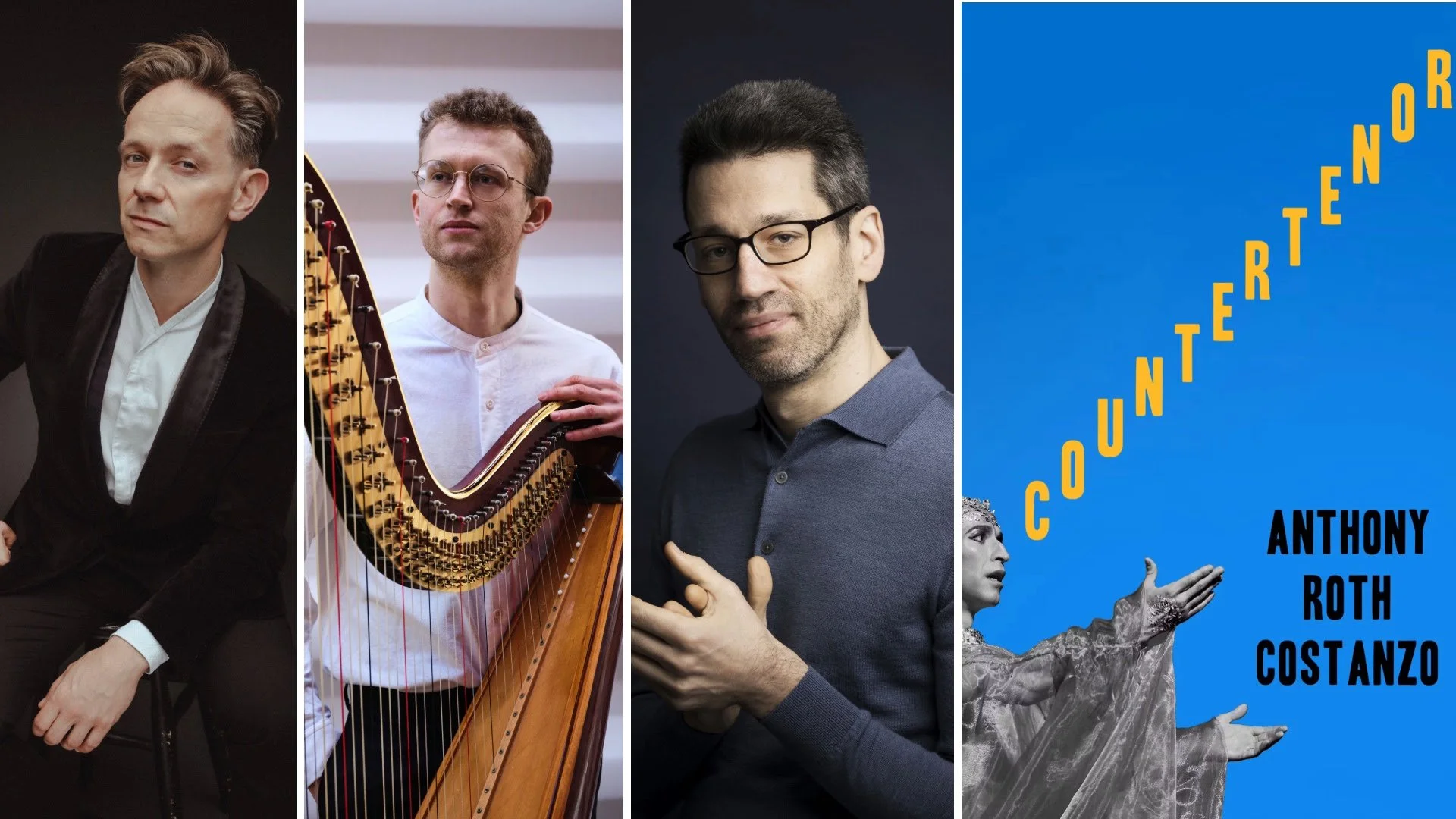
Photos available in high resolution here.
October and November Classical Highlights at Caramoor
Rosen House Concert Series: Countertenor Iestyn Davies and Harpist Oliver Wass
Sunday, October 18, 2026 at 3:00pm
Rosen House Concert Series: Pianist Jonathan Biss
Sunday, October 25, 2026 at 3:00pm
Conversations at Caramoor: Anthony Roth Costanzo on his New Book Countertenor
Sunday, November 8, 2026 at 3:00pm
Caramoor Center for Music and the Arts | Rosen House
149 Girdle Ridge Road | Katonah, NY
Tickets & Information
Getting to Caramoor from NYC: Caramoor is an approximately one-hour ride on Metro-North from Grand Central to Katonah, NY.
KATONAH, NY – Caramoor, a vibrant cultural destination nestled on 81 acres of historic gardens and woodlands in Katonah, NY, continues its intimate 2026-2027 Rosen House Concert Series with two October performances plus a very special installment of Conversations at Caramoor in November. Celebrated British countertenor Iestyn Davies and harpist Oliver Wass perform on Sunday, October 18, 2026 at 3:00pm and renowned pianist Jonathan Biss performs on Sunday, October 25, 2026 at 3:00pm, as part of the Rosen House Concert Series. On Sunday, November 8, 2026 at 3:00pm, countertenor and author Anthony Roth Costanzo will speak about his new book, Countertenor (Farrar, Straus, Giroux, October 27, 2026) as part of the Conversations at Caramoor series. All three events take place in the Music Room at the Rosen House.
Caramoor, once the estate of music and art lovers Walter and Lucie Rosen, is one of the region’s most distinctive destinations for live performance, cultural engagement, and exploration. Caramoor’s Rosen House Concert Series runs from October through May, held in the exquisite Music Room of the historic home – a Mediterranean-style villa from 1939 filled with treasures from around the world. Audiences enjoy performances by some of today’s most in-demand artists in the same living room salon setting where the Rosens once entertained their many friends. The estate’s gardens and grounds are also open year round to visitors, free of charge, for picnicking and walking daily from 10:00am to 4:00pm.
Countertenor Iestyn Davies is known for his vocal beauty and technical dexterity. An esteemed Handelian, he is a GRAMMY-winner and recipient of multiple Gramophone awards, with appearances at The Metropolitan Opera, La Scala, and Carnegie Hall. He earned an Olivier Award nomination for his performance in the play Farinelli and the King in London and New York. In 2022, Davies appeared with lutenist Thomas Dunford in the Music Room, and on October 18 he returns to Caramoor with Oliver Wass, the first harpist ever to win the prestigious Guildhall Gold Medal, for a recital that includes Dowland’s Flow My Tears; In Darkness Let Me Dwell; Now, O Now I Needs Must Part; Say Love if Ever Thou Didst Find; Time Stands Still; Can She Excuse My Wrongs; and My Thoughts Are Wing'd With Hopes; Purcell’s “Strike the viol, touch the lute” from Come, ye sons of art, away, Handel’s “Sento Amor” from Partenope and “Oh Lord Whose Mercies Numberless” from Saul; Gluck’s Orfeo ed Euridice Cantata (arranged by Davies), selections from J.S. Bach’s French Suite No.3 BWV 814; Mozart’s Rondo Alla Turka; Monteverdi’s Laudate Dominum in sanctis eius SV287; and Trabaci’s Toccata Seconda and Ligature per l'arpa.
Pianist Jonathan Biss is recognized globally for his impeccable taste and formidable technique. He has appeared as a soloist with the foremost ensembles of the world, including the Los Angeles and New York Philharmonics, the Boston Symphony, and the Royal Concertgebouw. Biss is particularly renowned for his deep engagement with the music of Beethoven. An alum of the Evnin Rising Stars program, he has a rich history with Caramoor, performing many times over the years and last appearing with the Orchestra of St. Luke’s in Beethoven’s Piano Concerto No. 3 during the 2019 Summer Season. He has recorded the complete piano sonatas of the composer, created a widely viewed Coursera lecture series, spearheaded the Beethoven/5 commissioning project, and is the author of the acclaimed book Unquiet: My Life with Beethoven. Beyond his extensive touring and advocacy for newly commissioned works, Biss serves as the Co-Artistic Director of the Marlboro Music School and Festival. He is a frequent contributor to The New York Times and the recipient of numerous prestigious honors, including the Leonard Bernstein Award, an Avery Fisher Career Grant, and a Gilmore Young Artist Award. At Caramoor on October 25, he will present his program Words Fail! featuring selections from Mendelssohn’s Songs Without Words, Janáček’s “Words Fail!” from On the Overgrown Path, Kurtág’s “Quiet talk with the Devil” and “Silence” from Játékok, Amy Beth Kirsten’s (speak to me), and Schumann’s Variations on an Original Theme and Fantasy in C Major, Op. 17.
Anthony Roth Costanzo, one of today’s leading opera singers, will celebrate his debut book, Countertenor (Farrar, Strauss, Giroux, October 27, 2026), with a talk at Caramoor on November 8. Part memoir, part cultural history, the book traces the countertenor voice from its origins in the castrati of the baroque era to its singular place in opera today, exploring how this extraordinary range continues to challenge our ideas of gender, identity, and sound itself. With the same wit and vitality that define his performances, Costanzo reflects on his own path as a singer, producer, and curator shaping the future of the art form. This is a rare opportunity to hear one of opera's most compelling voices speak candidly about the instrument that made his career. Copies of Countertenor will be available for purchase, with a book signing to follow the talk.
Beyond the Music: Yoga, Teas, Talks, & More
Caramoor has expanded its slate of community and family programming to include tours, teas, yoga, and more, giving visitors a wide variety of ways to experience this unique setting in addition to its world-class concerts. Caramoor offers Rosen House Signature Tours on Fridays and Saturdays, inviting visitors to explore the historic Rosen House through a docent-led experience which shares the stories behind the House’s carefully assembled treasures. Caramoor will also continue its popular Afternoon Teas, offering a variety of tea sandwiches, scones with crème fraîche and preserves, delicious desserts, and a selection of fragrant teas. Tea is served in the Music Room, a unique opportunity to relax with friends and family in a breathtaking historic setting. In addition, Caramoor invites the community to unwind and restore in a serene setting with Sunset Yoga in the Sunken Garden in September and Yoga in the Music Room in January. This special yoga series is designed to nurture both body and mind. Each session offers a gentle, mindful practice led by an experienced instructor, with an emphasis on breath, alignment, and presence. Caramoor also offers family activities in all seasons, including making Halloween treats and winter wreaths during Halloween Dessert Decorating Kids Cooking Class and Winter Wreath-Making for Families. Caramoor also offers Rosen House Studio Nights: Art and Aperitifs for adults on select Wednesday evenings, with themes including ceramic tile painting, stained glass mosaics, and jewelry design.
New this season, Caramoor is teaming up with Juilliard Extension to offer six classes that give audiences the opportunity to dive deeper into the themes presented on stage throughout the Rosen House Concert Series and Summer Season. Participants will learn from acclaimed professors and lecturers and engage in thoughtful discussion with fellow music lovers. Topics include Beethoven to Bartók: The Expanding World of Chamber Music; The String Quartet Across Three Centuries; Music, Faith, and Power in the Baroque World; and more. Classes can be taken individually or as an entire series.
Please visit the Caramoor website for the full schedule of Beyond the Music programs, which are announced on a rolling basis: caramoor.org/events/beyond-the-music
About Caramoor
Caramoor Center for Music and the Arts is a vibrant cultural destination nestled on 81 acres of historic gardens and woodlands in Katonah, NY. Once the home of music and art lovers Walter and Lucie Rosen, Caramoor has evolved into one of the region’s most distinctive destinations for live performances, cultural engagement, and exploration – a sanctuary for music, art, and nature.
Each year, Caramoor presents an exciting array of concerts across genres – from classical, opera, and chamber music to jazz, American roots, global sounds, and the American songbook. Caramoor’s acclaimed Summer Season brings audiences together for unforgettable outdoor performances from June into August in five distinct settings (the Venetian Theater, Friends Field, Spanish Courtyard, Sunken Garden, and the Music Room), while the intimate Rosen House Concert Series runs from October through May in the historic Rosen House, a Mediterranean-style villa listed on the National Register of Historic Places and filled with treasures from around the world. With a mission to engage audiences of all ages, Caramoor also offers a selection of concerts and programs for families and our youngest listeners.
Caramoor is a place where music, history, and nature come together to create moments of beauty and connection for all who visit. In addition to hearing concerts, visitors to Caramoor can tour the spectacular Rosen House, explore its intriguing collections, enjoy a picnic, and experience the lush gardens and grounds – including Caramoor’s unique collection of site-specific Sound Art, permanently installed sound sculptures that draw inspiration from their environment. Caramoor also offers a formal afternoon tea service year-round in the Music Room (by reservation), the summer seasonal concessions Bravo Bar, and a selection of public programs such as yoga, art classes, and large-scale community events.
At-a-Glance Calendar: 2026-27 Rosen House Concert Series Performances
Friday, October 2, 2026 at 7:30pm: Nobuntu
Friday, October 16, 2026 at 7:30pm: Bandits on the Run
Sunday, October 18, 2026 at 3:00pm: Countertenor Iestyn Davies and Harpist Oliver Wass
Sunday, October 25, 2026 at 3:00pm: Pianist Jonathan Biss
Saturday, October 31 and Sunday, November 1, 2026 at 3:00pm: Evnin Rising Stars
Friday, November 6, 2026 at 7:30pm: Pianist Aaron Diehl
Sunday, November 15, 2026 at 3:00pm: Renaissance Quartet
Sunday, December 6, 2026 at 2:00pm and 4:00pm: Christmas with Cantus
Sunday, March 7, 2027 at 3:00pm: Schwab Vocal Rising Stars
Sunday, April 4, 2027 at 3:00pm: Viano Quartet
Friday, April 9, 2027 at 7:30pm: The Summer Camargo Quintet
Sunday, April 11, 2027 at 3:00pm: ACRONYM and Countertenor Reginald Mobley
Sunday, April 25, 2027 at 3:00pm: Pianist Inon Barnatan
Sunday, May 2, 2027 at 3:00pm: Renaissance Quartet
Friday, May 7, 2027 at 7:30pm: Sister Sadie
Friday, May 14, 2027 at 7:30pm: Cabaret in the Music Room with Vocalist Mandy Gonzalez
For Caramoor's complete schedule, including the Rosen House Concert Series and Beyond the Music events: caramoor.org/events/calendar
Ticketing Information
Concert tickets are available for purchase online at caramoor.org; by phone at 914.232.1252 Tuesdays through Fridays from 10am-4pm; and on site from the Box Office two hours before each performance.
Caramoor is located at 149 Girdle Ridge Road in Katonah, NY.
How to get to Caramoor: caramoor.org/visit-us/amenities
More information about visiting Caramoor: caramoor.org/visit
Nov. 6: Composer and Multi-Instrumentalist Amir ElSaffar Announces Ashwaaq – New Album on Maqām Records
Nov. 6: Composer and Multi-Instrumentalist Amir ElSaffar Announces Ashwaaq – New Album on Maqām Records
Composer and Multi-Instrumentalist Amir ElSaffar
Announces New Album Ashwaaq
Out November 6, 2026 on Maqām Records
Featuring the Poetry of 13th-Century Sufi Mystic Ibn Arabi
Sung by Aleppan vocalist Khaled AlHafez
Set to a Tapestry of Harmonized Maqam Modes
performed by String Quartet and Santur
Release Date: November 6, 2026
Pre-Order Available Now
CDs or press downloads available upon request.
On November 6, 2026, New York City-based Iraqi-American composer, trumpeter, santur player, vocalist, and modular synthesist Amir ElSaffar will release his new album Ashwaaq on Maqām Records, part of Maqām Studio, of which ElSaffar is the founder and Artistic Director. Ashwaaq is Amir ElSaffar’s ninth studio album and his second on Maqām Records. This recording is comprised of an original seven-movement composition for string quartet, voice, and santur (Iraqi hammered-dulcimer) by ElSaffar, that pairs his music with verses of poetry by thirteenth-century poet Ibn Arabi.
Alongside ElSaffar, Ashwaaq features renowned Syrian vocalist Khaled AlHafez, a carrier of traditional singing from Aleppo, and a string quartet with whom ElSaffar has deep musical relationships: his sister, Dena El Saffar on viola, with whom he co-leads an Iraqi Maqam ensemble; violinist Megan Gould, a major player in the Arabic music scene in New York who has played with Dena for over 30 years; Eylem Basaldi, an innovative violinist and improviser rooted in Turkish music; and cellist Naseem AlAtrash, a virtuoso and composer in his own right and member of the Turtle Island String Quartet.
Amir ElSaffar works at the intersections of jazz, Western classical, electro-acoustic music, and Iraqi and Arabic Maqam. Described as “the celebrated trumpeter and composer who explores vital connections between jazz and Arabic music” (New York Times), and “The Innovator” (SPIN), ElSaffar has created a unique microtonal language that merges the Arabic maqam modal system with jazz and Western classical harmony.
Muhyiddin Ibn Arabi, or simply Ibn Arabi (1165-1240), is one of the most revered Sufi philosophers and mystics, whose work embodies the ideals of love and transcendence. The epic Turjuman Al-Ashwaq (Translator of Desires) is a collection of 61 poems that explores the divine and ecstatic nature of unity amid the diversity and variety of the manifest world. On Ashwaaq, selections from Ibn Arabi’s verses are paired with voice and string quartet, using the natural and inherent sound of string instruments to interpret and reflect upon the deeper meanings of Ibn Arabi’s texts.
“My heart can take on any form: a meadow for gazelles, a cloister for monks,
For the idols, sacred ground, Ka'ba for the circling pilgrim,
the tables of the Torah, the scrolls of the Qur'án.
I profess the religion of love; wherever its caravan turns along the way, that is the
belief, the faith I keep.”
The final lines of this poem are among the most widely read and quoted in Arabic poetry, about love of the divine in its constantly changing manifestations. Here, Ibn Arabi finds the unity in all religions, faiths, and philosophies from a place free of dogma. That which is infinite cannot be grasped or contained and is perceived through an open heart “capable of every form.”
The musical side of Ashwaaq is built on much more than the series of melodies and rhythms. ElSaffar is driven by a transcultural perspective which draws on the universality of composing, listening, and reacting to music, reflecting the sentiments of Ibn Arabi’s verses. In his approach to this composition, ElSaffar explores the vast possibilities of sound, melody, harmony, and rhythm through the combination of traditional Arabic singing with the string quartet, to create a work that’s less about conventional analysis or structure and more about expressing the ecstasy, spirituality, and emotion of the poetry.
In order to best achieve his artistic vision, ElSaffar embraced a musical language known as maqam, a system of modes that has been practiced for centuries in North Africa, Western Asia, and Central Asia. These modes –– similar to Western scales but with microtones and greater melodic specificity –– determine the feeling and spiritual quality of a piece of music.
“Rather than relying on Western harmony or counterpoint, two approaches that conflict with the maqam’s inherent logic,” says ElSaffar, “the harmonies of Ashwaaq emerge from sustained microtonal resonances inherent to the maqam, and heterophony — the simultaneous renderings of a single melodic phrase with variation.”
ElSaffar finds even more inspiration in Arab musicality for Ashwaaq, using overtones of the Arab takht – chamber ensemble – as well as rhythmic pulsations that conjure folk instruments and dance. He then brings these elements together with string techniques and aspects of contemporary music. The choice to include a string quartet of Western instruments, as opposed to traditional Arab musical instruments, was guided by ElSaffar’s desire to express the plurality and multitude of meanings in Ibn Arabi’s text, a departure from the single-melody approach characteristic of traditional Maqam music. The work proposes a new form of polyphony based on the microtonal maqam, a delicate undertaking few have attempted, making it a unique contribution in both maqam music as well as Western chamber music.
Composed in 2014 on a commission from the Royaumont Foundation in France, where ElSaffar was composer-in-residence for three years, the work premiered at the Festival d’Avignon and Festival d’Aix-en-Provence, and had follow-up performances throughout Europe.
Left to right: Eylem Basaldi, Naseem AlAtrash, Khaled AlHafez, Amir ElSaffar, Dena El Saffar, Megan Gould
More about Amir ElSaffar: Amir ElSaffar leads the acclaimed six-piece Two Rivers ensemble and 17-piece Rivers of Sound Orchestra, and recently founded his New Quartet featuring microtonal piano. He is also the santur player and musical director for vocalist Hamid Al-Saadi, one of the last living practitioners of the Iraqi Maqam.
ElSaffar is the founder and Artistic Director of Maqam Studio and Maqam Records, an initiative supported by the Mellon Foundation, which seeks to preserve and foster innovation within the Maqam musical tradition of the Middle East. He is also composing an Arabic-language Maqam opera, which will have its concert premiere in 2027.
ElSaffar’s compositional output includes works for jazz ensembles, string quartets, mixed chamber ensembles, and symphony orchestras. In addition, he has led numerous hybrid projects with Raga, Flamenco, Stambeli (Tunisian Gnawa) and Subsaharan African trance music. In his most recent works he has incorporated electronic elements, such as analog modular synthesizer.
He has premiered new works at the Newport Jazz Festival, Berlin Jazz Festival, Dream City Festival (Tunisia), Festival d’Aix-en-Provence, Festival d’Avignon (France), Flamenco Biennale (Netherlands), the Mostly Mozart Festival at Lincoln Center, and Pierre Boulez Saal, among others.
ElSaffar’s awards and honors include a Mellon Foundation Arts and Culture grant (2023-2028), Doris Duke Performing Artist Award (2013), United States Artists Fellowship (2018), a Hodder Fellowship at Princeton University (2020-2021), an Opera America IDEA Grant (2025-2026) and Creative Capital Award (2026), in support of hisopera. in Arabic.
Ashwaaq
Music by Amir ElSaffar
Release Date: November 6, 2026
Maqām Records
Featuring Amir ElSaffar (santur and composition); Khaled AlHafez (voice); Megan Gould, Eylem Basaldi (violin); Dena El Saffar (viola); Naseem AlAtrash (cello)
Tracklist:
1. Introduction - Nizam [1:36]
2. I - Layta Shi'ri [2:29]
3. II - Qif Bil-Manazili [6:09]
4. III - Tal'a Al-Badru [4:28]
5. VI - Qalat [3:20]
6. V - Lam’at Lana Bil-Abraqayn [4:17]
7. VI - Al Hubbu Dini (Love is My Religion) [7:32]
8. VII - Ala Ya Banat Al-Wadi [2:37]
Total Time: [32:31]
Poetry by Ibn Arabi (1165-1240 AD)
Music by Amir ElSaffar
Produced by Maqām Records
Recorded by Marc Urselli at EastSide Sound, New York, NY on November 10, 2025
Mixed & Mastered by Marc Urselli at Audio Confidential, New York, NY
Cover Art by Amina Ahmed
Design by Buyana Jargalsaikhan
Commissioned by the Royaumont Foundation in 2014
Premiered at Festival d’Avignon and Festival d’Aix-en-Provence in July, 2014
Dedicated to the memory of Frederic Deval (1951-2016)
Excerpts from Ibn Arabi’s collection of mystical love poems, Turjumān al-Ashwāq (The Translator of Desires), written in Mecca in 1215. Excerpts from a translation into English by Michael Sells (Princeton University Press, 2021) are included in the linear notes.

Now Available on ECM New Series: András Schiff's Recording of Brahms' Klavierstücke
Now Available on ECM New Series: András Schiff's Recording of Brahms' Klavierstücke
András Schiff
Johannes Brahms
Klavierstücke
András Schiff, Blüthner piano
Albumblatt, Klavierstücke op.76, Fantasien op.116, Intermezzi op.117, Klavierstücke op.118, Klavierstücke op.119
ECM New Series 2730/31
Out Now
Downloads and CDs available upon request.
Early works and late works, the young Brahms and the mature Brahms: how could the music not sound different? Yet for his new recording of Brahms's piano pieces, András Schiff does not begin with any of the composer's better-known youthful works—from the Scherzo, op. 4, to the Ballades, op. 10, of 1854. Instead, he opens with a musical miniature that remained unknown for many years: little more than a sounding vignette from that period.
Brahms wrote the Albumblatt during a concert tour, inscribing it as a musical dedication in the Album Amicorum of Arnold Wehner, director of the University of Göttingen. Other artists, including Schumann, Mendelssohn and Liszt, had also left their mark there. Brahms later revised the fleeting little piece and incorporated it into his Horn Trio, op. 40. In the context of this recording, this wistful work by the twenty-year-old Johannes Brahms serves as an atmospheric and finely judged introduction to everything that follows. For András Schiff, it is something like “A Portrait of the Artist as a Young Man”.
The "mature" Brahms emerges in the Eight Piano Pieces, op. 76, composed largely in 1878—a collection of Capriccios and Intermezzi. These works reflect Beethoven, Schumann and Chopin far less directly than Brahms's earlier music, and they certainly make no demands for an orchestral style of piano playing. Instead, they are intimate, profound miniatures. The critic Eduard Hanslick aptly described them, with their restrained manner, as "soliloquies," while the French Brahms biographer Claude Rostand called them "a cycle of pianistic reveries tinged with a Nordic world-weariness.
Between 1866 and 1878, Brahms had largely neglected solo piano music. He returned to the genre only with op. 76 and the Two Rhapsodies, op. 79, before devoting himself once again, in 1892 and 1893, almost exclusively to piano pieces. The Fantasies, op. 116, and the Intermezzi, op. 117, could just as easily have borne that general title. Brahms's friend Theodor Billroth was no admirer of these small-scale works. He considered them "not varied enough, mostly too ponderous," and advised the composer to "remain with the grand style." Posterity, however, reached a very different verdict. These intimate works have come to be regarded as among the finest achievements of late Romantic piano music.
The term Klavierstück ("piano piece") was, incidentally, a catch-all designation in the nineteenth century, encompassing a wide range of lyrical forms: impromptus, ballades, romances, rhapsodies, capriccios, intermezzi and Songs Without Words, with fluid boundaries between the various genres. Brahms himself favoured the designations Capriccio and Intermezzo, using them almost as complementary opposites in terms of tempo, dynamics and musical character. On the one hand are the animated, more passionate Capriccios, full of rhythmic ingenuity and finely shaded dynamics. On the other are the introspective Intermezzi, restrained in expression and avoiding sharp contrasts.
In the recording booklet, András Schiff contributes highly personal notes on the individual works, touching on both their expressive content and aspects of their formal construction. He also observes that "the colours of these autumnal Brahms pieces" remind him, through a kind of elective affinity, of the sequence of colours in Paul Klee's painting Ancient Sound—especially when played on a historical instrument such as "the beautifully maintained 1859 Blüthner, lovingly cared for by Christoph Kern."
With the release of these piano pieces, András Schiff continues his sequence of Brahms recordings for ECM’s New Series. It began with the Clarinet Sonatas, recorded with Jörg Widmann, and has since expanded to include the Piano Concertos with the Orchestra of the Age of Enlightenment and the Violin Sonatas with Yuuko Shiokawa.

Nov 20: Islandia Music Records Releases Third Volume in Weather Systems Series from Steven Schick - It’s About Time
Nov 20: Islandia Music Records Releases Third Volume in Weather Systems Series from Steven Schick - It’s About Time
Islandia Music Records Releases Third Volume in
Weather Systems Series from Steven Schick
It’s About Time – Out on November 20, 2026
“Philosopher King of Percussion” – The New York Times
Upcoming Performances by Steven Schick: December 4 & 5, 2026 – World Premiere by Tyshawn Sorey
Park Avenue Armory, New York, NY
Tickets & Information
Press downloads and promotional CDs available upon request.
www.stevenschick.com | www.islandiamusic.com
New York, NY – Islandia Music Records announces Weather Systems III – It’s About Time, the final volume in a three-volume series from “one of the great percussion virtuosos of our time” (San Francisco Chronicle) Steven Schick. Weather Systems is a set of recordings of the percussion music that has been most meaningful to Schick, which spans more than 100 years. Weather Systems III – It’s About Time will be released on November 20, 2026. A single from the album, David Lang’s Unchained Melody, will be released on November 6, 2026.
Percussionist, conductor, and author Steven Schick has championed contemporary percussion music by commissioning or premiering more than one hundred-fifty new works. The title of his series, Weather Systems, and the first album, A Hard Rain (2022), reflect Schick’s background growing up in a farming family in Iowa, always having one eye on the weather and in particular, on the rain. The second installment, Soundlines: On Language and the Land (2023), is an echo of Schick’s walk up the California coast: a musical changing of perspectives and connection with the world. In his liner notes, Schick writes, “Each [of these recordings] presents layered emotions in which a humorous façade dissolves to reveal deeper truths.”
This third volume in the series, It’s About Time, explores time as both a large-scale concept and a micro-temporal component of music. The 2-CD set features highly contrasting works for percussion by David Lang (Unchained Melody, String of Pearls, The Anvil Chorus), Michael Gordon (XY), Harrison Birtwistle (The Axe Manual), Iannis Xenakis (Rebonds), Brian Ferneyhough (Bone Alphabet), Kaija Saariaho (Six Japanese Gardens), and Rand Steiger (For Robert Erickson). Schick describes the collection as, “an ode to the reciprocal wisdom between past and present, between pieces I have lived with for decades and the newest of the new.”
Weather Systems is released on Islandia Music Records, the record label of cellist and producer Maya Beiser. Beiser says, “Steve Schick and I met over 30 years ago, in New York City. Both of us were involved with the Bang on a Can festival; we became founding members of the Bang on a Can All-Stars. Steve is a true virtuoso, possessing a rare artistic force which melds rigorous discipline with mesmerizing, hypnotic performance energy. Over the years we have collaborated on many different projects and remained close friends and artistic confidants. I am so thankful for the opportunity to help bring this monumental project to fruition with Islandia Music Records.”
Schick writes in his liner notes for this release:
“Any retrospective survey such as the Weather Systems series—seven CDs of personally meaningful solo and small-form chamber music that I recorded about the time I turned seventy—risks lapsing into nostalgia, that ill-advised desire to return to, purportedly, better times. But music helps us resist the backward urge. It shows us that the past need not be an anchor; it can be a root system.
The spine of It’s About Time consists of music from my decade as percussionist with the Bang on Can All-Stars, from 1992 to 2002. The founders of the Bang collective—composers, Michael Gordon, Julia Wolfe, and David Lang—and my original bandmates, Evan Ziporyn, Mark Stewart, Lisa Moore, Robert Black, and Maya Beiser are not only fearless artistic collaborators, they are life-long friends. This music is heard here in dialogue with canonic works by other composers important to me.”
About the Music:
David Lang’s Unchained Melody (2002) was, in Schick's words, “a gift from David when I left the All-Stars” that made the sadness of that departure more bearable. Each pitch of a simple melody played on the glockenspiel is paired with a unique percussive noise, and on this recording Schick teams up with computer musician William Brent, whose “ludbots” (MIDI-triggered kick-drum beaters) join gongs, bells, and broken cymbals to form what Schick describes in his liner notes as, “a strange and beautiful grunge gamelan.”
Schick describes Lang's String of Pearls (2006) as “a single line on a single instrument played out like the long arc of a fly fisherman’s line cast onto still water. Harmonies move slowly. The player’s hands move fast. And the listener is mesmerized by the beguiling eddies of marimba sound.”
Lang's The Anvil Chorus (1991), now a staple of the solo percussion repertoire, grew out of the image of a circle of blacksmiths all working together around the same piece of metal, carefully counting their blows to avoid striking one another. Scored for metallic instruments (ringing, dry, and a third group Lang once called “nasty”) as well as bass drum and wood blocks, Schick toured the piece with the Bang on a Can All-Stars performing on portable and borrowed instruments. For this recording Schick created what he calls, “a distinctly non-tour-able version,” featuring large brass bells, the heaviest of which takes three people to lift.
Michael Gordon's XY (1998) transforms five drums into what Schick hears as “an eloquent chorus,” built from interlocking crescendo/decrescendo phrases that escalate into ever more complex polyrhythms. Schick writes in his liner notes that, “The music projects the energy and expansiveness of an Elvin Jones solo, but at its core it is a barren aria with the inescapable melancholy of a Beowulf monologue.”
Schick recorded Harrison Birtwistle's The Axe Manual (2000) with pianist Aleck Karis. The complex piece sets independent strands of piano and percussion against one another, often in different meters and tempos. Schick describes the goal as “organicity.” He writes, “With each instrument speaking its natural language, the stage is set for a ludic interplay of rhythm and texture; time and harmony.”
Kaija Saariaho's Six Japanese Gardens (1994) was written after an extended visit to Kyoto, and references specific gardens in some cases through field recordings of Japanese music and natural sound. Schick finds that the music remains evocative throughout. He writes, “The sounds of Buddhist chanting accompanied by the tolling of gongs in the fourth movement, ‘The Rock Garden of Ryoan-ji,’ is haunting. And the solitary plinks of bell, stone, and triangle notes imitate the ubiquitous sounds of dripping water in the Moss Garden (Saiho-ji), perhaps the greenest place I have ever seen. In a final ingenious sleight of hand, one worthy of a composer of the stature of Saariaho, at the end of the sixth movement, ‘Stone Bridges,’ she pivots seamlessly to the music of the opening. We are returned to a sonic Urwelt of insects and drums; bells and breath. And we realize that we have not lost contact with the earth at all.”
Rand Steiger's For Robert Erickson (2024), an homage to the co-founder of the University of California, San Diego, explores rhythm at a micro-level through what Schick describes as, “the frisson of acoustic beating between two vibraphones,” each one with one manual tuned to equal temperament and the other to just intonation. Schick writes, “As with any Steiger piece, the texture is electric with a lively interplay of rhythm and harmony. And I find that the slow bowed section at the middle of the piece, exploring the delicious differences between tuning systems, is among the most beautiful passages in all the solo percussion repertoire.”
Iannis Xenakis's Rebonds (1989) has become core repertory for percussionists, often performed, in Schick's view, with “a sense of triumph” as the player “vanquishes” its considerable challenges. Schick hears something different. He writes, “But in each Xenakis piece that I know there are moments of true impossibility, designed to thwart the heroic urge. When those impossible passages occur, the player has a simple choice—either stop playing or find a flawed and human solution to an unsolvable problem. Thus, Xenakis transforms a musical problem into an ethical one. Rebonds invites us to jettison the heroic and embrace the human.”
Brian Ferneyhough's Bone Alphabet (1992) is so extremely difficult and dense that Schick learned it at what he describes as, “the glacial pace of roughly one month of intense practice per minute of music.” That slowness became its own kind of teacher, as Schick learned the piece over a long period of time, which included his father’s death in 1991. He writes, “I began learning Bone Alphabet by trying to show my mastery as a percussionist and ended with a willingness to reveal my shortcomings. . . Try it slower, then faster. Succeed here; let yourself fail there. Play it again. Practice. It might be difficult to imagine being comforted by music as prickly as Bone Alphabet. But without it I would have been lost.”
More About Steven Schick: Percussionist, conductor, and author Steven Schick was born in Iowa and raised in a farming family. Hailed by Alex Ross in The New Yorker as, “one of our supreme living virtuosos, not just of percussion but of any instrument,” he has championed contemporary percussion music by commissioning or premiering more than one hundred-fifty new works. The most important of these have become core repertory for solo percussion. Schick was inducted into the Percussive Arts Society Hall of Fame in 2014.
Steven Schick was artistic director of the La Jolla Symphony and Chorus from 2007 to 2022, and previously, the San Francisco Contemporary Music Players. As a conductor, he has appeared with the BBC Scottish Symphony Orchestra, the Saint Paul Chamber Orchestra, the Milwaukee Symphony, Ensemble Modern, the International Contemporary Ensemble, and the Asko/Schönberg Ensemble.
Schick’s publications include a book, The Percussionist’s Art: Same Bed, Different Dreams, and many articles. He has released numerous recordings including the 2010 Percussion Works of Iannis Xenakis, and its companion, The Complete Early Percussion Works of Karlheinz Stockhausen, in 2014 (both on Mode). He received the “Diapason d’Or” as conductor (Xenakis Ensemble Music with ICE) and the Deutscheschallplattenkritikpreis, as percussionist (Stockhausen), each for the best new music release of 2015.
Steven Schick is Distinguished Professor of Music and holds the Reed Family Presidential Chair at the University of California, San Diego. He was music director of the 2015 Ojai Festival, and co-artistic director, with Claire Chase, of the Summer Music Program at the Banff Centre from 2017-2019.
About Islandia Music Records: Islandia Music Records is an independent label founded by cellist and producer Maya Beiser. A home for boundary-breakers and sonic visionaries, it brings together avant-garde musicians, visual artists, sound designers, and technologists to forge new frontiers in art and sound.
Steven Schick: Weather Systems III – It’s About Time
Islandia Music Records
Release Date: November 20, 2026
Disc I
David Lang: Unchained Melody (2002) (7:13) *
David Lang: String of Pearls (2006) (9:20)
David Lang: The Anvil Chorus (1991) (8:00)
Michael Gordon: XY (1998) (16:02)
Harrison Birtwistle: The Axe Manual (2000) (23:38) **
Disc II
Iannis Xenakis: Rebonds (1989) (12:41)
Brian Ferneyhough: Bone Alphabet (1992) (12:19)
Kaija Saariaho: Six Japanese Gardens (1994) (16:06)
Rand Steiger: For Robert Erickson (2024) (21:06)
*with William Brent, ludbots
**with Aleck Karis, piano
Recording engineers:
Samantha Dunscombe
David Lang: The Anvil Chorus; Kaija Saariaho: Six Japanese Gardens; Rand Steiger: For Robert Erickson
Andrew Munsey
Iannis Xenakis: Rebonds; Brian Ferneyhough: Bone Alphabet; Harrison Birtwistle: The Axe Manual; Michael Gordon: XY
Josef Kucera
David Lang: Unchained Melody; David Lang: String of Pearls
All pieces recorded at the University of California, San Diego, Studio A.
Executive producer: Maya Beiser
Label manager: Kristen Loring
Art direction: Denise Burt / elevator-design.dk

OUT TODAY: Pianist Lucas Debargue Releases Gershwin Variations – New Album on Sony Classical
OUT TODAY: Pianist Lucas Debargue Releases Gershwin Variations – New Album on Sony Classical

Pianist Lucas Debargue Releases New Album on Sony Classical Gershwin Variations
Out Today - Listen Here
Worldwide Album Release Date: Out Today
In Concert at Ladies Morning Musical Club in Montreal on October 25, 2026
In Concert at Lincoln Center in New York City on October 29, 2026
Lucas Debargue presents Gershwin Variations, an ambitious tribute to George Gershwin in two parts: One recorded with the Orchestre de Paris conducted by Elim Chan, the other devoted to the pianist's original creations inspired by Gershwin's songs.
Internationally acclaimed pianist Lucas Debargue's Gershwin Variations stand as an ambitious and unprecedented project, born from the desire to explore a radically different universe after recording Scarlatti sonatas and the complete solo piano works of Fauré. This double album, which is out today on Sony Classical – listen here, is an ode to George Gershwin, an unclassifiable composer standing at the crossroads of classical music and jazz, whose singularity inspired Lucas to create a work equally impossible to categorize.
The album is divided into two parts, both equally grandiose and virtuosic… yet each with its own distinct identity.
The first part, recorded at the Philharmonie de Paris on Stephen Paulello’s unique SP/287 piano, features some of Gershwin’s most iconic works, including the Concerto in F with the Orchestre de Paris conducted by Elim Chan, the Three Preludes for Piano, and a highly personal version of Rhapsody in Blue, enriched with the pianist’s own cadenzas.
The second part, recorded at the Paulello Studio, is entirely devoted to twelve virtuosic études composed by Lucas from Gershwin’s most popular songs, spanning all chromatic keys. This cycle represents the most ambitious creation of his career as a pianist to date, affirming a deep commitment to freedom and invention, while placing itself in the tradition of the great composers who wrote their own études.
The Gershwin Variations is neither a classical album nor a jazz album, but a hybrid work reflecting the anticonformist spirit and the American dream embodied by Gershwin. Lucas offers a bold and poetic reinterpretation in which counterpoint, shifting harmonies, and unconventional rhythms reveal the richness of Gershwin’s melodies. He invites listeners to rediscover a repertoire where popularity is never synonymous with triviality, and where music becomes a space for freedom, daring, and vitality.
Lucas Debargue says: “I wanted to create an album that captures the spirit of constant transformation that breathes life into music in general—and into Gershwin’s music in particular. It features moments of spontaneous improvisation, original compositions, and interpretive choices that leave no trace in the original scores. That is why I decided to title it Gershwin Variations.”
TRACKLIST
CD 1
Rhapsody in Blue, 3 Preludes, Concerto in F
Lucas Debargue – piano
Orchestre de Paris, Orchestra
Elim Chan – conductor
George Gershwin (1898-1937)
1. Prelude I - Allegro ben ritmato e deciso
2. Piano Concerto in F - I. Allegro
3. Piano Concerto in F - II. Adagio – Andante con moto
4. Piano Concerto in F - III. Allegro agitato
5. Prelude II - Allegro ben ritmato e deciso
6. Rhapsody in blue - Molto moderato (Cadenzas: Lucas Debargue)
7. Rhapsody in blue - Meno mosso e poco scherzando (Cadenzas: Lucas Debargue)
8. Rhapsody in blue - Andantino moderato (Cadenzas: Lucas Debargue)
9. Rhapsody in blue -- Agitato e misterioso (Cadenzas: Lucas Debargue)
10. Prelude III - Allegro ben ritmato e deciso
[Total Time: 55:02]
CD 2
12 Virtuoso Etudes on Gershwin Songs
Lucas Debargue, piano
Lucas Debargue
1. Embraceable You - Rumba, in E
2. Fascinating Rhythm - Valse, in A
3. Someone To Watch Over Me, in D - Pavane
4. Someone To Watch Over Me, in D - Gaillarde
5. It Ain’t Necessarily So, in G - Fantaisie
6. It Ain’t Necessarily So, in G - Chaconne
7. It Ain’t Necessarily So, in G - Fugue
8. Liza - Gavotte § Double, in C
9. But Not For Me, in F – Prelude
10. But Not For Me, in F – Perpetuum Mobile ****
11. I Want To Stay Here (I love you Porgy) Adagio Dekadent, in B-flat
12. The Man I Love - Mirage, in E-flat
13. They Can’t Take That Away From Me - Romance, in A-flat
14. I Got Rhythm (I Really Got Rhythm !) - Boom Bap, in D-flat - Part I
15. I Got Rhythm (I Really Got Rhythm !) - Boom Bap, in D-flat - Part II
16. I Got Rhythm (I Really Got Rhythm !) - Boom Bap, in D-flat - Part III
17. Lady Be Good - Berceuse, in F-sharp
Summertime - 20 Concert Variations & Finale, on a Theme of George Gershwin, in B
18. Summertime - Introduction
19. Summertime - Thème
20. Summertime - Variation 1: Tempestoso
21. Summertime - Variation 2: Tango
22. Summertime - Variation 3: Scherzino
23. Summertime - Variation 4: Polonaise
24. Summertime - Variation 5: Féroce
25. Summertime - Variation 6: Scintillante
26. Summertime - Variation 7: Nocturne
27. Summertime - Variation 8: Marcia Funèbre
28. Summertime - Variation 9: Sicilienne
29. Summertime - Variation 10: Intermezzo
30. Summertime - Variation 11: Reggae
31. Summertime - Variation 12: Con Fuoco
32. Summertime - Variation 13: Caccia
33. Summertime - Variation 14: Choral
34. Summertime - Variation 15: Toccatina
35. Summertime - Variation 16: Bossa Nova
36. Summertime - Variation 17: Largo Recitativo
37. Summertime - Variation 18: Teneramente
38. Summertime - Variation 19: Fugue
39. Summertime - Variation 20: Tarentelle
40. Summertime – Finale: Alla Marcia
[Total Time: 55:29]
ABOUT LUCAS DEBARGUE

Quiet Hours - Nocturnes by Ellis Ludwig-Leone Recorded in the Homes of Some of Today’s Most Celebrated Pianists - Available Now
Quiet Hours - Nocturnes by Ellis Ludwig-Leone Recorded in the Homes of Some of Today’s Most Celebrated Pianists - Available Now
Cover art available in high resolution here.
Quiet Hours
Nocturnes for Solo Piano by Ellis Ludwig-Leone
Read The New York Times Feature
Tickets on Sale Soon: Quiet Hours presented by Death of Classical
November 7, 2026
Recorded in the Homes of Some of Today’s Most Celebrated Pianists –
Timo Andres, Han Chen, Aaron Diehl, Simone Dinnerstein, David Kaplan, Lisa Kaplan, Ellis Ludwig-Leone, Dan Schlosberg, and Adam Tendler
www.ellisludwigleone.com | www.bettercompanyrecords.com
Press downloads and CDs available upon request, contact Christina Jensen, christina@jensenartists.com.
NEW YORK, NY — In an impressive collaborative feat, acclaimed composer and pianist Ellis Ludwig-Leone, lauded by The New Yorker for his “knack for simultaneously expressing beauty and crisis,” has released Ludwig-Leone: Quiet Hours on Better Company Records. Moving beyond the traditional boundaries of the solo piano format, the album brings together nine of today’s generation-defining classical pianists for a singular concept: nine original nocturnes, each custom-written by Ludwig-Leone for the pianist and recorded on their home instrument. In addition to releasing the album, Ludwig-Leone is also publishing all of his nocturnes as a songbook alongside a series of score-following videos on his YouTube channel, so that other pianists can bring these pieces into their own living rooms. This special project was the subject of a recent feature in The New York Times, written by Brian Seibert. Quiet Hours will be celebrated in concert this fall, presented by Death of Classical on November 7, 2026 (tickets on sale soon).
Quiet Hours features nine solo nocturnes by Ellis Ludwig-Leone for himself and eight other pianists – Timo Andres, Han Chen, Aaron Diehl, Simone Dinnerstein, David Kaplan, Lisa Kaplan, Dan Schlosberg, and Adam Tendler. Rather than gathering these soloists in a sterile studio environment, Ludwig-Leone launched a cross-country road trip, bringing a mobile recording setup into their living rooms and private studios from New York to Chicago to Los Angeles.
The result is a moving conceptual alignment. Because these pieces are nocturnes—historically rooted in the quiet, reflective spaces of the night—they double as intimate sonic portraits of the spaces, habits, and instruments that make up each musician’s creative home. By capturing the unique mechanical character, subtle imperfections, and deep-seated familiarities of each pianist's own piano, Quiet Hours transforms the listening experience into a literal and psychological invitation into their private worlds.
“Sitting side-saddle to each player's creative process in their own space was fascinating,” says Ludwig-Leone. “I found my music constantly challenged and enriched. It brought me back to being a student, close-reading a text together to reveal a deeper understanding of the whole.”
For Ludwig-Leone, Quiet Hours converges several threads of his artistry—a pianist since childhood, he also leads the rock collective San Fermin, in addition to composing for such classical luminaries as Attacca Quartet, Eighth Blackbird, the Philadelphia Orchestra, BBC Concert Orchestra, and New York City Ballet. As Seibert writes in The New York Times, “While the nocturnes on Quiet Hours are formally complex contemporary classical compositions, they are at heart songs, even lullabies.” Ludwig-Leone alludes to the personal nature of these pieces in the article, saying, “I’ve thought of composition as building a house or making structures, and songwriting more as inviting someone in for coffee.” The nocturnes on this unusual album masterfully combine aspects of both of his approaches.
Ludwig-Leone has also long found inspiration in literary sources, and while he avoids setting poetry to music, the nocturnes on Quiet Music are influenced by texts concerning the night by poets and writers including William Collins, Emily Dickinson, Emma Healey, Carey McHugh, Jacques Prévert, Karen Russell, Wallace Stevens, Elizabeth Sylvia, and Cynthia Zarin.
He says of the album, “Recently, moving into a new apartment, I inherited an old upright. In the quiet of this unfamiliar space, I found that sitting at the piano became a way of making the place mine, of feeling at home. From this unexpected reunion emerged a collection of nocturnes: intimate, quasi-narrative pieces that filled the room with memory, imagination, a sense of belonging. Each nocturne was shaped by a piece of writing that is important to me, many of them written by my close friends. In ‘setting’ these words, the project became not only a return to the piano but also an invitation to a wider community. Together, these nocturnes are portraits of home: intoxicating, gnarly, lovely, frustrated, wistful—in other words, the kaleidoscope of feelings that arise when you come back to something you thought you had lost.”
About Ellis Ludwig-Leone:
Ellis Ludwig-Leone has forged a singular career as both a celebrated contemporary classical composer and the creative force behind the band San Fermin. Ludwig-Leone writes music that balances warm, naturalistic textures with moments of thorny complexity, paying special attention to the psychological intersection of wonder and dread. Since coming to international attention with San Fermin’s 2013 debut, he has maintained a prolific dual practice, touring extensively while composing numerous works for the stage and concert hall. In addition to five studio albums with the band, his discography includes two acclaimed albums of chamber music, featuring collaborations with world-class ensembles such as the Attacca Quartet. His compositions have been performed by the Philadelphia Orchestra, the BBC Concert Orchestra, and the New York City Ballet, with recordings appearing on Sony Classical, New Amsterdam, and Better Company Records. His expansive stage and chamber output includes the dance-driven opera The Night Falls, praised by The New Yorker for its “ingenious, gorgeous score” and named one of The New York Times’ Best Dance Performances of 2023. A recipient of residencies from MacDowell, Yaddo, and the Banff Centre for the Arts, Ludwig-Leone was honored as the recipient of the 2025 Ellis-Beauregard Composer Award.
Album Details:
Ludwig-Leone: Quiet Hours
Better Company Records
Release Date: August 14, 2026
Composed by Ellis Ludwig-Leone
1. Quiet Hours recorded by Han Chen (4:30)
2. Downstairs Neighbors recorded by Aaron Diehl (2:32)
3. Barcarole for a Sunken City recorded by David Kaplan (4:00)
4. Trois Allumettes (for M.H.) recorded by Ellis Ludwig-Leone (3:26)
5. The House at Night recorded by Simone Dinnerstein (3:05)
6. Bright Room, Dark Corners recorded by Lisa Kaplan (4:33)
7. Nocturne recorded by Timo Andres (3:16)
8. Family Portrait recorded by Adam Tendler (3:57)
9. A Long, Long Sleep recorded by Dan Schlosberg (4:52)
Produced by Ellis Ludwig-Leone
Mixed and mastered by Tyler McDiarmid
All tracks engineered by Tyler McDiarmid, except:
“Nocturne” engineered by Timo Andres
“The House at Night” engineered by Silas Brown, co-produced with Silas Brown and Simone Dinnerstein
“Bright Room, Dark Corners” engineered by Greg Miner
“Barcarole for a Sunken City” engineered by Sergey Parfenov
“Family Portrait” engineered by Aaron Ross
All tracks recorded at private residences except:
“The House at Night” recorded at Abeshouse Studios, South Salem, NY
“Bright Room, Dark Corners” recorded at Philharmonic Studios, Vernon Hills, IL
“Barcarole for a Sunken City” recorded at Herb Alpert School of Music, Los Angeles, CA
“Family Portrait” recorded at Yamaha Artist Services, New York, NY
Cover art by Stephen Halker, incorporating photographs by Ellis Ludwig-Leone and Tyler McDiarmid, with additional color grading by Ellis Ludwig-Leone.
A portion of this record was written at Yaddo artist residency, December 2024.
About Better Company Records
Co-founded by Ludwig-Leone and Allen Tate, Better Company Records is a Brooklyn-based, artist-driven label headquartered in Fort Greene. Since its launch in 2020, the label has overseen more than 200 releases from an eclectic roster of over 50 artists, dedicated to championing genre-fluid projects that push the boundaries of modern music.

OUT TODAY: Cellist Sol Gabetta Releases New Album on Sony Classical – Saint-Saëns & Lalo: Cello Concertos with Les Siècles
OUT TODAY: Cellist Sol Gabetta Releases New Album on Sony Classical – Saint-Saëns & Lalo: Cello Concertos with Les Siècles

Sol Gabetta Releases New Album on Sony Classical Saint-Saëns & Lalo: Cello Concertos with Les Siècles
Out Today - Listen Here
II. Intermezzo. Andantino con moto – Allegro presto
from Cello Concerto in D Minor by Édouard Lalo
Worldwide Release Date: Out Now
Cellist Sol Gabetta’s new album Saint-Saëns & Lalo: Cello Concertos is out today on Sony Classical - listen here. Recorded with the French orchestra Les Siècles, performing on period instruments, the cellist presents Camille Saint-Saëns’ two Cello Concertos alongside Édouard Lalo’s Cello Concerto in D minor—three cornerstone works of the Romantic cello repertoire.
Bringing together historically informed orchestral sound with her own distinctive voice, Sol Gabetta explores the contrasting musical worlds of these concertos. Saint-Saëns’ First Concerto and Lalo’s concerto, composed within a span of just a few years, both place a strong emphasis on the orchestra, creating a dynamic dialogue between soloist and ensemble. By contrast, Saint-Saëns’ Second Concerto—written three decades later—emerges as a highly virtuosic and structurally expansive work that demands exceptional technical and expressive range from the soloist.
Known for her expressive intensity and clarity of interpretation, Sol Gabetta shapes each of these works with a strong sense of narrative and colour, highlighting their lyrical qualities while bringing out their distinctive characters. The collaboration with Les Siècles adds a further dimension to the recording, offering a sound palette that reflects the stylistic context of the late 19th century while remaining vivid and immediate.
Saint-Saëns & Lalo: Cello Concertos by Sol Gabetta with Les Siècles will be available from September 18, 2026 on CD, as well as for download and streaming in Stereo and in Dolby Atmos.
Sol Gabetta is one of the leading cellists of her generation, internationally acclaimed for her expressive playing and wide-ranging repertoire. She performs regularly with major orchestras and conductors worldwide and is known for her close engagement with both core repertoire and lesser-known works. She appears with leading orchestras such as the Berlin Philharmonic, Vienna Philharmonic, and London Symphony Orchestra, and is a frequent guest at major international venues and festivals including the Lucerne Festival and New York’s Lincoln Center. Following her recent return to the United States, she made her debut with the New York Philharmonic and appeared with The Cleveland Orchestra and the Chicago Symphony Orchestra, while her international touring activity has also taken her to Asia, including appearances at the BBC Proms Japan. Sol Gabetta performs on a rare Matteo Goffriller cello from 1730.
Repertoire:
Camille Saint-Saëns:
Cello Concerto No. 1 in A Minor, Op. 33
I. Allegro non troppo
II. Allegretto con moto
III. Molto allegro
Cello Concerto No. 2 in D Minor, Op. 119
I. Allegro moderato e maestoso – Andante sostenuto
II. Allegro non troppo – Cadenza – Molto allegro
Édouard Lalo:
Cello Concerto in D Minor
I. Prélude. Lento – Allegro maestoso
II. Intermezzo. Andantino con moto – Allegro presto
III. Introduction. Andante – Allegro vivace